
 By Admin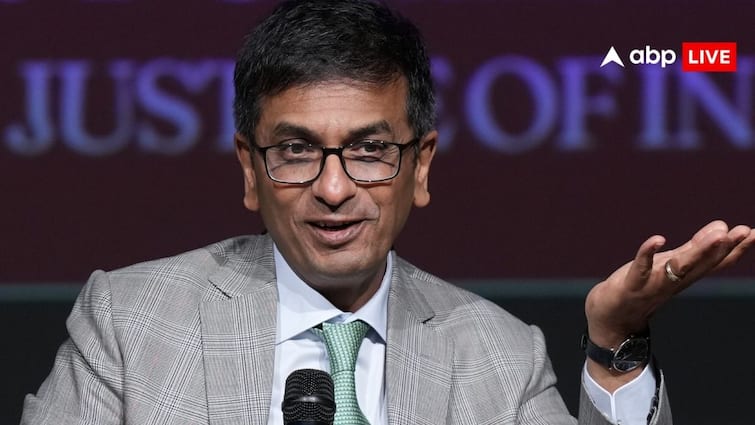
Former Chief Justice, who has already made the Parliamentary Committee constituted on the Bill that provides for simultaneous elections, has already supported the constitutionalism of the concept of ‘one nation, one election’ (ONO), but has also given suggestions about various aspects of the bill, including the power given to the Election Commission.
Justice DY Chandrachud, who was the Chief Justice (CJI) of India, has rejected the opposition’s criticism in his opinion submitted to the Joint Parliamentary Committee that the simultaneous Lok Sabha and State Assembly elections together is a violation of the basic structure of the Constitution.
This thing was not written in the constitution
He said that there is no talk of separating national and state elections anywhere in the Constitution. However, according to the opinion submitted to the Parliamentary Committee, he joined another former CJI Ranjan Gogoi in questioning the ‘comprehensive powers’ given ‘wide powers’ without setting any guidelines for the use of ‘discretion’ to the Election Commission in the proposed Constitutional Amendment Act.
Justice Chandrachud and another former CJI J. S. Khehar is going to appear before the committee headed by Bharatiya Janata Party (BJP) MP PP Chaudhary on 11 July, so that members can interact with them on the provisions of the bill and know their views on their questions.
Questions raised on the widespread powers given to the Election Commission
Questioning the comprehensive powers given to the Election Commission in the Bill, Justice Chandrachud said, ‘Unlimited rights can enable the election body to reduce or extend the constitutionally compulsory 5 -year period of the tenure of the state assembly. Especially on the pretext that elections together with the Lok Sabha are not viable.
He said that the Constitution should define, paint and structures the circumstances under which ECI can use this power. Two former CJIs, Justice UU Lalit and Justice Ranjan Gogoi appeared before the committee in February and March respectively. Sources have said that during the conversation, Justice Gogoi said that he agrees with the concern of some members regarding the excessive power given to the Commission.
Elections should be held in order
Justice Lalit had suggested that elections should be conducted not simultaneously, but in order, as the tenure of the remaining assemblies aimed at making the election cycles synchronized could be legally challenged. However, the three former Chief Justice have not questioned the constitutionality of the concept of elections simultaneously.
Conspiracy to seduce voters
In his written opinion, Justice Chandrachud said that by holding elections simultaneously, there will be no violation of the voters’ right to choose the delegates and the bill ensures that voters are represented by their duly elected MPs or MLAs. The argument opposing to hold elections simultaneously is based on the fact that Indian voters are innocent and can be easily seduced.
Justice Chandrachud said, ‘The argument that gradual elections are part of the original structure of the Constitution (part of the principles of federalism or democracy) is not correct. The gradual time of elections cannot be considered as a specialty of the original constitution, it is a distant thing to be considered an irreversible feature.
Small parties threatened by holding elections simultaneously
Justice Chandrachud’s opinion is not devoid of caution about some characteristics of the Bill or the possible effects of it on it. He expressed concern that small or regional parties would be marginalized due to the dominance of national parties with better resources by holding elections together.
He said that this is an important policy aspect that needs to be paid to legislatively. To ensure equal opportunities among political parties, the rules that control electoral campaigns, especially spending on election campaign must be strengthened.
Party spends more money than fixed limit
Justice Chandrachud said that the maximum limit has been fixed on the amount to be spent by the candidate during the election campaign during the election campaign, but there is no such limit on the expenditure incurred by political parties themselves during the election campaign. This difference in regulation goes in favor of parties with more financial resources in the electoral process.
Also read:- Do not pay attention to rumors! Election Commission said- no change in the process of voter list updation in Bihar