
 By Admin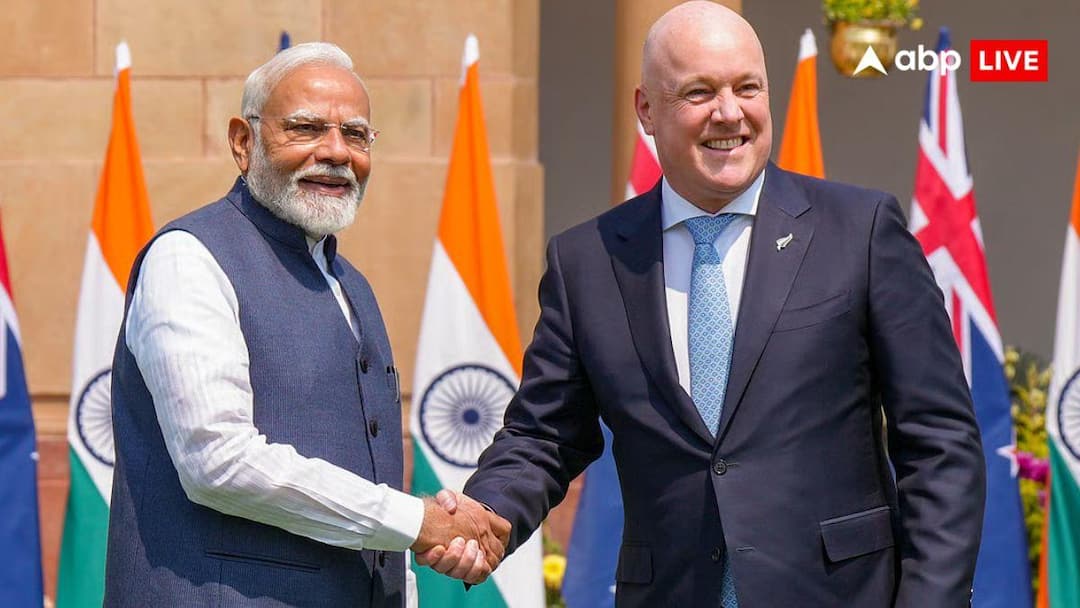
New Zealand Prime Minister Christopher Luxon on Saturday (27 December) welcomed the Free Trade Agreement (FTA) with India, whereas just a few days ago his country’s Foreign Minister had expressed strong objection to it. Luxon described the agreement as a historic achievement for his government and an important step towards future development.
Lakson said, “We had promised to have a free trade agreement with India in our first term and we have fulfilled it.” Emphasizing its economic importance, he said that this agreement will provide more employment, higher income and more export opportunities for 14 lakh Indian consumers.
What did New Zealand’s Foreign Minister say
He said that this agreement is part of the broader agenda of his government. The recent deal exposed divisions within New Zealand’s ruling coalition, as Foreign Minister Winston Peters criticized the deal as neither free nor fair. Peters, leader of the New Zealand First (NZF) party, further said that he had conveyed his party’s concerns to Indian Foreign Minister S Jaishankar and also said that despite his opposition to the deal, he had the utmost respect for him.
benefit to both countries
The free trade agreement was announced earlier this week after talks between PM Modi and Luxon. Both the leaders said that with this agreement, bilateral trade can double in the next 5 years and there can be investment of 20 billion dollars in India in the next 15 years. Negotiations for this agreement started in March. At the time of the announcement, Modi and Luxon said that the agreement reflects the shared ambition and political will to further deepen relations between the two countries.
New Zealand First Party leader expressed protest
Regarding this agreement, New Zealand First Party leader Peters wrote on Twitter, “New Zealand First had appealed to its coalition partner not to hastily finalize a low-quality agreement with India.” He alleged that speed was given priority instead of quality. Peters said that the National Party considered it better to make a poor agreement rather than work hard to achieve a fair agreement that would be beneficial to both New Zealand and the Indians.
The main point of contention for Peters is the treatment of the dairy industry. He said that New Zealand has completely opened its market to India, but in return the tariff on Indian imports of major dairy products has not been reduced.
read this also
Indian Railways will double the capacity of trains in major cities of the country in the next 5 years, know what is the plan