
 By Admin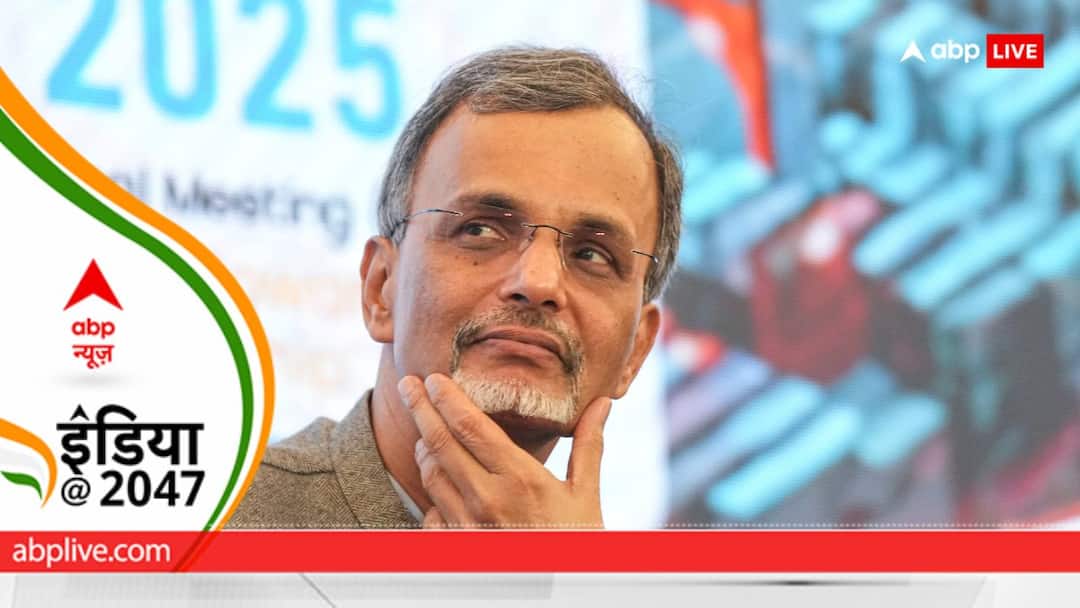
ABP Entrepreneurship Conclave: Speaking on the goal of making India a developed nation by 2047, Chief Economic Advisor V. Ananth Nageswaran at ABP News’ Entrepreneurship Conclave clearly said that for this, India will have to continuously work on a clear, long-term and practical strategy. He said that in the last few years, the government has made many major reforms in the direction of making ease of doing business easier. The GST system has been simplified, changes have been made in labor laws and the tax structure has been made more transparent, so that investor confidence increases and economic activities can be accelerated. He believes that the effect of these reforms will be visible gradually and it will not come in one stroke.
Why no trade deal with America yet?
On the question asked about the manufacturing sector, he said that the government’s schemes like PLI (Production Linked Incentive) are often compared with China, but the circumstances of India and China are different. China adopted a different model decades ago, whereas India is moving forward with balance in a democratic system. He said that the manufacturing sector in India has now become stable and it is creating a strong base. It is not necessary that India will have to adopt the same model as China, rather India will have to make a path according to its strengths.
On the ongoing uncertainty regarding the India-US trade deal, the Chief Economic Advisor clearly said that only the Commerce Ministry can give the final information in this regard. The common citizen can only hope. On the issue of tariff, he said that when reciprocal tariff of 25 percent was imposed for the first time, the industry was already mentally prepared for it. That means it was not completely unexpected. Global trade has become extremely complex today and every country is giving priority to its own interests.
fall in rupee
On the question asked about the decline in rupee, V. Ananth Nageswaran pointed towards an important economic fact. He said that usually when a country wants to strengthen its currency, it increases interest rates. But the situation is different in case of India. History is witness to the fact that when the conditions related to savings and current accounts change in a country, the currency comes under pressure. He indicated that the weakness of the rupee should not be viewed only from a negative perspective, but it is important to understand the broader economic context behind it.
Regarding Indian economy and employment, he said that there is no situation of jobless growth in India. As evidence of this, he said that the demand for MNREGA has decreased in the last one year, which shows that other employment opportunities have increased in rural areas. Apart from this, about 1.5 crore new jobs have been added in the formal sector in the last two years. He believes that India can further strengthen employment generation by increasing manufacturing and exports.
AI
He talked about adopting a balanced approach regarding Artificial Intelligence (AI). He said that AI is still in its initial stages and it is important to discuss both its positive and negative aspects. AI can become a challenge for employment in some areas, but there are many areas where there is no alternative to AI, like construction, plumbing, manual skills etc. He said that the government itself is taking many initiatives regarding AI, but the focus should be that technology should complement human labour, not replace it.
On Indian economy reaching close to 4 trillion dollars and comparison with China, he said that in March 2025, India’s economy was about 3.9 trillion dollars. The weakness of the rupee has affected the figures in dollar terms. The world is changing rapidly and in such a situation India will have to pay more attention to investment, research and development and structural reforms. He especially stressed the need for reforms in land and labor reforms, power generation and distribution.
In the end, he said that to achieve the goal of a developed India, economic policies alone will not be enough, but equal attention will have to be paid to the physical and skill development of the young population. Strong youth power, stable policies, continuous reforms and strategies in tune with global changes—these are the foundations on which India can become a developed nation by 2047.
Also read: Tremendous jump in country’s exports, business worth more than $38 billion in November