
 By Admin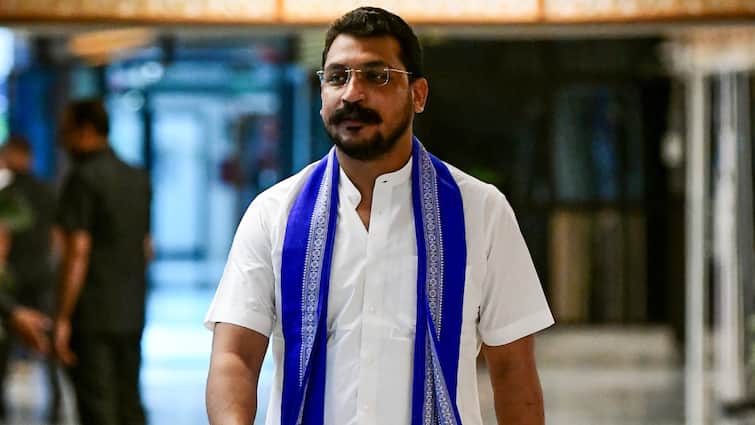
Chandrashekhar Azad, MP from Nagina in Uttar Pradesh and National President of Azad Samaj Party (Kanshi Ram), has written an important demand to the Chief Justice of the country (CJI) Bhushan Ramakrishna Gawai. He has given information about his demand on social media platform X. At the same time, this demand of Nagina MP is being discussed a lot in the political corridors.
Nagina MP Chandrashekhar Azad has urged that the picture of Dr. Bhimrao Ambedkar, the creator of the Indian Constitution and the craftsman of modern India, should be mandated in all the courts, Supreme Court, High Court and Subordinate Courts of the country.
What did Bhima Army Chief say in the letter?
Chandrashekhar Azad said in his letter that Babasaheb gave us the constitution, on which the judiciary stands on the foundation and who gave every citizen the right to equality, freedom and justice. He wrote in his tweet, “In all the courts of India, the creators of the Indian Constitution, the craftsmen of the Indian Constitution, the exploited and the liberator of women, the symbol of knowledge, the Vishwa Ratna Param Pujya Baba Saheb Dr. Bhimrao Ambedkar ji has written a letter to Chief Justice Bhushan Ramakrishna Gavai.”
He said that Dr. Bhimrao Ambedkar has not only a great scholar of jurisprudence, but has also been a guide to the independence and equal justice system of the judiciary. In such a situation, the judiciary is incomplete without respecting his contribution.
The MP has three main points in the letter –
- A picture of Babasaheb Ambedkar should be established in all the courts of India.
- This step will be a symbol of fairness, constitutional values and commitment to social justice.
- By setting up the picture, the message will be sent to the exploited and disadvantaged class that the court is not only the law but also the conservator of the constitution maker.
Chandrashekhar Azad believes that this step will further strengthen the democratic and constitutional traditions of the country along with increasing the dignity of the judiciary. His letter remains a matter of discussion in social and political circles and it is being considered an important initiative towards social justice in the judicial system.