
 By Admin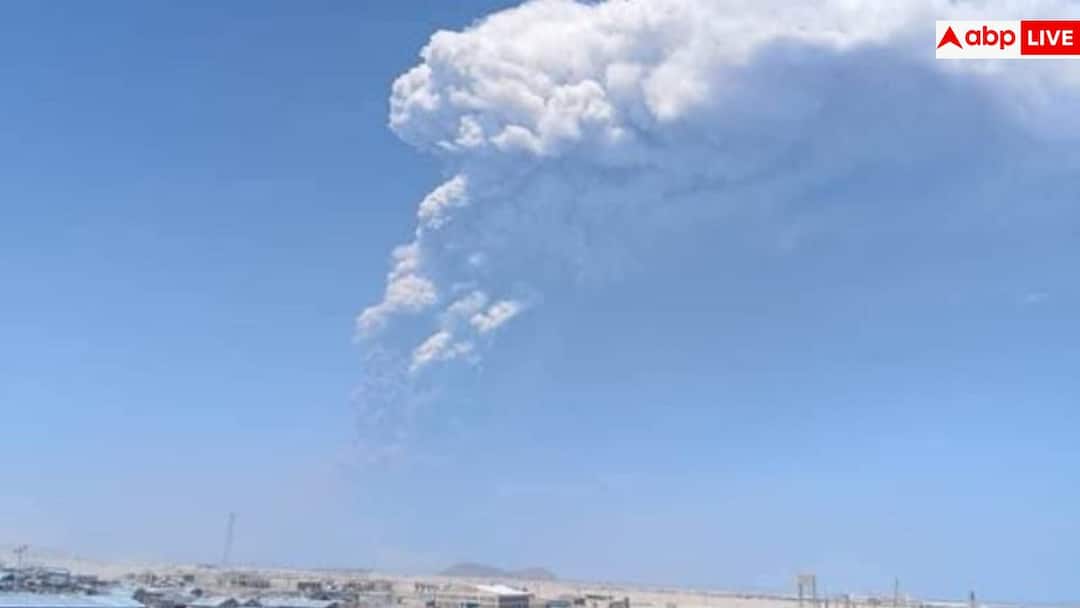
Ethiopia Volcanic Ash: The layer of ash that arose after the volcanic eruption in Ethiopia will be completely removed from India by Tuesday evening. According to the Indian Meteorological Department (IMD), this ash was spread over many parts of north-west India since Monday and also affected flight operations for some time. IMD Director General Mrityunjay Mohapatra said that the ash clouds are now moving towards China and will disappear from India by 7.30 pm on Tuesday. It first entered Gujarat on Monday, then spread to Rajasthan, Maharashtra, Delhi-NCR, Haryana and Punjab overnight.
How did the ash cloud reach India?
The shield volcano named Haile Gubbi, located in the Afar region of Ethiopia, erupted on Sunday after about 10,000 years. Ash rose to a height of 14 km (about 45,000 feet). According to the Toulouse VAAC, the huge cloud of ash formed during the eruption at 8:30 am GMT on Sunday continued to move towards northern India even after the eruption stopped. The ash rising from the Afar region, with strong upper winds, crossed the Red Sea, reached Yemen and Oman and then crossed the Arabian Sea and entered western and northern India. IMD said that this plume was tracked through satellite imagery, VAAC advisory and models.
How dangerous for health
In Delhi, there was a slight ash-like haze in the sky and the air quality remained in the ‘very poor’ category. According to reports, a large amount of sulfur dioxide also came out during the volcanic eruption. Such high presence of gas has increased concerns about the possible threat to the environment and people’s health. Volcanic ash is not like the soft ash left in a common fire. It contains very fine, rough and sharp particles of rocks, minerals and glass. Their size can be so small that they are not even visible to the naked eye, and can also be so large that they leave scratches on the eyes or sensitive skin. Sometimes this ash also contains crystalline silica which, if inhaled for a long time, can cause serious lung disease like silicosis.
What effect does it have on health?
According to the CDC, these problems can occur even after short exposure. In this
- persistent cough or difficulty breathing
- sore throat
- redness or irritation in the eyes
- headache or fatigue
- Slight nausea if too much ash is inhaled
These symptoms intensify in people with asthma, bronchitis or any kind of respiratory disease. Can be felt. Being exposed to ash for long periods of time and in large quantities can cause serious lung problems in the future, such as in those near volcanoes. However, such is not the situation in India, but it is important to be cautious.
How to protect?
- Stay indoors as much as possible and keep doors and windows closed.
- If it is necessary to go out, wear an N95 mask.
- Do not run an air-conditioning setting that draws outside air in.
- Keep removing the ash accumulated outside the house from the doors and ventilation system.
Read this also- Winter Health Tips: With cold water or hot water…how is it right to take bath in cold? Learn from experts
Disclaimer: This information is based on research studies and expert opinion. Do not consider this as a substitute for medical advice. Before adopting any new activity or exercise, please consult your doctor or relevant specialist.
Check out below Health Tools-
Calculate Your Body Mass Index (BMI)
Calculate The Age Through Age Calculator