
 By Admin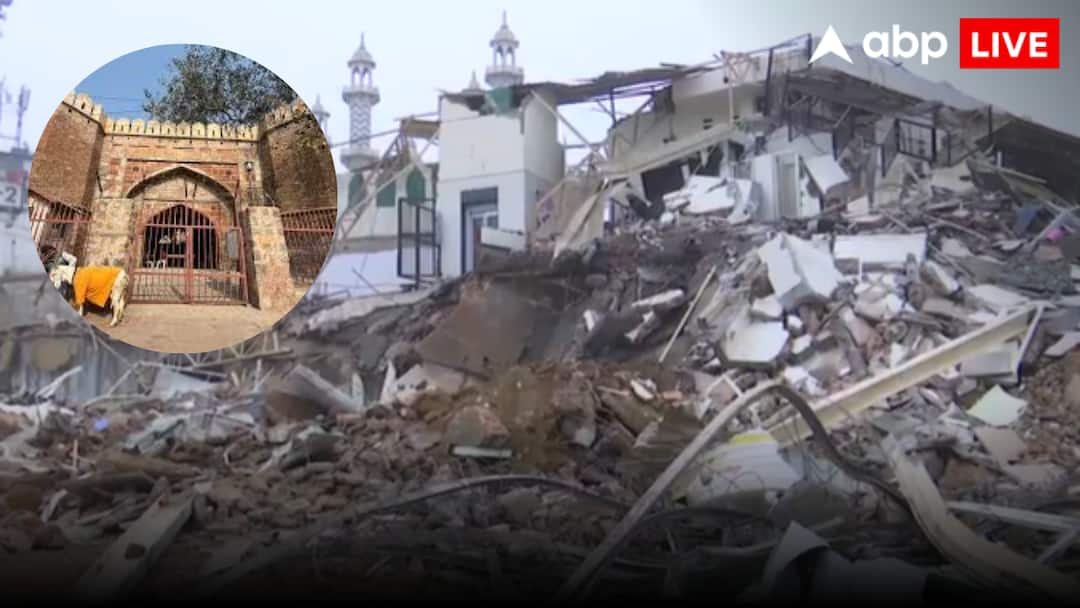
Encroachment on government land from the metropolitan cities to small towns of the country is not a new thing. Often the administration remains blind until the courts intervene. A similar case has also come to light in the country’s capital Delhi, which has once again brought the pages of history into discussion.
This is a case of alleged illegal encroachment in and around the Faiz-e-Ilahi Mosque located near the historical Turkman Gate. When this matter reached Delhi High Court and the court ordered removal of the encroachment, there was a huge uproar in the area during the action. Stone pelting, tear gas and deployment of heavy police force once again brought Turkman Gate into the limelight.
What is Turkman Gate? Know its historical importance
Turkman Gate is one of the main gates of Shahjahanabad (Old Delhi), built by the Mughal emperor Shahjahan. Built in the 17th century, this gate was constructed at a time when Delhi was being developed as a strongly fortified capital.
How did Turkman Gate get its name?
This gate is named after the famous Sufi saint Shah Turkman, whose shrine is located near the gate. Urs is organized here every year in the memory of Shah Turkman. Due to this religious and cultural importance, this area has been inhabited for centuries. Talking about the structure of Turkman Gate, it is a rectangular structure. It has a two-storey turret with a three-arched entrance. It is considered an important example of Mughal art.
Does Turkman Gate have any connection with Aurangzeb?
This question often arises that what is Aurangzeb’s relation with Turkman Gate? No direct relation has come to light yet. However, the Turkman Gate was built during the reign of Shahjahan and Aurangzeb was the son of Shahjahan. For this reason the gate has no direct or historical connection with Aurangzeb. This confusion often spreads due to social media and incomplete historical information.
When was the bulldozer run on Turkman Gate for the first time?
The name of Turkman Gate first came into discussion on a large scale on 13 April 1976, when a bulldozer was run during the Emergency. At that time, on the instructions of Sanjay Gandhi, a large-scale slum removal campaign was launched in Delhi. Bulldozer reached Turkman Gate area for the first time. Initially slums were removed, which faced limited opposition.
What was the impact of Sanjay Gandhi’s decision?
This decision of Sanjay Gandhi agitated the entire Old Delhi. Jama Masjid, Chandni Chowk and Turkman Gate. Anger and dissatisfaction spread in these areas. Local people called for a general strike. Labor organizations and leftist parties organized the protest. This protest soon started turning violent. On 19 April 1976, Turkman Gate became a ground of conflict. The situation went completely out of control. The bulldozers moved forward again, people came out on the streets, then Dojana House was attacked. In response, the police lathicharged and tear gas shells were released. Even women and children were not spared. Many people were injured in this violent confrontation and Turkman Gate became a painful chapter in the history of Delhi.
Why did Turkman Gate come into discussion again in 2025?
After almost five decades, Turkman Gate is once again in the headlines. The reason for this is Faiz-e-Ilahi Mosque and encroachment. Faiz-e-Ilahi Mosque is located near the historic Turkman Gate. Many buildings have been built around it by illegal encroachment on government land. The court ordered removal of illegal encroachments around the historical structure. On January 6, 2025, the bulldozer started again, after which a ruckus broke out. MCD and police teams reached the spot with bulldozers. Seeing this, the local people started protesting. Soon stone pelting started and the police used tear gas to control the situation. The entire area was converted into a cantonment.
Also read: EXCLUSIVE: Why did the bulldozer run in Delhi’s Ramlila Maidan area, how did the dispute start, what is the link to the mosque?