
 By Admin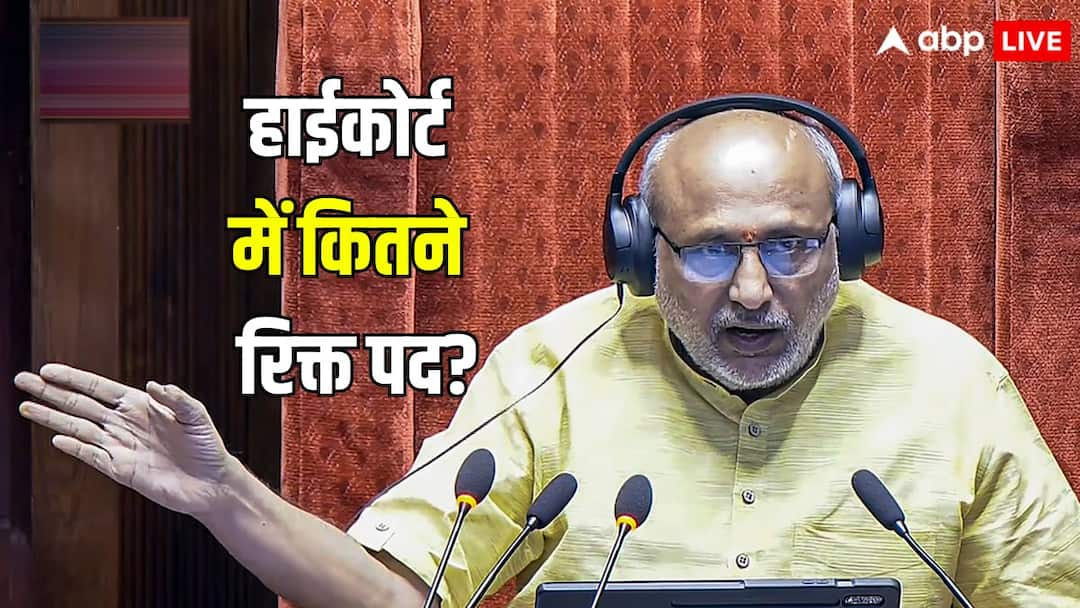
Rajya Sabha MP Harish Biran sought information regarding vacant posts in High Courts across the country. It was asked what are the existing vacant posts of judges in the High Courts, the details of the recommendations of the Supreme Court Collegium pending before the government and the reasons for their pending. Apart from this, has the government evaluated the impact of vacancies on pending cases in the country? If yes, what are its details? And what are the steps taken by the government to fill these vacancies in various courts?
Answer given by the government
- Responding to this, Minister of State (Independent Charge) of the Ministry of Law and Justice and Minister of State in the Ministry of Parliamentary Affairs, Arjun Ram Meghwal said that against the sanctioned posts of 1122 judges till 27 November 2025, 825 judges are working and the posts of 297 judges are vacant in various High Courts.
- Against these vacancies, 97 proposals for appointment of High Court judges are at various stages between the government and the Supreme Court Collegium. Recommendations for 200 vacancies have not yet been received from the High Court Collegium.
- Giving information, the Minister said that the responsibility of initiating proposals for appointment of judges in the Supreme Court rests with the Chief Justice of India, whereas the responsibility for initiating proposals for appointment of judges in the High Courts rests with the Chief Justice of the High Court.
- As per MOP, High Courts have to make recommendations at least 06 months before the vacancy. However, this time limit is rarely observed. For appointments to High Courts, the opinion of the concerned State Government is obtained as per MOP. The recommendations are also to be considered in the light of other reports available for discussion. The recommendations of the High Court Collegium, State Governments and the Government of India are then sent to the Supreme Court Collegium (SCC) for advice.
- The appointment of judges to high courts is a continuous, integrated and collaborative process that requires consultation and approval between the executive and the judiciary. It requires consultation and approval from various constitutional authorities at the state and central levels. Only those persons are appointed as judges of the High Courts whose names have been recommended by the SCC. From May 2014 to 01.12.2025, 1156 judges have been appointed in various High Courts.
- Pendency of cases in the Court arises due to several factors, including complexity of facts, nature of evidence, cooperation of stakeholders, such as the Bar, investigating agencies, witnesses and litigants, as well as physical infrastructure, supporting court staff and proper application of rules and procedures to track and bunch hearing of cases. Moreover, the pendency of cases in the High Courts and the vacancy position of judges are not necessarily directly related.