
 By Admin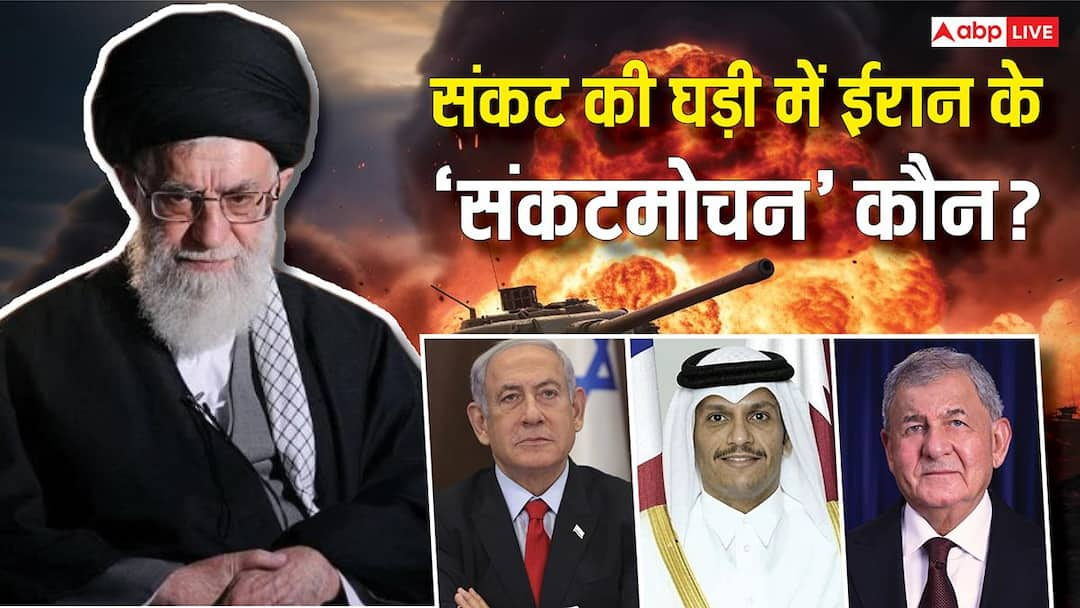
The Middle East is once again on the boil. The internal situation in Iran is deteriorating, millions of people are standing on the streets against the government and America has openly warned. If the situation takes the form of war and Iran is attacked, then the question will not only be about war, but it will also be decided on which side the Muslim world will stand. Will Iran be left alone or will it get support? Let us understand which way the wind will blow in Muslim countries during the war?
What is the background of Iran crisis?
Iran has been facing international sanctions for a long time. The sanctions imposed by America, United Nations and many European countries have deeply hurt its economy. Inflation is at its peak, the value of the Iranian Rial is continuously falling and the life of common people is becoming difficult. This economic pressure has given rise to large-scale protests in the last two weeks.
Initially these demonstrations were against inflation and unemployment, but gradually this movement turned into an open challenge against the power and leadership of Supreme Leader Ayatollah Ali Khamenei. In the last 18 days, there have been reports of deaths of more than 2000 people due to violence, clashes and repression.
America’s threat and fear of war
Amidst this situation, US President Donald Trump gave a statement that very strong options are being considered regarding Iran. After this the discussion intensified that America and Israel could together attack Iran. This fear has worried the entire Middle East. The biggest question before the Muslim countries is that if there is a war, with whom will they stand or will they maintain silence.
Will Muslim countries unite?
Experts believe that the Muslim world will not reach any single decision. Just as many countries did not come forward openly during the Gaza conflict, similarly in the Iran-America conflict, most countries can choose the path of balance and neutrality. Every country has its own economic interests, security concerns and international relationships, which will determine its stance.
What will be Qatar’s stance?
Qatar is an important military partner of America in the Middle East. Al Udeed Air Base located here is considered to be America’s largest and strategic military base, where more than 10 thousand American soldiers, modern fighter jets and drones are deployed.
However, experts believe that if America and Israel attack Iran, Qatar will avoid jumping into the war directly. It is possible that he may set limits on the use of his military base and try to show himself neutral. Qatar’s priority will be to avoid regional war and maintain diplomatic balance.
Why would Iraq keep its distance?
The situation in Iraq is very sensitive. Years of American military presence and recent air strikes have increased resentment towards America there. Many political and religious groups within Iraq are considered close to Iran.
In such a situation, America cannot expect open support from Iraq against Iran. Baghdad would like to stay away from any conflict that could once again lead the country towards instability.
Turkey’s double helplessness
Turkey’s foreign policy has long been critical of American and Israeli interference. Ankara has openly opposed Israel on the issue of Palestine. Therefore, if Israel attacks Iran alone, Turkey can give statements in support of Iran at the political and diplomatic level.
But the other side of the picture is that Turkey is a member of NATO and has deep military ties with America. If America enters the war directly, Turkey will probably keep itself away from the conflict and try to play the role of mediator.
What is Pakistan’s stance?
Pakistan’s foreign policy has generally been based on balance and diplomacy. It is already struggling with economic crisis, security challenges and internal pressures. In such a situation, Pakistan will be saved from getting involved in any new international war.
Although Pakistan talks about solidarity with Muslim countries, it does not mean military support. In the conflict between Iran and America, Pakistan can possibly appeal for peace and dialogue at the United Nations and international forums.
UAE’s compulsion and interests
The attitude of the United Arab Emirates i.e. UAE can be very cautious. Dubai has long been a major trading hub for Iran and billions of dollars of trade takes place between the two countries. This economic relationship prevents UAE from taking an open front against Iran.
On the other hand, at the security level, UAE is a close ally of America and Saudi Arabia. In such a situation, if there is a war, the UAE will avoid jumping into the fight directly, but can provide limited logistics or intelligence support.
Kuwait’s traditional neutrality
Kuwait has always been known for maintaining balance in regional conflicts. It has social and cultural ties with Iran, especially because of its Shia population. Although Kuwait is also a strategic ally of America and Saudi Arabia, it can avoid openly supporting any one party. Kuwait will try to play the role of mediator and appeal to reduce tension.
Saudi Arabia’s complex situation
Saudi Arabia has long considered Iran its biggest regional rival. The Houthi rebels in Yemen and the fight for influence in the Gulf region show the conflict between the two countries.
Nevertheless, in recent years there has been improvement in Iran-Saudi relations. For this reason, if there is a war, Saudi Arabia can avoid direct military confrontation. Despite being close to America, he may hesitate to openly support any side.
Oman’s intermediary role
Oman is considered the most balanced and peace-loving country in the Gulf region. It has played the role of mediator between Iran and Western countries in the past. Oman’s back-channel diplomacy was also important in the 2015 Iran nuclear deal. If there is a war, Oman will neither allow its military bases to be used nor will it take sides. His role will be limited to peace and dialogue.
Why will Egypt remain cautious?
Egypt is a long-standing strategic partner of America and receives significant military assistance. At the same time, its relations with Iran are neither very close nor completely hostile. Egypt’s priority is the security of Gaza, the Sinai Peninsula and the Suez Canal. In such a situation, he will maintain distance from any major war and appeal for restraint.
Jordan’s concern
Jordan is a small but strategically important country. It has limited relations with Iran, while its relations with America and Western countries are strong. In the event of conflict, Jordan will focus on the security of its airspace and borders, but will avoid direct military involvement.
Also read: Iran Protest: Who has the most debt on Iran, who will suffer the most if the government changes here?