
 By Admin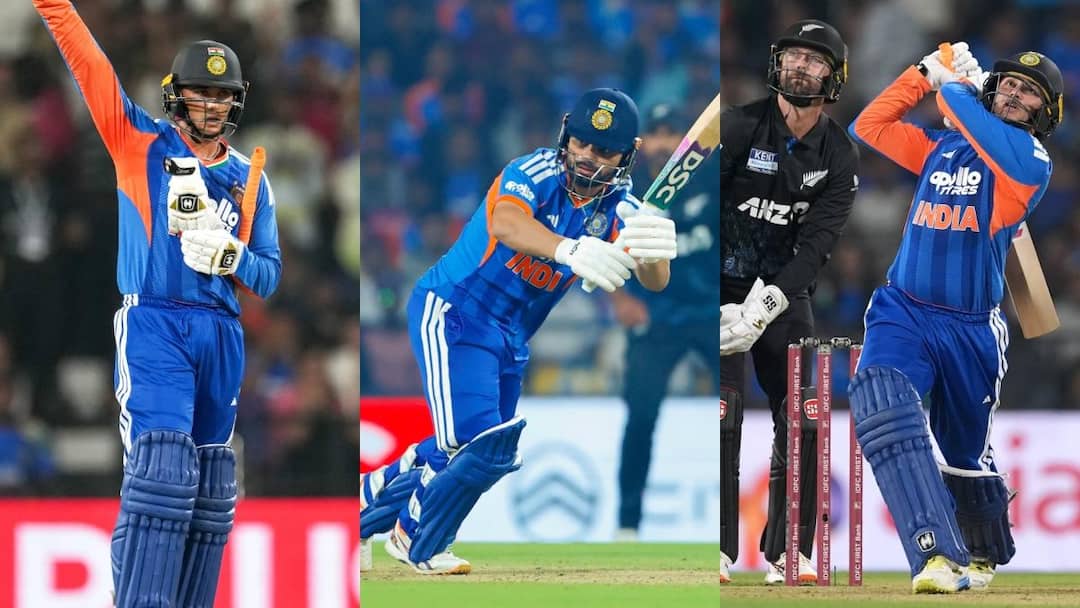
The teams of India and New Zealand are facing each other for the first T20 at the Vidarbha Cricket Association Stadium in Nagpur. In the match, New Zealand won the toss and decided to bowl. Team India, who came to bat first, put 238 runs on the board for 7 wickets in 20 overs. This was India’s highest total in T20 against New Zealand. Abhishek Sharma played the biggest innings for the team and scored 84 runs in 35 balls with the help of 5 fours and 8 sixes. There were 21 runs in the last over, out of which Rinku Singh scored 20 runs.
However, Team India, captained by Suryakumar Yadav, could not put as big a total on the board as expected after a good start. Initially it seemed that the Indian team would reach the total of 250 runs as the team had put 100 runs on the board in just 8.4 overs. The run pace slowed down after Abhishek was out.
Innings Break!
A blistering start backed by a solid finish by #TeamIndia 🔥
Over to our bowlers now 🙌
Scorecard ▶️ https://t.co/ItzV352h5X#INDvNZ | @IDFCFIRSTBank pic.twitter.com/dkKpQMjqc0
— BCCI (@BCCI) January 21, 2026
Apart from Abhishek, other batsmen could not do anything special.
The thing to note is that apart from Abhishek, other batsmen could not do anything special. Apart from Abhishek, no batsman could touch the half-century mark. After Abhishek’s 84 runs, the second highest high score was 44 runs, which was made by Rinku Singh, who came at number seven, with the help of 4 fours and 3 sixes in 20 balls.
Wickets fell continuously
Indian batsmen batted aggressively, but on the other hand no player was able to stay on the crease for long. Continuous fall of wickets was the biggest reason behind the low total.
Performance of New Zealand bowlers
For New Zealand, Jacob Duffy and Kyle Jamieson took maximum 2-2 wickets in their account. During this, Duffy spent less runs and gave only 27 runs in 4 overs. Whereas Jamieson gave away 54 runs in 4 overs. Apart from this, Kristen Clarke, Ish Sodhi and Mitchell Santner took 1-1-1 wickets in their bag.