
 By Admin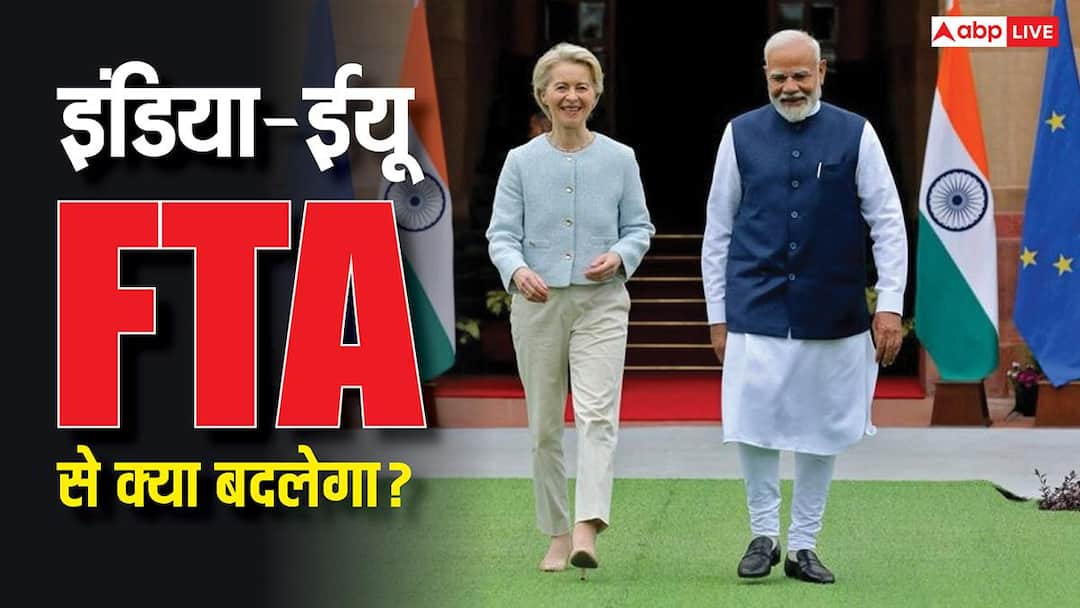
India-EU FTA: During the high-level meeting held in New Delhi, the much-awaited Free Trade Agreement (FTA) between India and the European Union (EU) was finally sealed, which could not be finalized for the last two decades. This agreement is being called the “Mother of All Deals” because of its comprehensiveness and strategic importance. In fact, the European Union is India’s largest trading partner and about 17 percent of India’s total global trade is with the EU alone, which further increases the importance of this agreement.
Trade surplus trade with EU
If we look at the figures, the total trade between India and EU in the financial year 2024-25 was approximately $ 136.53 billion. In this, the import from EU to India was about 60.68 billion dollars, while India exported about 75.85 billion dollars to the EU. In this way, India achieved a trade surplus of about $ 15.17 billion with the EU, which shows a strong position for Indian exporters.
India-EU relations have been very strong not only in goods but also in the services sector. In the year 2024, services trade between the two will reach approximately $83.10 billion, in which IT services, business services and telecommunications have a major contribution. With the implementation of the new FTA, it is expected that trade barriers will reduce, investment will increase and India-EU economic relations will deepen in the coming years.
Let us know what is going to change after the signing of the historic FT agreement with the EU.
Electronics, clothing and market access
Many important changes can be seen after the historic free trade agreement with the EU is ratified. The most direct impact of this agreement will be on market access in electronics, textiles and other manufacturing sectors. Especially the reduction in customs duty on goods will make Indian products more competitive in the European market, which is expected to give a big boost to exports.
At present, about 10 percent customs duty is imposed on Indian clothes in the European Union, which has been a big challenge for Indian exporters. Under the FTA, this fee is likely to be reduced in a phased manner. This will not only make Indian clothes cheaper but will also increase their demand in Europe. Its direct benefit will be that Indian exporters will be in a better position than countries like Bangladesh and Vietnam and will be able to strengthen their share in the European market.
cars will be cheaper
The sector that is being discussed the most in the India-EU FTA is the automobile sector, because till now the Indian car market has been counted among the most protected markets in the world. At present, 70 to 100 percent import duty is imposed on cars coming from Europe, which is decided depending on the model and price. For this reason, European luxury and premium cars become very expensive for Indian customers and their accessibility remains limited.
According to reports, there may be a big change in this situation after the implementation of FTA. The Government of India has agreed to reduce the import duty on expensive cars priced above Rs 16 lakh to about 40 percent in the initial phase. With this, European cars may become cheaper than before, due to which Indian consumers will have more options. Also, this will increase competition in the Indian auto sector and will also create pressure on domestic companies to further improve technology, quality and innovation.
.
Also read: Now you will not be able to hold meetings in cafes! For more than 1 hour, Rs 1000 will be charged. Extra charge per hour, notice goes viral