
 By Admin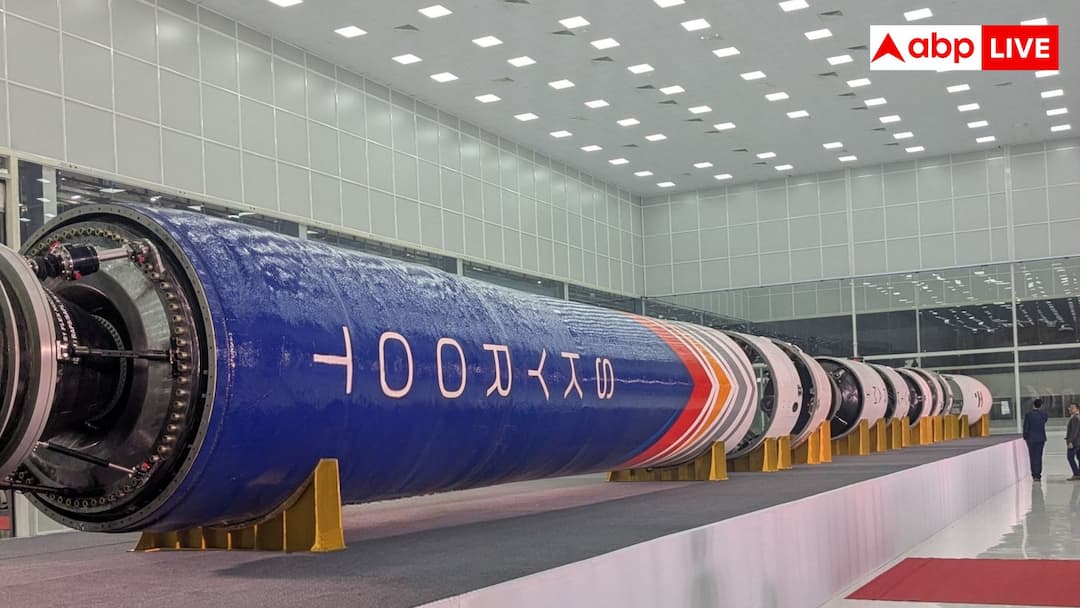
India is continuously touching heights in space technology. Till now ISRO used to launch most of the rockets and missions in the country, but now private companies have entered this sector. Recently, Prime Minister Narendra Modi has unveiled the country’s first private rocket Vikram-1 at the Infinity Campus of Sky Route Aerospace in Hyderabad.
This rocket has been designed to launch small and micro satellites into space and it is also being considered as the beginning of a new era in India’s space sector. In such a situation, let us tell you today what is the process of India’s first private rocket from ground to space.
How does a rocket reach space?
About 100 kilometers above the earth is where the environment begins to collapse. Space is considered to begin from there. This limit is called Kármán line. When any rocket crosses this height and achieves sufficient speed against the earth’s gravity. Only then is he able to reach space. To place the satellite in the Earth’s orbit, a speed of about 7.8 kilometers per second i.e. about 28,000 kilometers per hour is required. Only a rocket can provide such high speed. At the same time, gas comes out rapidly from the back of the rocket and according to Newton’s third law, the rocket gets a push in the forward direction, this push is called thrust.
How does a rocket take off?
The rocket carries two things with itself: fuel and oxidizer. Due to lack of air at high altitude, the rocket does not get oxygen from outside, hence it carries oxygen itself. Due to the mixing of fuel and oxidizer in its engine, extremely hot gases are formed which come out rapidly backwards and push the rocket upwards. Whereas the rocket is made in parts which are called stages. The lowest stage of the rocket carries the most fuel and gives the most thrust in the beginning. As soon as the fuel runs out, this part is dropped so that the rest of the rocket becomes lighter and can achieve more speed. In this way the second and third stages also get separated after completing their work. Lastly, the remaining upper part places the payload i.e. satellite in its orbit.
How is India’s first private rocket?
Vikram-1 developed by Sky Route Aerospace is India’s first private rocket. It is named in honor of ISRO’s founder Dr Vikram Sarabhai. It has been designed to carry small and micro satellites into space. While unveiling this rocket, Prime Minister Narendra Modi said that India now stands in the line of those few countries in the space sector which have the capability to privately develop and manufacture orbital-class launch vehicles. Whereas the height of Vikram-1 rocket is 20 meters, width is 1.7 meters, thrust is 1200 kN. This entire rocket is made of light and strong carbon fiber technology. Many parts of this rocket have been prepared with 3D printed technology. This rocket is also capable of placing multiple satellites in different orbits in a single flight. Vikram-1 can be assembled and launched rapidly. Due to which it is considered very useful for the small satellite market.
Also read- Do Hindus also not eat Halal meat like Muslims, what are the rules in this religion?