
 By Admin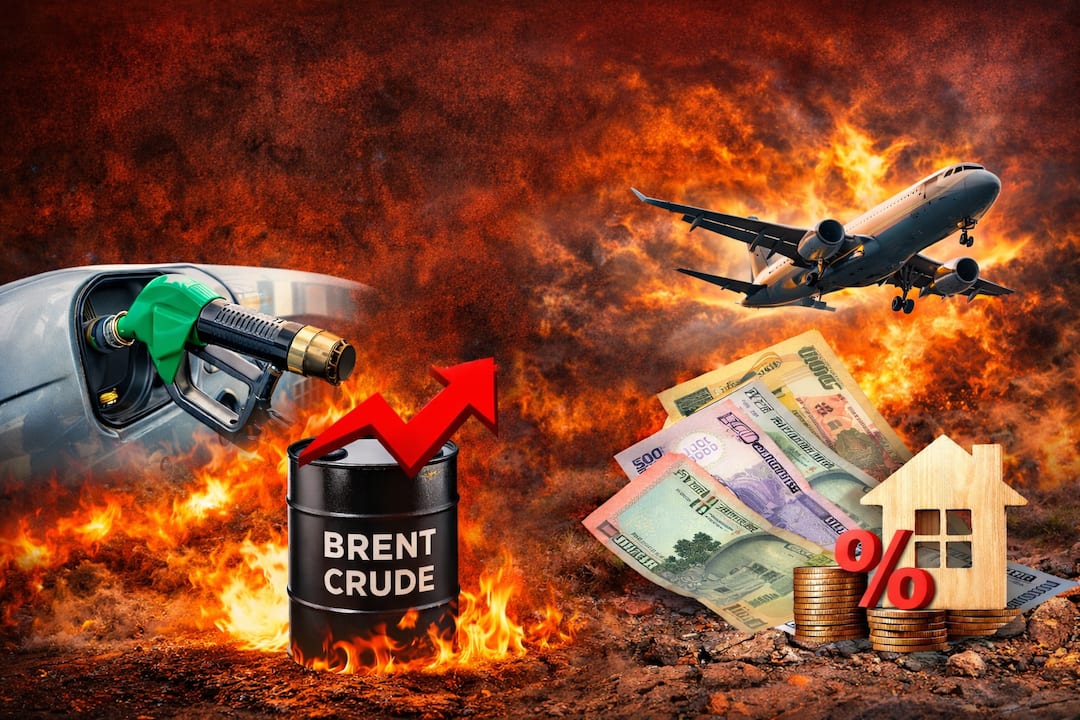
India’s Inflation Impact: The effect of increasing tension in West Asia is now visible on India’s economy as well. Due to rise in oil prices and global uncertainty, pressure on the Indian currency has increased. The situation is such that the rupee has continuously weakened and reached near Rs 93 per dollar, due to which a situation of economic uncertainty is being created. At the same time, inflation in the country has also reached its highest level in almost ten months.
Experts believe that if this crisis continues for a long time, it can directly impact the pockets of common people. Although at present it does not seem to have a major impact on consumers, but if the situation continues for a long time, there may be an increase in fuel, travel and daily expenses.
Possible impact on India
1. Fuel and gas can be expensive
If the price of Brent Crude remains above $100 per barrel in the international market, then the prices of petrol, diesel and gas may increase. Due to this, there is a possibility of increase in the expenses of travel and daily life.
2. Imports will become expensive
India imports a large part of its needs. Due to the weakness of the rupee, prices of food items, industrial components, electronics and other imported goods may increase.
3. Foreign travel and studies are expensive
Due to the weakening of the rupee, services like foreign travel, foreign university fees and international online subscriptions may become more expensive than before.
4. EMI may also be affected
If inflation increases, the Reserve Bank of India may have to be cautious about cutting interest rates. In such a situation, the possibility of reducing the loan EMI may decrease and the pressure of high interest rates may persist for a long time. Obviously the crisis in West Asia is currently showing limited impact in India, but if oil prices remain high and the rupee weakens, then its impact may gradually reach the common people through inflation, fuel and everyday expenses.