
 By Admin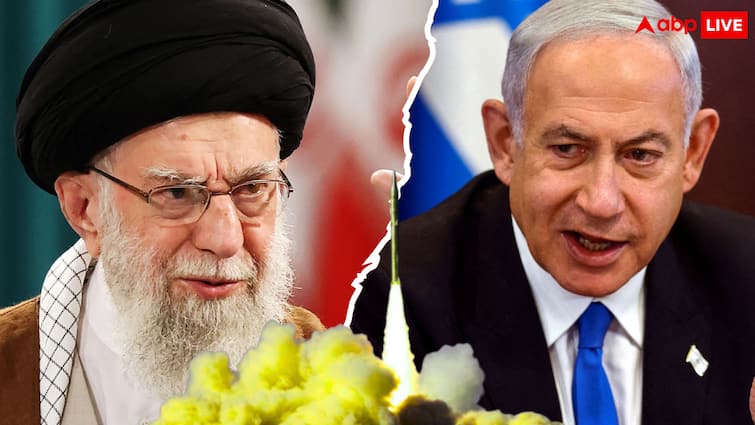
Israel Iran War: The ongoing conflict between Israel and Iran is no longer limited to the military front. This war is now making a huge impact on the economic backbone of both countries. Israel is suffering a direct loss of millions of billions of dollars every day, while Iran’s economy under pressure has been under more stress.
Let us try to understand by comparing the economic status of the two countries, who will suffer more financially at the end of this struggle and which country in the long term will prove to be more insecure.
What do Israel and Iran’s economy depend on?
Israeli’s economy is mainly based on high technology industry. More than 400 multinational companies in the world like Google, Intel and Microsoft’s Research Centers are located in Israel. Apart from this, diamond cutting and polishing indentory contributes to the Israeli exports. With the help of greenhouse technology, farming and flowers also have a large export from here.
On the other hand, a large part of Iran’s economy depends on the export of oil and natural gas. According to a report from the Iran Front Page, it is estimated that by the end of 2025, Iran will produce around 3.1 million barrels of oil per day, of which 1.6 million barrels will be exported. Apart from this, Iran’s agriculture and manufacturing sectors also play an important role in revenue, although their effect is not as widespread as oil.
The thing to understand here is that due to many restrictions imposed by the US and Europe on Iran, it is mostly able to export his oil and gas to China. In 2023, Iran sent an average of 1.1 million barrels per day (BPD) oil to China.
Who is stronger than the economic situation?
The Israeli economy has reached $ 583 billion based on GDP, while Iran’s GDP is around $ 463 billion in 2025 as per the IMF report. However, this estimate is before the war that started with Israel. While the inflation rate of Israel is close to 3 percent, it has reached 29.5 percent in Iran.
The most interesting thing is where there is a huge burden of foreign debt on Israel, which is about 105 percent of GDP. At the same time, Iran’s foreign debt is only 1.8 percent of GDP, which comes in the lowest ratio in this field.
Who is facing more?
According to a report by the Israeli business newspaper Calcolist, the direct economic cost of war is very heavy for Israel. He is spending billions of dollars military every day, including missile interceptor, F-35 aircraft flight and ammunition.
The cost of the first missile attack on Iran was estimated at $ 593 million. In addition, the deployment of thousands of reserve soldiers has affected the labor market and there has been a drastic decline in Industrial Production. Tourism and export have also shocked due to the closure of airports.
At the same time, the situation in Iran is also no less serious. Although its economy was already under pressure due to US sanctions, but now his oil exports are also in danger due to the war. Currently, most of Iran’s oil is exported to China at concessional rates.
If the oil pipelines or refineries are damaged due to the war, then this revenue source may also come to a standstill. Also, the devaluation of the Iranian currency ‘riyal’ is happening rapidly. In 2024, its price was reduced by 50 per cent, which could be even more.
Possible economic photo after war
According to a Calcist report, if the war goes on long, then the economy of Israel may have a huge impact. The defense budget of 2025 has already reached $ 38.6 billion and the total budget is above $ 215 billion.
In such a situation, it is estimated that if the war runs for more than a month, only military expenses can cross $ 12 billion. Due to this, Israeli’s budgetary deficit can reach 5 percent of GDP. Also, high-tech sector, which is based on foreign investment and innovation, can also be badly affected by this instability.
Looking at Iran, there is a slightly different form in its situation. IMF has estimated Iran’s economic growth rate of 3.1 per cent in 2025, which suggests that the country has kept itself stable to some extent despite the sanctions. According to a report by the Iran Front Page, Iran is expected to stay up to $ 13.9 billion, Iran’s current account surplus.
But all this is only until his oil infrastructure does not suffer any serious harm. If the war has been attacked by refineries or gas areas, then revenue may fall by 40 percent.
Which country is in a more unsafe situation?
In easy language, Israel is in a more unsafe situation in terms of short term loss. Due to heavy military expenses, dependence on global supply chains and decline in technical sector, it is having a direct impact on the economy. If this struggle is prolonged then it is possible to fall by 20 percent in GDP.
Iran’s economy is already under pressure, but it has been suited to restrictions for a long time. Therefore, his immediate shock may feel a little less. However, if the war destroys its oil production structure, it may have to spend billions of dollars on reconstruction and his GDP may fall by 7 per cent.
Overall, there is no economic winner of this struggle. Israel is facing more financial pressure in the short term, while Iran may have to face serious problems such as damage and inflation in the long term. If the war goes on for more than a month, then not only the economic stability of these two countries will be in danger, but the entire regional economy of West Asia may be in crisis.
Also read: After US attacks on nuclear bases, Khamenei’s anger on the seventh sky, warning- Jewish enemy committed a big crime, will now show …