
 By Admin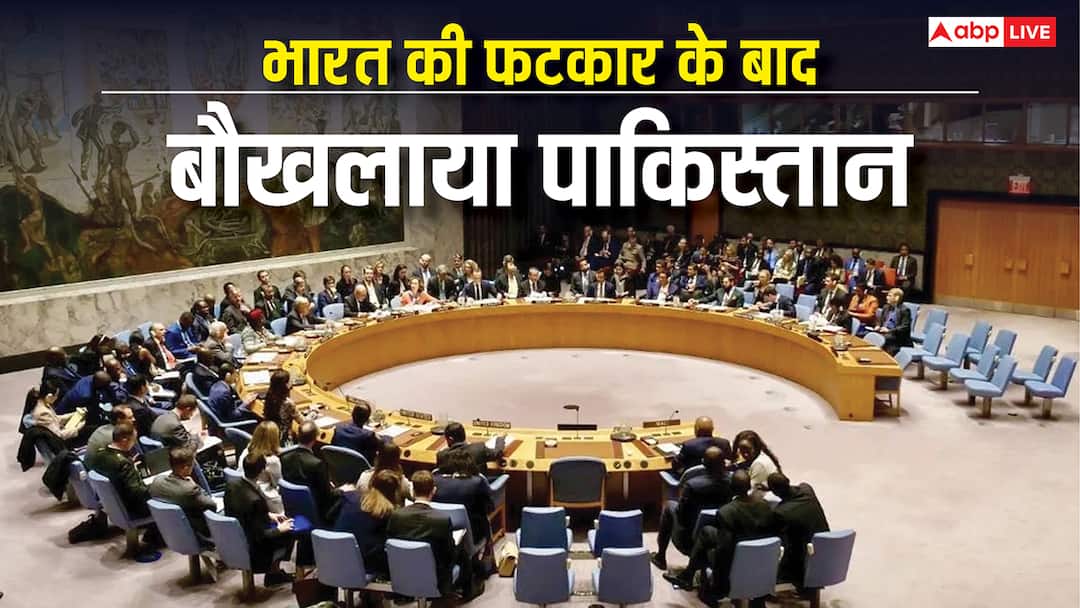
Pakistan has once again raised the issue of Jammu and Kashmir in the United Nations Security Council (UNSC) and made baseless allegations against India. This statement has come at a time when a day earlier the representative of India had strongly reprimanded Pakistan on the issue of terrorism. In response to this, Pakistan repeated its old tune regarding Kashmir from the UNSC platform.
Called Kashmir a ‘disputed area’
During the open debate organized at UNSC on the topic ‘Leadership for Peace’, Counselor and Political Coordinator in Pakistan Mission, Gul Qaiser Sarwani said that Jammu and Kashmir is an internationally recognized disputed territory. He claimed that this stance is not only of Pakistan but also of the United Nations.
‘Kashmir was not a part of India and will never be’
Sarwani said in his statement that Kashmir has never been a part of India and will never be. He also alleged that India itself had raised the issue in the United Nations and had promised the people of Kashmir to decide their future through a referendum, which did not materialize even after decades.
India accused of militarization and human rights violations
The Pakistani envoy said that India is maintaining heavy military deployment in Jammu and Kashmir, suppressing fundamental rights and suppressing the voices of dissent. He also alleged that India was taking steps to change the demography of the region, which is a violation of international laws.
Counterattack on India on the issue of terrorism
Responding to India’s allegations regarding terrorism, Sarwani said that India is trying to divert attention by making baseless allegations. He claimed that India itself has been involved in cross-border terrorism, alleged government violence and targeted killings abroad.
India claims to support terrorist organizations
Pakistan’s envoy alleged that India has supported Tehreek-e-Taliban Pakistan (TTP), Baloch Liberation Army (BLA) and other groups which have carried out attacks in Pakistan. He said that the actions taken by India against Pakistan are a violation of international law and the United Nations Charter.
Objection also expressed on Indus Water Treaty
Sarwani criticized India’s stand on the Indus Water Treaty. He said that there is no provision for unilateral suspension or change in this treaty and it is wrong to make water a political weapon. Citing the decision of the Court of Arbitration in 2025, he talked about maintaining the validity of the treaty. At the end of his statement, the Pakistani envoy also raised questions on the status of democracy in India. He alleged a decline in civil liberties, repression of dissent and alleged atrocities against minorities.