
 By Admin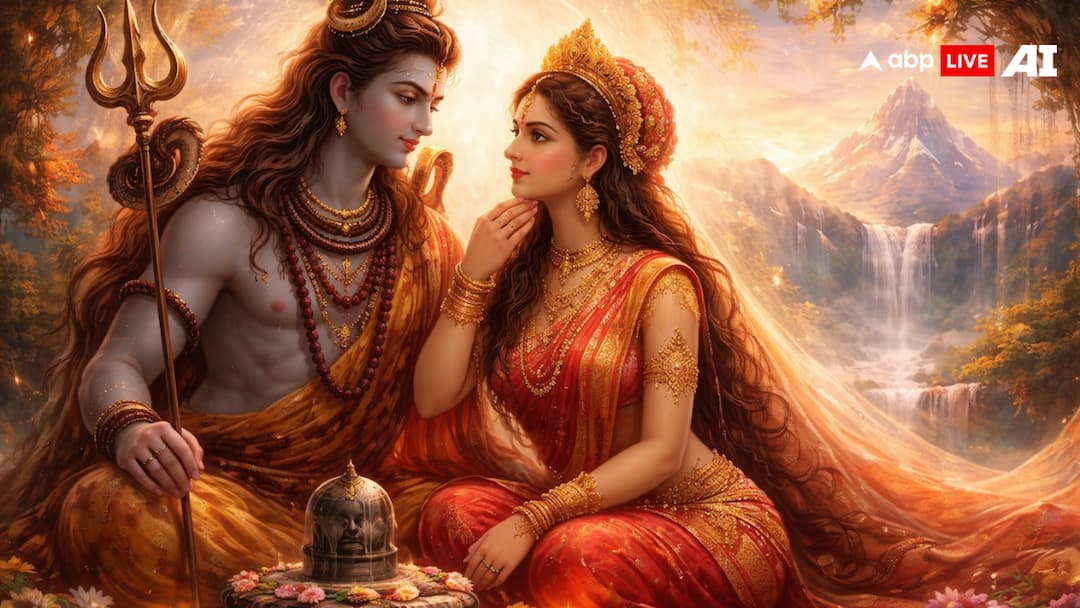
Tapasa hi shuddhyanti deha na samsayah bhaktya tu labhyate devah shankarah shashwatah.
Meaning- By penance both body and mind are purified, by devotion you attain eternal Shankar.
On the auspicious occasion of Mahashivratri, temples shine with lamps and bells ring at night. Devotees chant “Om Namah Shivay” with folded hands. Many people call it the wedding night of Shiva and Parvati, but there is a very powerful story hidden behind this grand celebration. This is not just an ordinary marriage, but a divine day of union of Shiva and Shakti.
Shiva on the path of destitute after losing Sati
The great ascetic Shiva had become disillusioned after losing Sati, the lord of the world. The grief of Sati Mata’s death had made him introvert. Due to which he became engrossed in deep meditation and became detached from the society and then Mother Parvati came.
Mother Parvati not as a princess in search of love, but as a soul determined to restore cosmic balance. A princess who chose penance over luxury.
Maha Shivratri 2026: Why is Mahashivratri so powerful? Know the complete secret of worship method, auspicious yoga and Shiva’s grace from Astrologer?
Parvati, born in a royal environment, had her heart set on Shiva.
The trials that come in life awaken inner strength and help in clarifying true faith. Parvati was born in the Himalayas to King Himavan and Queen Maina.
Despite being surrounded by royal surroundings, his mind was attracted towards the ash covered yogi who lived beyond state and jewellery.
Performed hard penance to attain Shiva
According to Shiv Purana, Mother Parvati meditated in the icy winds to attain Lord Shiva. He limited his food to mere leaves and eventually abandoned them too. She did not expect any change for herself from Shiva, but was raising herself to the level of his consciousness.
The first evidence in this story was his. He proved that divine love can be earned by staying disciplined.
A god who tested devotion by changing disguise. When Parvati’s penance shook the heavens, Shiva decided to see whether her resolve was merely determined or impulsive.
Shiva disguised himself as a sage and tested Parvati.
According to the poetic description of Kumarasambhavam, he appeared before him in the guise of a wandering sage. He described the shortcomings of Shiva. He described Shiva as homeless, covered in ashes and surrounded by spirits. He asked the princess, why are you desiring such a groom? Parvati defended Shiva with a calm heart without any hesitation.
He described to the sage the cosmic form of Shiva, his renunciation and his supreme consciousness.
Sati explained the nature of Shiva
He did not love the image of Shiva, but appreciated his truth. At that time Parvati proved that her devotion was not just an imagination but was rooted in knowledge. A sorrow that needed to be overcome before love could return.
Shiva’s solitude after Sati’s death was not a sign of weakness but of deep emotion, but he had to rise above his grief before he could accept Parvati.
Marriage was not possible while immersed in grief. This means this exam was internal. Shiva had to come out of solitude and join the world. When he accepted Parvati it symbolizes healing. His son Kartikeya later restored cosmic order by defeating the demon Tarakasura. This marriage was part of a broader divine plan.
From the ash covered yogi to the householder, Shiva is a great yogi. They meditate from the cremation grounds to the high Himalayas. They give up jewellery. Beyond traditions, Parvati is considered a symbol of life, fertility, movement and warmth.
Journey from separation to family life
According to Skanda Purana, Shiva ultimately had to adopt household life. It is described in Skanda Purana that how Parvati’s family got scared after seeing demons and ghosts at her wedding. The ferocity of ascetic life collided with the sophistication of royal tradition.
Shiva proved that transcendence and responsibility can exist together. The union of consciousness and energy is philosophically associated with Shiva without Shakti. Without Shakti even Shiva cannot appear. Mahashivratri is not only associated with their marriage, but also symbolizes the defeat of the ego, the infinite pillar of light described in the Linga Purana.
Their marriage teaches people that divine union is not about desire, but about evolution. It’s about knowing the merit. On Mahashivratri, when the lights of lamps flicker in the temples and mantras related to Shiva echo, then the deep truth of this story is understood.
Prepare yourself before wishing for a union. Be transformed before you receive the blessing.
Disclaimer: The information provided here is based only on assumptions and information. It is important to mention here that ABPLive.com Does not constitute any endorsement or verification of information. Before implementing any information or belief, consult the concerned expert.