
 By Admin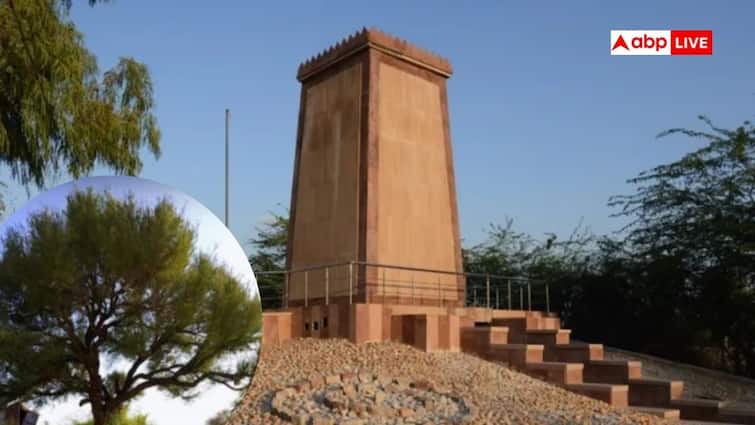

Historians Ramchandra Guha and Madhav Gadgil have mentioned this incident in their book The Fissured Land: An Ecological History of India. In the 18th century, Maharaja Abhay Singh of Jodhpur started construction of his palace.

A large amount of wood was needed for the palace and lime furnaces. The responsibility of this work was given to his minister Giridhar Bhandari, who ordered the soldiers to cut trees. When a group of soldiers reached Bishnoi village on the banks of the Luni river, about 25 km from Jodhpur, there was a lot of trees of Khejri.

As soon as the preparations for cutting trees started under the order, Amrita Devi, a woman from the village and three of her daughters, came forward. He protested by clinging to them to save the trees. The commander ordered the ax to run instead of explaining.

During this, Amrita Devi and her daughters were martyred. He had said in the last moments, you can cut your head, but no trees. The sacrifice of Amrita Devi shook the entire Bishnoi society.

Gradually, the women, children and men of the village also clung to the Khejri trees. The soldiers then mercilessly beheaded one after the other. A total of 363 people were martyred in this incident. History knows it by the name of Khejarli massacre.

When this incident reached Maharaja Abhay Singh, he became distracted. He immediately issued a copper and declared that area preserved. It was ordered that there will be a ban on cutting or hunting trees in the villages of Bishnoi society.

This decision further strengthened the faith of the Bishnoi community and the tradition of their environmental protection. The tree that was sacrificed so much to protect, is considered to be the basis of life in the Khejri tree Thar Desert.
Published at: 11 Sep 2025 06:58 AM (IST)
