
 By Admin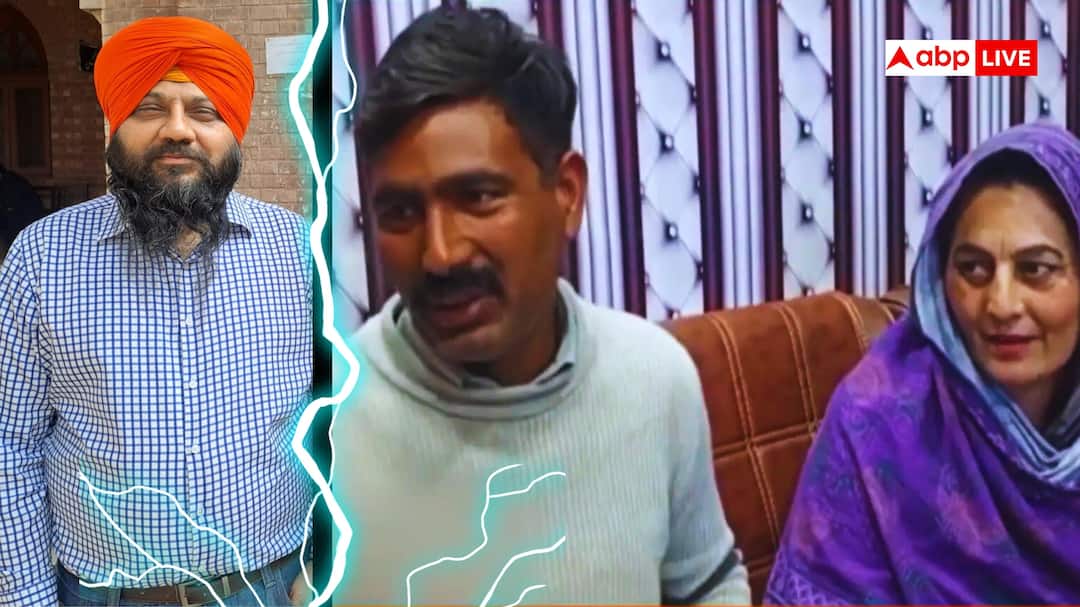
Sarabjit Kaur’s story sounds like the script of a Bollywood film – love across the border, 8 years of friendship on social media and then a sudden marriage in Pakistan, but there is a twist in it – allegations of forced conversion, rape and legal complications. Kaur’s Indian husband Karnal Singh has filed a new petition in the Lahore High Court demanding annulment of the marriage. This matter is not only a war between two families, but is also raising questions on the Sharia laws of Pakistan. After all, how can a married non-Muslim woman marry a Muslim man? Why are such cases so rare?
Sarabjit had reached Pakistan with a group of pilgrims
Sarabjit Kaur, a 52-year-old Indian Sikh woman, had gone to Pakistan along with about 2,000 Sikh pilgrims to celebrate Guru Nanak Dev Prakash Parv in November 2025. On 13 November, all the passengers returned to India, but Kaur went missing. A few days later, news came that she had married Pakistani citizen Nasir Hussain, accepted Islam and changed her name to Noor Fatima. Whereas Kaur was already married.
Both of them met on social media 8 years ago. Kaur’s family claims that all this happened by force, while the Pakistani side is calling it a story of love.
Sarabjit’s first husband reached Lahore High Court
Kaur’s Indian husband Karnal Singh was shocked by this incident and approached the Lahore High Court. His petition claims that Kaur’s marriage is valid under Indian law and without ending it, a new marriage cannot take place in Pakistan.
Singh alleged that Kaur’s conversion was forced and Nasir Hussain knew that she was already married. The petition has also demanded that rape charges be leveled. But the most interesting thing is that Singh has based it on the principles of the Federal Shariat Court of Pakistan.
What is the law of marrying a non-Muslim married woman in Pakistan?
Under Sharia laws in Pakistan, a married non-Muslim woman who wishes to convert to Islam and marry a Muslim man must go through a strict process. The Federal Shariat Court has made it clear in several decisions that the woman will first have to obtain judicial divorce as per the laws of her country.
Then, she must invite her non-Muslim husband to convert to Islam in the presence of two witnesses. If the husband refuses, it is necessary to observe the Iddat (waiting period) of 90 days. Only after this the first marriage is considered over and the new marriage becomes valid. Singh’s petition rests on the fact that Kaur did not take any of these steps.
Strict law on interfaith marriages in Pakistan
Experts say that such cases are rare in Pakistan, but when they happen, they create an uproar at the international level. There are complexities regarding interfaith marriages in Pakistani law. Under the Muslim Family Law Ordinance 1961 and Shariat Act 1980, a Muslim man can marry a non-Muslim woman, but if the woman is already married and is converting, the above mentioned process is mandatory.
If this does not happen, the marriage is considered illegal and the people involved may face charges of bigamy or rape. In the past years, the Supreme Court of Pakistan has shown strictness on forced marriages of minority girls.
For example, in 2023, the court asked the government for a report on such matters and directed to make new laws. But implementation is lacking. Sometimes courts rely on medical age test or conversion certificate, while families show documents like birth certificate.
What is India’s reaction on this matter?
This case has also affected India-Pakistan relations. The Indian Foreign Ministry has expressed concern over Kaur’s safety, while Pakistan says it is a personal matter. Singh’s petition is set for hearing in the court and his lawyer Ali Changeji Sandhu has said that this is a direct violation of the principles of Sharia.
If the court approves the petition, it could set an example for interfaith marriages in Pakistan. But experts warn that social pressure and threats are common in such cases, making it difficult to get justice.