
 By Admin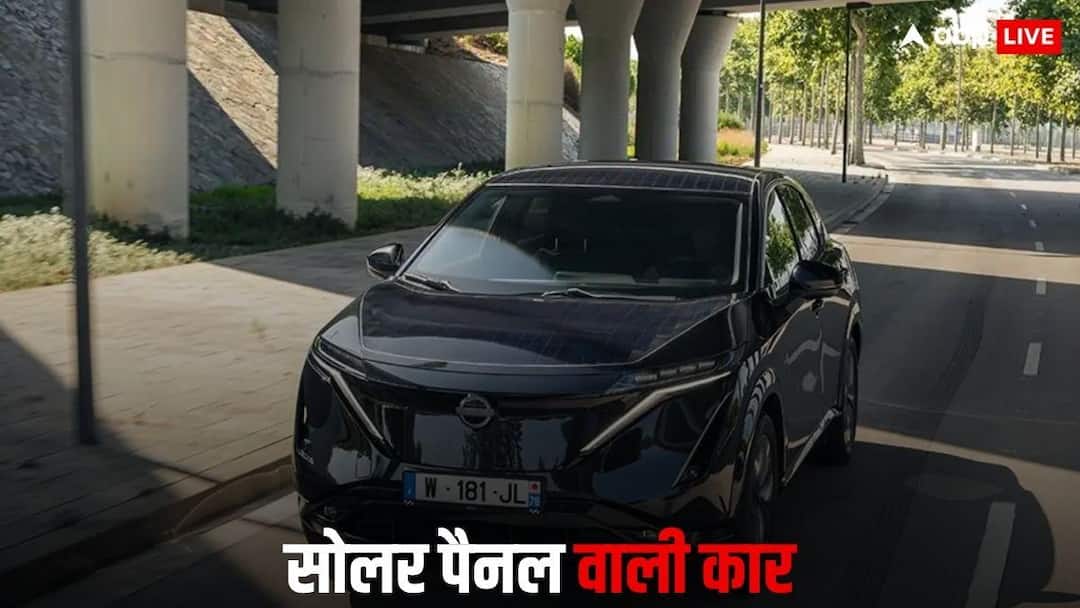
The automobile industry around the world is now working on such technologies, which will make cars not only advanced but also environment-friendly and sustainable. In this direction, Japanese company Nissan has introduced a special concept of its all-electric SUV Ariya. This car can charge its battery with sunlight and is capable of providing an additional range of about 22 kilometers. This technology is being considered a big step for future electric cars.
The battery will keep charging while the vehicle is moving.
- In Nissan Ariya Solar Concept, solar panels have been installed in about 41 square feet area on the roof, bonnet and rear part of the car. These panels convert sunlight into electricity and directly charge the battery. The special thing is that these solar panels are almost not visible from outside, which means there is no impact on the design and look of the car. This technology has been developed by Nissan in collaboration with Netherlands company IM Efficiency. Solar cells have been fitted into the body of the car in such a way that both aerodynamics and design remain intact. This is the reason why this concept car looks almost similar to the production model Ariya.
Glimpse of future EV technology
- This experiment of Nissan is special because the company wanted to test what effect the installation of hidden solar panels has on the look and performance of the car. This technology can reduce range anxiety in the future, as the battery will continue to charge even when the car is parked or moving.
Nissan Ariya: Features and Range
- Nissan Ariya is the company’s most premium and advanced electric crossover SUV. It has a battery ranging from 63 kWh to 87 kWh, which is capable of giving a range of about 600 kilometers on a single charge. It has advanced features like Nissan’s special e-4ORCE all-wheel drive technology, coupe-style design, luxury interior, two 12.3-inch digital screens, level-2 ADAS and 360-degree camera.
What is the possibility of launch in India?
- Nissan Ariya has already been spotted testing in India. If it is launched in India in future, its price could be between Rs 60 lakh to Rs 80 lakh. If technology like solar panels reaches the production model, it can prove to be a game-changer for the Indian EV market as well.
Also read:-
From Tata Altroz to Kia Sonet Diesel, these are the cheapest diesel cars in the country, priced below Rs 10 lakh