
 By Admin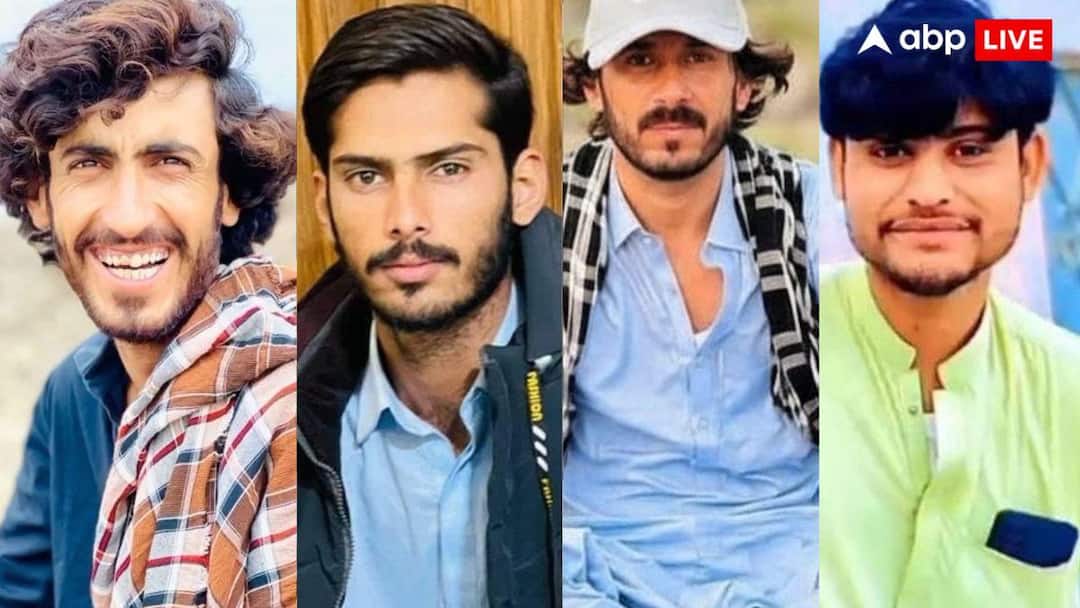
The murder of 4 Baloch students missing in the last 36 hours has once again raised questions on the situation in Balochistan. The families allege that all these students were first forcibly disappeared and later killed by security forces and armed gangs of Pakistani Intelligence Agency (ISI). Local human rights organization Baloch Yakjehti Committee (BYC) says that these incidents are not isolated, but part of a systematic pattern.
Junaid Ahmed, a 22-year-old graduation student, resident of Surab, was first forcibly abducted and then detained without warrant from a hospital in Quetta by Eagle Force and Counter Terrorism Department (CTD) personnel on January 23, 2026. Yesterday (15 February) his body was found after several weeks, which had bullet marks on it.
Picked up from home, then shot
Similarly, Jangiyan Baloch, a matric student from Panjgur, was picked up on 26 May 2025. The family alleges that Frontier Corps (FC) and an ISI death squad were involved. After this, on 15 February 2026, his body was found in Shaptan area. Another 17-year-old student, Muhnas Baloch, was picked up by local security agency officials from his home in Tump on February 14, taken a short distance ahead and shot dead. Another student, Nawab Abdullah, was picked up from home by the Frontier Corps in May 2025. After 8 months, on 14 February, his body was thrown outside the house.
1713 Baloch youth forcibly disappeared
In the last 3 years, 1713 Baloch youth have been forcibly disappeared from Balochistan province of Pakistan. According to the data of Human Rights Council of Balochistan (HRCB), last year, cases of forced disappearance of more than 390 youth were reported in Balochistan and bodies of more than 80 missing people were recovered. Although the cases of forced disappearance of youth in Balochistan had started in the year 2000 after the beginning of armed insurgency in Balochistan, where the Pakistani Army and ISI used to detain the youth illegally without warrant and either kill them or make them join the groups formed to fight against the Baloch insurgent group, but from the year 2022, these cases There has been a huge increase.
Balochistan is rich in natural resources
Balochistan is the most progressive region of Pakistan in terms of natural resources, where the treasure of gold, silver, uranium, rare earth minerals and precious gems is scattered. Despite having so much natural wealth, today Balochistan is in the grip of civil war and its natural wealth is being taken advantage of by the leaders in power in Pakistan and Pakistan’s foreign partners. Reko Dik in Chagai district of Balochistan alone has reserves of 25.6 billion pounds of copper and 414 metric tons of gold. There is also the Sendak Project nearby, which is being run by the Chinese company MCC, but despite being a hub of natural wealth, Balochistan gets only 2% royalty of the total price for the development work.
Balochistan’s Sui gas field provides natural gas for cooking to the entire Pakistan, while according to the data of international organizations, even today more than 95 percent of the population’s homes do not have gas connections. This is the reason why civil war is so prevalent in Balochistan today that this year itself, more than 50 Baloch fighters have died in the conflict between Baloch fighters and the Pakistani Army and more than 200 Pakistani soldiers have been killed in the attacks of Baloch fighters. This is the reason that today, more than hospitals and big schools, military posts and broken roads have become the identity of Balochistan.
History of insurgency in Balochistan
The history of insurgency and civil war in Balochistan is very old and currently the fifth phase of insurgency is going on in Balochistan, which started in the year 2000. The first armed rebellion started in the year 1947 itself after the inclusion of Balochistan in Pakistan. The second rebellion took place when the autonomy of Kalat area of Balochistan was snatched. The third year was in 1962 when an army cantonment was built in Balochistan. The fourth rebellion lasted from 1973 to 1977, when Pakistan’s then dictator Zulfikar Ali Bhutto dismissed the National Awami Party government of Balochistan and the fifth rebellion started in the year 2000, when Pervez Musharraf first started the work of Gwadar Port without the consent of the Baloch community and then it took the form of armed rebellion in 2006 after the assassination of Nawab Bugti. After which organizations like Baloch Liberation Army, Baloch Liberation Front and Baloch Republican Army were formed. Apart from Pakistan, America has also declared them a terrorist organization.
When the construction of Gwadar Port started, the Baloch people and leaders had started protesting with the fear that due to its construction, there would be a crisis in the income of fishermen and today after 25 years, their apprehensions are being proved right, because because of Gwadar Port, today small fishermen cannot catch fish in 60 to 70 percent of the areas where they used to catch fish 25 years ago. Gwadar Port today is part of the China Pakistan Economic Corridor and 20 to 25 kilometers of it is a restricted zone. In such a situation, this port is just a political and strategic pawn for Baloch Janta.
read this also
Weather Forecast: U-turn of weather as soon as winter ends, rain in 8 states, warning from Delhi-UP to Punjab-Haryana