
 By Admin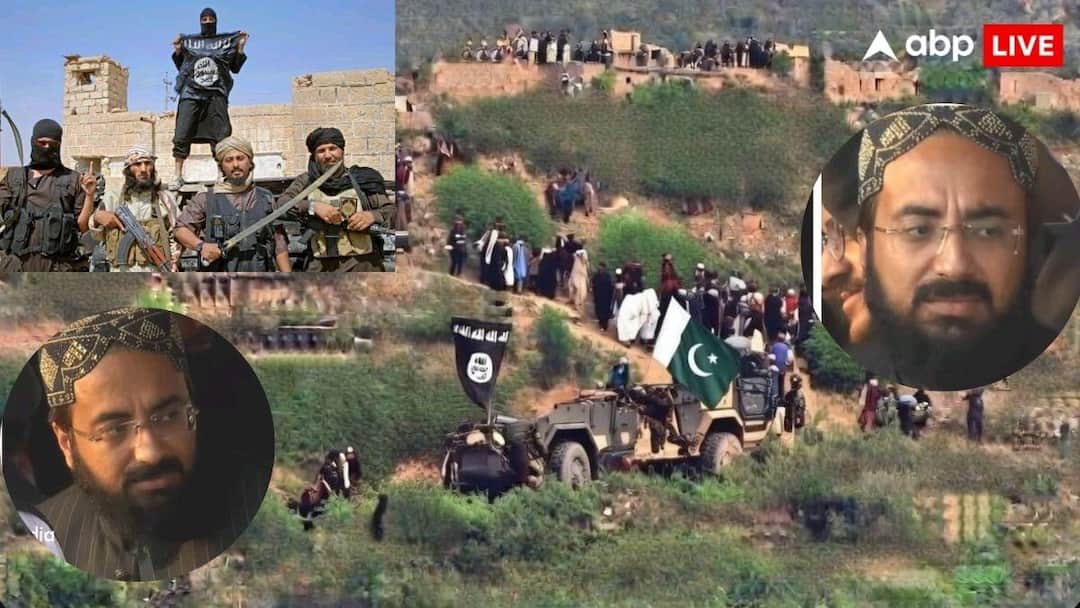
Terrorists have once again started conspiring to carry out a major attack in Jammu and Kashmir. Terrorist organization Lashkar-e-Taiba, on the orders of Pakistan’s intelligence agency ISI, has planned to carry out terrorist attacks in India in the coming days in collaboration with Islamic State Khorasan (ISKP).
For this, an army of 12 fidayeen terrorists has been formed in Jammu and Kashmir, which have been divided into three groups whose command is in the hands of terrorists Abu Huraira, Mohammad Omar alias Rabbit and Mohammad Rizwan alias Abu Dujana. This hybrid module of Lashkar-Islamic State is being handled by the top commander of Lashkar-e-Taiba, Huzaifa Bakkarwal.
Joint headquarters of Lashkar-ISKP built in Tirah Valley
Lashkar-e-Taiba and Islamic State Khorasan have established a joint headquarters in the mountainous area of Khyber district of Khyber Pakhtunkhwa province near the Pakistan-Afghanistan border. The command of this headquarters has been given to terrorist Hafiz Zubair Mujahid, who before becoming the commander of Islamic State, worked as the representative of Lashkar-e-Taiba between Lashkar-e-Taiba and the Intelligence Unit (Military Intelligence) of the Pakistani Army.
The entire work of infiltration of terrorists was carried out with the help of Shamsher Nai, Rafiq Nai and Qasim Lala. However, in the year 2019, Lashkar sent Hafiz Zubair Mujahid as the commander in Islamic State Khorasan (ISKP) and he created ISKP base in Balochistan and carried out many attacks in Afghanistan.
Preparations to infiltrate terrorists into India
Now the command of the joint headquarters of Lashkar-e-Taiba and Islamic State Khorasan has also been given to this Hafiz Zubair Mujahid. Its work is to infiltrate terrorists having Afghan citizenship into Jammu and Kashmir of India so that Afghan terrorists can also be recruited into the already existing 12-member module of Islamic State-Lashkar-e-Taiba.
While at present the three commanders of this module, Abu Huraira, Mohammad Omar alias Rabin and Mohammad Rizwan alias Abu Dujana, all three are Pakistanis and are commanding a group of 4-4 terrorists, then under the new strategy, by expanding this module, ISI has set a target of keeping 15-20 terrorists in each group in the next 6 months and for this, to add 45-60 terrorists from Afghanistan, ISI has set up ISKP in Tirah Valley of Khyber Pakhtunkhwa. And the joint headquarters of Lashkar has also been setup.
Pakistan planning to attack India
According to sources, under the new system, where 45-60 Afghan terrorists are to be prepared to attack in India and linked to the hybrid module of ISKP-Lashkar, then ISI will use the remaining members against TTP in Khyber Pakhtunkhwa and will get ISKP to attack the bases of Tehreek-e-Taliban Pakistan (TTP) like ISI in Balochistan with the help of ISKP, Baloch Liberation Army (BLA) and BLF. (Baloch Liberation Front). That means, from the joint headquarters of ISKP-Lashkar established in Tirah Valley, ISI will kill two birds with one stone.
According to sources, this joint module is the brainchild of Lieutenant General Amir Ehsan Nawaz, chief of X Corps of Pakistan Army and Sector Commander in ISI’s PoK, Brigadier Faiq Ayub. Eight months after Operation Sindoor, not only have these two prepared it along with their other officers, but have also made it operational.
Order will be given from Rawalpindi
According to sources, the work of infiltrating the Afghan terrorists of this joint brigade of Lashkar-e-Taiba and Islamic State Khorasan (ISKP) into Indian Jammu and Kashmir will be done only by Rafiq Nai and Shamsher Nai, who have been working to infiltrate the terrorists of Jaish-e-Mohammed and Lashkar-e-Taiba into India for the last two decades. Also, the top commander of Lashkar-e-Taiba, Huzaifa Bakkarwal, will sit in Rawalpindi along with the group of terrorists of this hybrid module and talk on satellite phone and give information about the prepared operation.
Many Afghans killed in Pakistani airstrike
Pakistani Army has killed more than 60 civilians by carrying out air strikes in the hilly areas of Khyber district almost every month for the last one year. This also includes the incident of 22 September when in a single day 30 civilians were killed by the Pakistani Army in an air strike, which included 9 children. Apart from this, the Pakistani Army has also claimed to have killed more than 35 terrorists in Khyber district alone and has also destroyed more than 6 Markaz in the airstrike, which the Pakistani Army calls the base of Tehreek-e-Taliban.
In such a situation, two big questions are now being raised before the global community. First, how can we trust Pakistan, which has killed more than 60 innocent people in the name of running an anti-terror operation in the hilly areas of Khyber district, and is setting up a joint headquarters of Islamic State and Lashkar-e-Taiba at the same place? Second, for how long will Pakistan continue its proxy war on terror with India through new strategies?