
 By Admin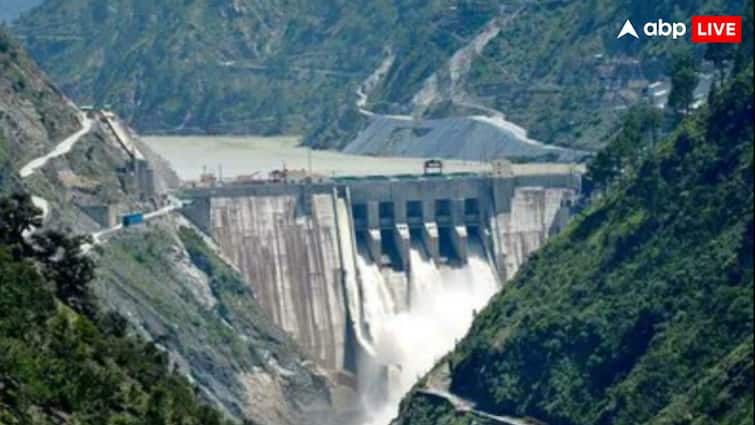
In a major decision following the suspension of the Indus Water Treaty with Pakistan, the Union Ministry of Environment, Forest and Climate Change has given environmental clearance to the long-pending Sawalkot Hydropower Project on the Chenab River in Jammu and Kashmir. An official said, ‘The 40th meeting of the Expert Environment Assessment Committee (EAC) for river valley and hydropower projects was held on September 26 and the final approval was given on Thursday (October 09, 2025).’
Officials said that the Centre’s Environment Committee held extensive discussions before giving the approval. “The EAC has recommended environmental clearance without the need for new cumulative impact or carrying capacity studies, assessments that are typically mandated to evaluate the combined impacts of multiple projects within a river basin,” an official said.
Project designed as 1856 MW Hydropower Station
This relaxation is expected to speed up the implementation of the project. The approval comes at a time when India has suspended the Indus Water Treaty (IWT) following the Pahalgam terrorist attack in April 2025 and has renewed focus on harnessing the hydropower potential of Chenab.
According to official reports, the project, operated by NHPC, is designed as an 1856 MW hydropower station consisting of a 192.5 meter high concrete gravity dam and a reservoir spread over an area of more than 1100 hectares. After completion, Sawalkot will be one of the largest hydropower projects located on the western rivers of the Indus system.
Approval processes may be affected
In June, the Ministry of Home Affairs (MHA) had described the project as being of ‘strategic importance’ and had urged the Environment Ministry to grant it expeditious approval. The power ministry had also warned that the new basin-wide studies could have an impact on the approval processes already initiated.
The Forest Advisory Committee (FAC) had already given the relaxation in July, saying that the guidelines for cumulative studies were issued in 2013, while the Sawalkot project was first started in 1984 and the rules cannot be applied retrospectively.
So many trees will be cut to build the dam
Under this project, 847.17 hectares of forest land in Udhampur, Ramban, Reasi and Mahour districts will be used and more than 2.22 lakh trees will have to be cut, of which more than 1.26 lakh will be in Ramban alone. This dam will be built in two phases, which will generate 1406 MW and 450 MW electricity.
Environmentalists in Jammu and Kashmir have expressed concern over the ecological impact of this project. In a report submitted to the State Pollution Control Board in 2016, they argued that classifying Sawalkot as a run-of-the-mill project is misleading, as its huge reservoir would alter the natural river flow and submerge vast tracts of land.
These livelihoods will be affected by the construction of the dam.
He also said that there are already many big dams on Chenab river including Dulhasti, Baglihar and Salal. NHPC said it has updated the baseline environmental data to meet current needs and collected new primary data during the monsoon 2022, winter 2023 and pre-monsoon 2023 seasons.
The company said the updated data addresses concerns that the original 2016 environmental studies were out of date. Experts have warned that large dams like Sawalkot could affect downstream river flows, fish migration and sediment transport, destabilizing agricultural lands along the river channel and flood plains.
Project delayed due to centre-state disputes
Large reservoirs in the steep valleys of the Himalayas can also increase slope instability and landslide risk. As per the Environment Ministry’s own guidelines, projects that do not get in-principle forest clearance within 18 months will have to update their baseline studies.
Sawalkot has been facing delays for decades due to Centre-state disputes and objections under the Indus Water Treaty. Pakistan had earlier sought information about the project, but India refused, saying that as per the treaty, information was required six months before the start of construction.
Promise of electricity and employment to the people
Now with the treaty suspended, the government has included Sawalkot among its strategic core priorities. Tenders have already been issued for several components, making the project a test case for striking a balance between national security and environmental protection.
For communities living along the Chenab River, the project promises electricity and jobs, but also threatens the loss of forests, land and riverine habitats that have shaped local life for generations.
Also read:- Did Pakistani Army conduct airstrike in Kabul? Claims to have killed 30 BLA fighters