
 By Admin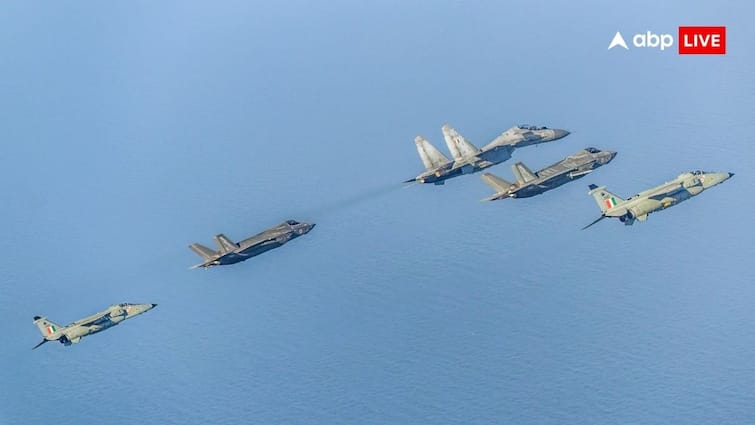
The Indian Air Force along with the Navy and the Army along the western border with Pakistan near the creek and desert border on 30 October.12 days from now ,trident maneuver, Are going to do. Just before this, the Air Force and DRDO have done wonders on the Konkant coast in the Arabian Sea. Advanced manned-unmanned teaming by creating a complete war environmentMUM-T, Has demonstrated ability.
According to a report in ‘Indian Defense News’, the Air Force and DRDO conducted a successful test related to Advanced Manned-Unmanned in the Arabian Sea. In this exercise, the indigenous fighter jet Tejas destroyed the target very easily. During the test, Tejas with one pilot was also networked with two non-fighter UAVs. In this, the same command and control system also worked well.
How did manned-unmanned teaming happen?
Manned-unmanned teaming was the biggest success of the test. During this exercise, Tejas and UAV kept changing their positions among themselves very smoothly. Good coordination was also seen between them. On this basis, commands were given through an autonomous control system, on the basis of which the strike was executed by the fighter aircraft.
Warning to enemies from India
Indian forces had performed amazingly during Operation Sindoor. The army had taught Pakistan a good lesson. After the terrorist attack in Pahalgam, India took revenge through Operation Sindoor. During this period more than a hundred terrorists were killed. The army had destroyed nine terrorist hideouts. During this period, Pakistan Army had tried to target Indian cities, which was foiled. After Operation Sindoor, India has started working rapidly on increasing the strength of the Air Force as well as the Navy and the Army.