
 By Admin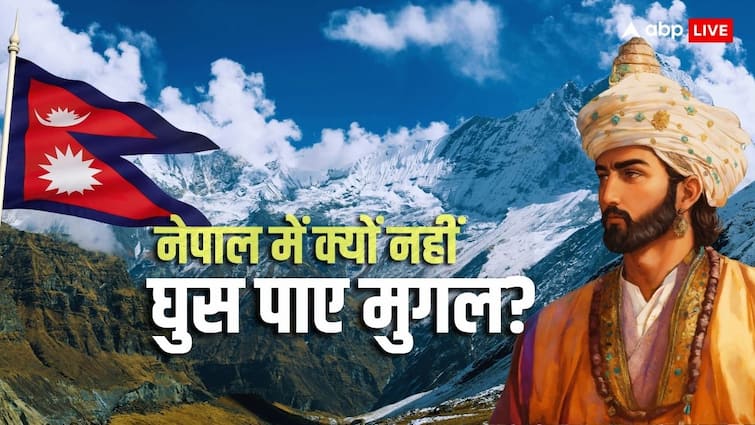
Nepal is currently going through a turbulent phase. Unemployment is increasing, youth are agitating on the streets and the government is facing allegations of corruption. Meanwhile, the demand for the return of the monarchy is also arising. Amidst this political instability, an old question is again in the discussion- why did the Mughals who ruled over a huge country like India ever completely subordinate Nepal?
Mughal empire and Nepal’s question
From 16th to 18th century, the Mughal Empire was the most powerful force of the Indian subcontinent. From Babur to Aurangzeb, the influence of the Mughals was spread to Bengal, Punjab, Deccan and Afghan border. Despite this, Nepal remained out of his possession.
Nepal’s geographical location was the biggest challenge for the Mughals. High mountains, narrow passes, deep valleys and dense forests provided natural security to Nepal. The Mughal, dependent on the heavy artillery and a huge mounted army, weakened in the mountain war.
Economic importance low
The Mughals were eyeing most of the plains and fertile areas. The Doab, Bengal and Gujarat of Ganga-Yamuna were a great source of prosperity and business for them. In comparison, Nepal was an area with limited agricultural production and difficult geography. So it was not an attractive goal for the empire.
At that time, Nepal was divided into many small states-Kathmandu, Bhaktapur and Lalitpur. These states may fight among themselves, but were able to resist together at the time of external attacks. This solidarity became a security shield against the Mughals.
Business relations between Nepal India and Tibet
Nepal was a trade bridge between India and Tibet. Salt, wool, spices and metals used to have a big business from here. It was more beneficial for the Mughals to maintain business relations rather than struggling with Nepal.
Cultural cause
Nepal was a strong center of Hindu and Buddhist traditions. The people there were aware of their cultural identity. The Mughal rule was seen as a cultural threat. This was the reason that Nepal did not accept external subjugation.
Challenge of military strategy
Nepal’s Gorkha warrior was proficient in the mountain guerrilla war. In comparison, the Mughal army was based on the field strategy. They could have to face heavy losses in the mountains. So he did not take the risk of climbing Nepal.
There were many other major challenges in front of the Mughals. Afghan and Iranian threats in the north-west, struggle with the Marathas in the south and the difficulties of Assam and Bengal in the east. In such a situation, a small and difficult terrain like Nepal did not become a goal of their expansion.
What are historical evidence?
- Nepal’s mention in Aine-e-Akbari is limited to trade and cultural relations.
- JN The government has written that Nepal never came under the direct rule of the Mughals.
- Nepali historians also believe that Nepal always preserved its sovereignty.
Also read-
The doctor went to celebrate the color with the nurse in the middle, the doctor returned after 8 minutes … Pakistan again got international insult!