
 By Admin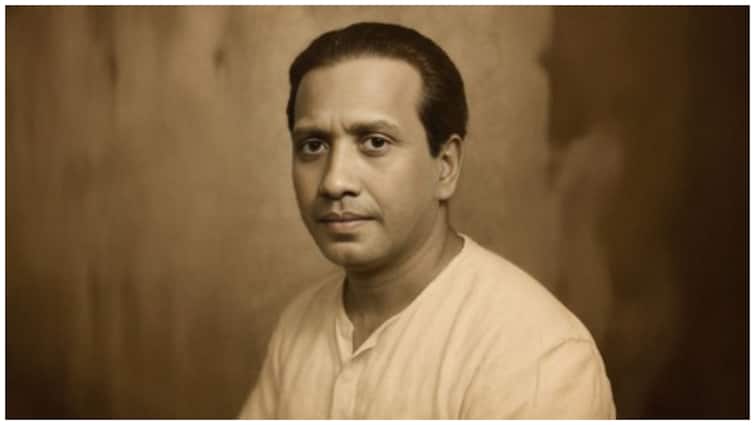
The year of 1985, when Hindi cinema had lost a shining star forever. A musician who gave a new identity to the Indian ballet not only with his music. We are talking about Ramakrishna Shinde. A name that continued to echo in millions of hearts even after being behind the scenes. His story is not just a musician, but of an artist who never let his art wither, despite all the struggles.
Ram Krishna Shinde used to learn music by hiding from family
On the day of ‘Ramnavami’ in 1918, the father’s shadow arose from the head of Ramakrishna, born in an ordinary Maratha family in Malvan, Western Maharashtra and the responsibility of the family came to his maternal uncle and aunt. They all came to live in Nanachouk area of Mumbai, where Ramakrishna’s childhood was spent in the streets of Mumbai.
There was no background of music in the family, yet the world of notes had taken home in this child’s mind. He started singing from Pandit Sitaram Pant Modi and studying sitar from Pandit Madhav Kulkarni. In those days, he often participated in concerts in fairs and exhibitions. In these programs, another emerging talent used to share the stage with him, which later became famous as ‘Swar Kokila’ and she is Lata Mangeshkar.
Leaving the job and dedicated his whole life to music
Seeing the financial condition of the family, young Ramakrishna started a job at Don Mills in Parel, Mumbai. But luck had something else approved. His tunes were pulling him away from the noise of machines, pulling him into the world of notes. In the year 1944, he was married to Nalini. Meanwhile, he came in contact with tabla player Ramakant Parsekar and dance-director Parvati Kumar Kambli.
His inner art forced him to take a decision that he would now live for music. He quit his job and dedicated his entire life to music. It was a big step, which also had risks, but his confidence in his art was strong like a rock.
Ramakrishna Shinde became the unconscious king of ballet music
Ramakrishna Shinde’s career was not limited to Hindi cinema only, but his contribution in the field of Indian ballet was incomparable. He gained fame from the ballet-dance music he prepared for the Indian National Theater (INT). His name became synonymous with ballet music. He performed a music combination of a total of 27 ballet dances during his lifetime, which made him the king of this genre. There was a special magic in his music, which used to thread every spirit of the dancers in the notes.
His magic of his Karnapriya tunes soon reached the film world. He got a chance to give music in the 1947 film ‘Manager’. The film was made under the banner of ‘Tiwari Productions’ and its director was IP Tiwari. His film journey started with this film. The same year he also got an opportunity to give music in another film ‘Bihari’. However, he was not the only musician in this film, Naresh Bhattacharya was also with him.
Reaching the pinnacle of success and said goodbye to the world
Ramakrishna Shinde also gave music in 1966 in Marathi films like Marathi film ‘Toki Sadhu Olakhawa’ and ‘I Ahe Shetat’ in 1970, which he also produced. More important than the success of films was the quality of music for him. His tunes still live in the hearts of music lovers. Even though Ramakrishna Shinde’s name is not associated with big business successes, his art gave many films a special identity. Manager (1947), Bihari, whose victory, gauna, dreadful jungle, police station and Captain India are the list of major films, for which they prepared music.
He died on 14 September 1985. Till then he was at the peak of his creativity even at the age of 67. At that time he was working on two important projects, including Raja Dhale’s ballet ‘Chandalika’ and Ajit Sinha’s ballet ‘Rituchakra’ for Doordarshan.