
 By Admin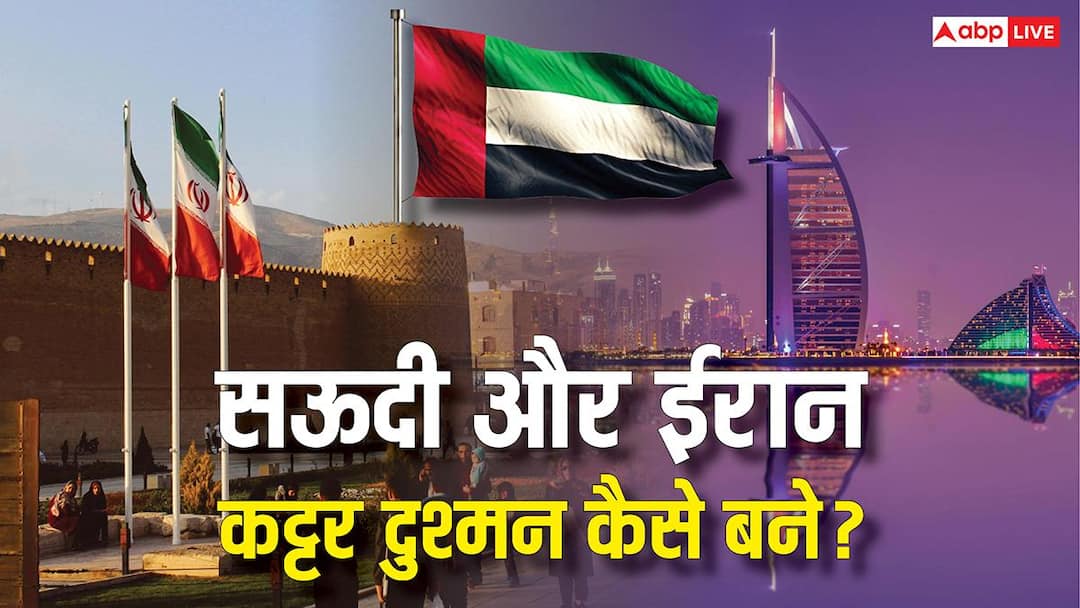
When Israel and America attacked Iran, no one had any idea that this beginning of war would engulf the entire Middle East. As soon as Iran lost its Supreme Leader Ayatollah Ali Khamenei, it started targeting American military bases throughout the Middle East. Iran attacked Gulf countries like Saudi Arabia, UAE, Kuwait, Jordan, Bahrain with missiles, which put the entire Middle East at the door of war.
Among these Iranian attacks on the Middle East, Saudi Arabia is being discussed the most. Actually, Iran and Saudi Arabia may be Muslim countries, but both are staunch enemies of each other. Now everyone’s eyes are on how Saudi Arabia responds to the Iranian attacks on itself. In such a situation, let us know why there is enmity between Iran and Saudi Arabia despite being Muslim countries, what is the history of these two countries?
What has happened in Saudi Arabia so far?
Saudi Arabia is surprised by the sharp reaction of IRGC after the US-led Israeli attack on Iran. As soon as Iran was attacked, it started targeting American military bases in the Middle East, which also included bases in Saudi Arabia. Gradually Iran intensified its attacks and meanwhile news came that Iranian drones targeted the world’s largest oil refinery Ras Tanura in Saudi Arabia. Saudi Arabia foiled this attack, but soon after this the refinery had to be temporarily closed, after which a major oil crisis started looming over the world.
What is the history of Iran and Saudi Arabia?
Saudi Arabia and Iran are considered two big countries of the Middle East. The population of both the countries are followers of Muslim religion, but whenever their names are heard together, the picture of war emerges before the eyes. It is also said that Iran and UAE have a role in maintaining and breaking peace in the Middle East. Both the countries have been struggling for a long time to establish their influence in the Middle East. Despite both being Muslim countries, their enmity has been fueled by religious differences.
Actually, there is a large Shia Muslim population in Iran, whereas Arabia is a country with majority of Sunni people. This division of religion is clearly visible between these two countries. There are many countries where Shia population is present, while in some countries Sunni people live in majority. In such a situation, they support Iran and Saudi Arabia for support and opposition.
Battle for leadership in the Muslim world
The conflict between Saudi Arabia and Iran in the politics of the Middle East is not just a dispute between two countries, but it is a direct clash of leadership, influence and ideology in the Muslim world. On one side is Saudi Arabia, which has a monarchical system, which considers itself the center of Islam. On the other hand, there is Iran, which emerged after the 1979 revolution, which has adopted a policy of increasing its influence in the entire region through the religious governance model.
Where did the real dispute between the two countries begin?
Islamic revolution took place in Iran in 1979. The leader of this revolution was Ayatollah Ruhollah Khomeini. Under his leadership, the power of the Shah ended in Iran and a religious governance system was established. After this, Iran presented itself not just as a country but as an ideological model.
Saudi Arabia already considered itself the natural leader of the Muslim world as the protector of Islam’s holy cities, but the Iranian revolution directly challenged this claim. Iran adopted a strategy of increasing regional influence through the Shia community, while Saudi considers itself the center of Sunni leadership. It was from here that the foundation of ideological and strategic conflict was laid.
Iraq war changed the balance of power
In 2003, America attacked Iraq and removed Saddam Hussein from power. Saddam Hussein was Sunni, whereas Iraq’s population is predominantly Shia. After his removal, a Shia-led government was formed in Baghdad and Iran’s influence increased rapidly there. Now Iraq, which earlier used to act as a balance for Saudi, gradually started moving into Iran’s sphere of influence. This increased Saudi’s strategic concerns and the distrust between the two countries deepened.
Arab revolution and increasing interference of countries
After this, in the year 2011, political turmoil started in Arab countries, which was called Arab Revolution. This instability weakened the governments of many countries. Saudi and Iran used this opportunity to strengthen their respective interests. Iran openly supported President Bashar al-Assad in Syria. On the contrary, Saudi supported the rebel groups. Now the result was that the Syrian war turned into a proxy war between the two countries. Here too, Iran’s strategy was to create its own sphere of influence through Iraq, Syria and Lebanon up to the Mediterranean Sea, but Saudi considers it a threat to itself.
Houthi rebels dispute in Yemen
The rise of Houthi rebels in Yemen became a big challenge for Saudi. Saudi Crown Prince Mohammed bin Salman launched a military campaign against the Houthis. Saudi alleges that Iran provides arms and support to the Houthis. Iran denies these allegations, but regional experts believe that Iran wants to increase influence in Yemen through the Houthi group. Even after many years of fighting, Saudi did not achieve decisive success, due to which its strategic position appeared weak.
Also read: The first well of the oil for which the whole world was ‘burning’, was found on this date itself.
Lebanon and the Hezbollah factor
Shia organization Hezbollah has a strong influence in Lebanon. This organization is powerful both politically and militarily and is considered a close ally of Iran. In 2017, Prime Minister Saad Hariri, who was supported by Saudi Arabia in Lebanon, was suddenly forced to resign. This move was seen as an attempt to curb Hezbollah’s growing political power.
Not only this, there may be enmity between Israel and Saudi Arabia, but both are under threat from Iran. Now the old saying goes that the enemy of the enemy is his friend, that is why Israel also supports Saudi Arabia to stop the influence of Iran.
Also read: If the Strait of Hormuz is closed, which countries’ economic progress will be closed? See full list