
 By Admin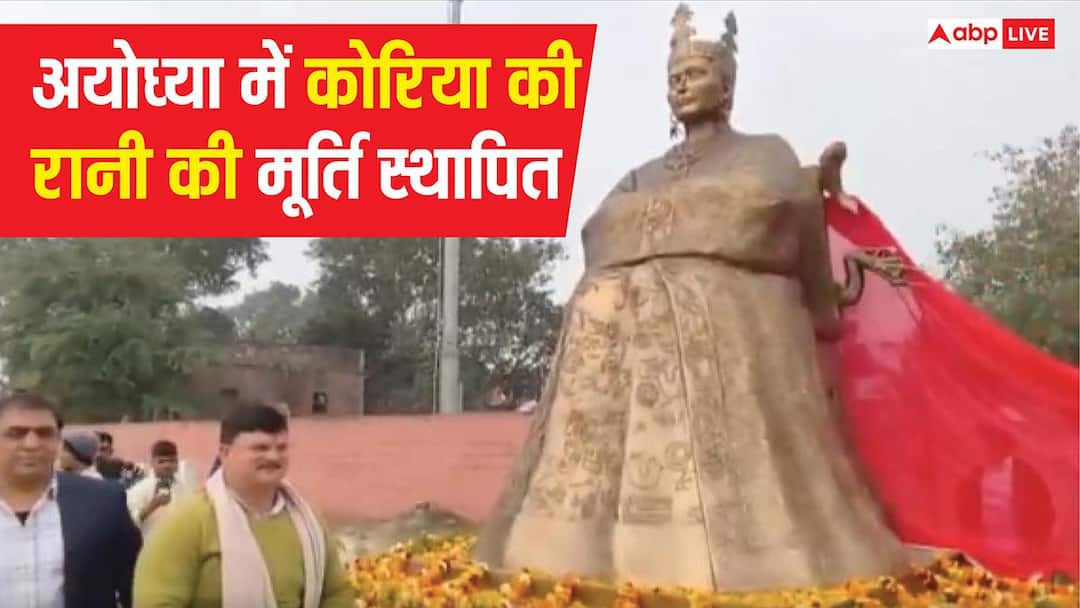
Bronze statue of Korean Queen in Ayodhya: Ayodhya, located in Uttar Pradesh, has added another new chapter to its historical narrative, which extends far beyond the borders of India.
A bronze statue of Korean Queen Hwang-ok has been unveiled in Ayodhya, honoring a mythological legend that links the temple town to Korea’s ancient history and the people who believe they are her descendants.
Indian princess who became Korean queen
For many South Koreans, Ayodhya is not limited to mere mythology; they consider it to be the birthplace of Princess Suriratna. According to historical folklore, she traveled to Korea around 48 AD and married King Kim Suro, founder of the ancient Gaya Empire.
He received the recognition of Queen Heo Hwang-ok and is credited with carrying the invaluable knowledge of Indian culture and Buddhism across the ocean.
This story is found in the Samguk Yusa, a famous Korean anthology of legends and history, which lists his birthplace as Ayuta.
According to a BBC report, it is said in some Chinese language records that the king of Ayodhya dreamed that his daughter should be married to King Suro. For this reason he sent the young princess on a sea voyage.
According to legend, the royal couple lived a long life and ruled the kingdom wisely and became the progenitors of the Karak dynasty, whose members trace their lineage to them even today.
A bronze statue of Korean queen Heo Hwang-ok has been unveiled in city of her birth Ayodhya.
Princess Suriratna traveled by boat around 48 AD to marry King Suro, founder of Korea’s Gaya kingdom.
She is credited with bringing Indian culture and Buddhism, and today millions of… pic.twitter.com/lB8cgqxUqe
— News Arena India (@NewsArenaIndia) December 25, 2025
There is no solid evidence on this fact
Anthropologist Kim Byung-mo once argued that Ayuta could be the actual Ayodhya, although historians have said there is no hard evidence of the princess’s existence.
This statue given in Ayodhya is not the first tribute. A statue dedicated to Queen Heo Hwang-ok was installed in 2001 by a partnership between Uttar Pradesh and the city of Gimhae, Korea.
But later it was rebuilt in the year 2015. Every year, members of the Karak dynasty come here and make this place a reminder of the meeting place and relationship between India and Korea.
Disclaimer: The information provided here is based only on assumptions and information. It is important to mention here that ABPLive.com Does not constitute any endorsement or verification of information. Before implementing any information or belief, consult the concerned expert.