
 By Admin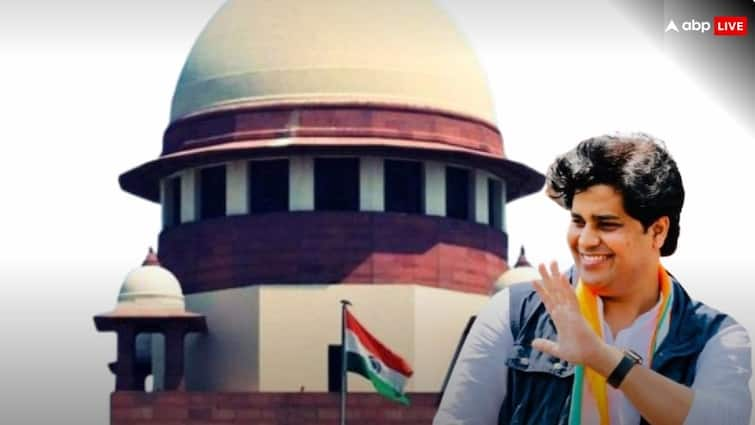
Congress Rajya Sabha MP Imran Pratapgarhhi has got a big relief from the Supreme Court. The court has canceled the case registered against Imran in Jamnagar, Gujarat. The court has admitted that there was no thing to spoil communal harmony in the social media post for which this case was registered.
In this decision, the court has also said many things on the fundamental rights of freedom of expression of citizens and protecting the citizens from the constitution. The court has said that before registering the case in such cases, the police should review the material themselves. The case should not be filed just because someone has given a complaint.
After attending a mass marriage program in Jamnagar, Imran Pratapgarhi posted a post on social media on 2 January. In this post, he put a poem as a background audio. Kishanbhai Nanda, a resident of Jamnagar, lodged an FIR, describing a poem with words like ‘Ai Khoon’s thirsty people …’, as a communal harmony. BNS sections 196 and 197 were added to that FIR. There can be a sentence of up to 5 years in these sections.
Imran approached the Gujarat High Court to revoke this case. He argued that his aim was to promote peace and love, but the High Court Justice Sandeep Bhatt’s bench refused. The High Court said that the investigation is still in the initial stages. Imran Pratapgarhi is an MP. They should follow the legal process while taking responsibility.
Hearing Pratapgarhi’s appeal, on January 21, the Supreme Court had banned any action in the FIR lodged in Jamnagar. Now a bench of Justice Abhay S Oka and Justice Ujjwal Bhuiyan has given a detailed decision on the matter. The judges have said that it is written in the preamble of the Constitution that all citizens have freedom to think. Thoughts through arts like literature, drama, cinema are the means of expression of ideas. This describes the lives of people as meaningful.
The freedom to express its point through different means gives the Constitution under Article 19 (1) (a). In Article 19 (2), some limitations of this right have been given, but their aim is not to suppress the right to expression. Protecting the right to expression is also necessary for the Fundamental Rights (Article 21) to live respectfully, therefore, if there is a violation of freedom of expression, the constitutional courts will have to come forward to protect it.
The court has also explained Section 196 of the Indian Justice Code and Section 173 of the Indian Civil Protection Code. The court has said that if there is a complaint of spreading disharmony in the society through written or oral words, then first people with competent and independent brain should see its facts themselves. It is wrong to register an FIR directly on the complaint given by a common person. The judges have also said important comments, saying that a person does not like anything, even then it is necessary to respect his right to speak.
Also read:-
Family Dispute: ‘To evict the son from home’, the Supreme Court said- the families are ending