
 By Admin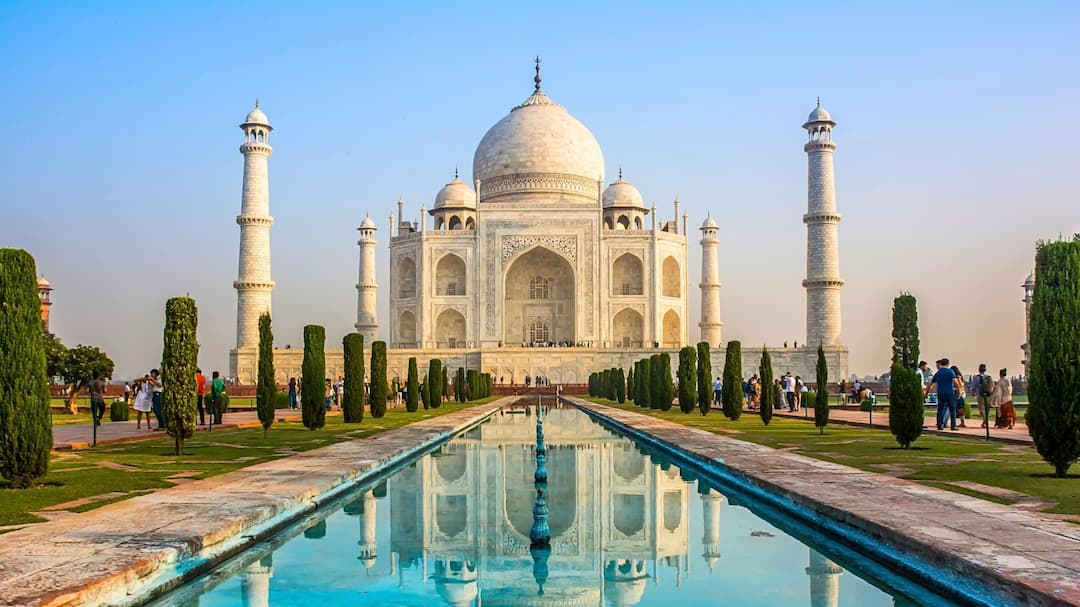
Taj Mahal, such a symbol of love on which poets tried their skills, painters put their art on canvas, filmmakers brought their expertise on screen. Lyricists wrote songs, musicians composed tunes, photographers freed the sculptor’s art from the confines of time and place and took the intricacies of architecture to every corner of the world. Writers strung it in a string of pearls of words and historians recorded it as a treasure of time. New generations of every era learned the art of love from it.
This symbol of love brought us face to face with that form of love, where the last step of love is to sacrifice everything, to destroy oneself. Reminded me of the principle of loyalty, where love is not just a pledge of the body, but is a journey into the soul.
Such is the beauty of the Taj Mahal that everyone from the courtesans to the Qawwals could not stop themselves from praising it. The courtesans mentioned this in their tales and gatherings and kept collecting tribute from their admirers, kind-hearted ones and lovers. In different eras, emperors copied it to show their grandeur and love, but failed.
Four hundred years have passed, but this building still speaks of the passing centuries. During this period, all kinds of rulers came and went – both good and bad. But most rulers saw it as a legacy and a memento of power. There were critics too, but most of them came to the conclusion that it should be judged on the criteria of history and art and praised it highly. The extent is such that even the religious people who oppose every new thing considered it a sign standing between time and destiny. Even the priest of the mosque and the priest of the temple – no one came out against it. Tourists from all over the world were seen running towards the east to see this building. He considered Taj Mahal as a symbol of India’s identity and love.
But what could be a bigger irony than this that this country is so immersed in the market of hatred that now a stage poet is calling it a ‘white graveyard’ and with his statement there is silence everywhere. Even if there were voices of protest, they came from traditional opponents and were very limited. The tradition of words that the stage poets come from has perhaps made their home in that swamp of hatred, where the clean, beautiful and fragrant lotus plant has now withered. Now only the smell comes from there… and it is possible that the stage poet is liking this smell, it is finding it more relaxing.

The custom is that when criticizing someone, one should at least weigh it on the criteria of one’s own tradition. If the Indian literary tradition can be proud of one person in the 20th century, it is Rabindranath Tagore – who wrote in his Shahakar Nazm: “The Taj Mahal is a drop of tear on the cheek of time.”
If there is any flaw in Tagore’s poetry or if it has lost its relevance in the journey of a century, then at least it should be openly acknowledged and announced. Let us tell you that Tagore said meaningless things in his writings. This line of his has become mere garbage of history. Many Urdu critics also acknowledged the greatness of Taj Mahal. He used to say that the Mughals gave three things to India – Urdu, Ghalib and Taj Mahal. Another famous critic of Urdu, Gopichand Narang, while praising Urdu, compared this language to Taj Mahal. He had said, ‘I call Urdu the linguistic Taj Mahal of India.’ Narang praised both Taj Mahal and Urdu together in one line. Tagore, Narang – these are those great personalities whose footsteps are worthy of respect.
Sahir, who is like this regarding Taj Mahal –
An emperor, with the help of wealth,
We have made fun of the love of the poor
When the same Sahir composed a song for the film Taj Mahal, he said – “Jo Vaada Kiya…” When this song decorated with Roshan’s music comes among the people with the magic of Rafi’s soulful, soulful and charming voice and Lata’s velvety and flexible tunes, it becomes popular on everyone’s tongue. This immortal song is also the Marhoon-e-Minnat of this Taj Mahal.
It is true that the Taj Mahal is not beyond criticism. But if there is hatred in criticism, especially religious, and along with it, there is greed and hope of getting something, then it is not difficult to understand how fast the journey of downfall is being made.