
 By Admin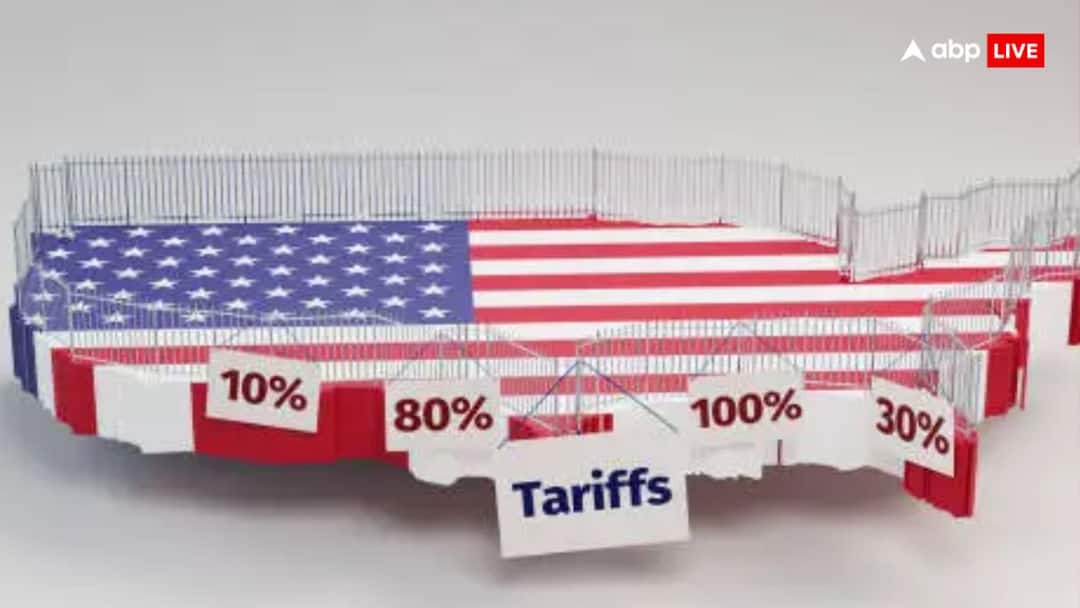
Lawmakers Warn Trump: A new tension has arisen in the trade relations between the two countries after US President Donald Trump imposed high tariffs of up to 50 percent on some Indian products. This step of the American administration has not only affected India’s economy, but opposition to it is also increasing within America. Experts and lawmakers say such a drastic decision on tariffs could have a long-term adverse impact on India-US relations, which have been based on cooperation, security and economic partnership for decades. It is also being said that due to increase in trade barriers, the profits of American companies have decreased and due to increase in import costs, there has been additional burden on consumers.
Indian-American MP Amy Bera raised this issue seriously in the US Congress and criticized many policies of the Trump administration. In particular, he termed the additional fee of $100,000 on H1B visa as excessive and impractical. Amy Bera says that this heavy duty is weakening the ability of American companies to include foreign talent in their industries. Given the important role Indian professionals play in Silicon Valley and the tech industry, such a move harms America’s technological edge. He also said that these additional costs hurt small and medium-sized American companies the most, who already face global competition.
Tariff threatens US-India people-to-people connect
Behera also warned that high tariffs and stringent visa policies are not only having an economic impact, but are also harming the people-to-people connect between the two countries. The biggest strength of India-US relations has been people-to-people cooperation, technical exchange and education-trade relations. If it is disrupted, it will directly weaken the long-term strategic partnership between the two countries. In this context, he referred to Prime Minister Narendra Modi’s recent meetings with Russian President Vladimir Putin and Chinese President Xi Jinping and indicated that tough American policies could tilt India towards other superpowers.
Democrat MP Pramila Jayapal widely criticized the tariff policy during her address to Congress. According to him, the high import duty policy of the Trump administration has definitely affected the Indian economy, but due to this, American businesses and consumers are also suffering equally. Due to high import costs, the production of American companies is becoming expensive, due to which the prices of their products are increasing and competition is decreasing. He warned that this situation could pose a threat to America’s economic stability and the health of the market.
Anti-Indian sentiment is increasing in America
Expressing special concern, Pramila Jaipal said that anti-Indian sentiment is increasing rapidly in America in recent years. He says that the tense trade environment between India and America and the strictness of visa policies is further increasing this sentiment. Whereas the reality is that the contribution of Indian-Americans is extremely important in the fields of American economy, education, technology and innovation. Crores of people of Indian origin play an important role in American development through taxes, employment and investment in America, hence such policies are also against America’s own interests.
Talks regarding trade deal have been going on between India and America for a long time. This agreement has been broken once, but now talks have started again. However, uncertainty over this has increased due to rising tariffs and political rhetoric. On the other hand, India has recently reduced the purchase of crude oil from China, due to which America has imposed an additional 25 percent tariff on India. Due to this, geopolitical complications are also increasing in India-America relations. If the tariff war continues, India may gradually lean more towards countries like Russia and the Middle East for energy and trade, which could weaken America’s strategic position in the Asia-Pacific region.
Read this also: Rupee again in the abyss, due to these three reasons the Indian currency reached record low.