
 By Admin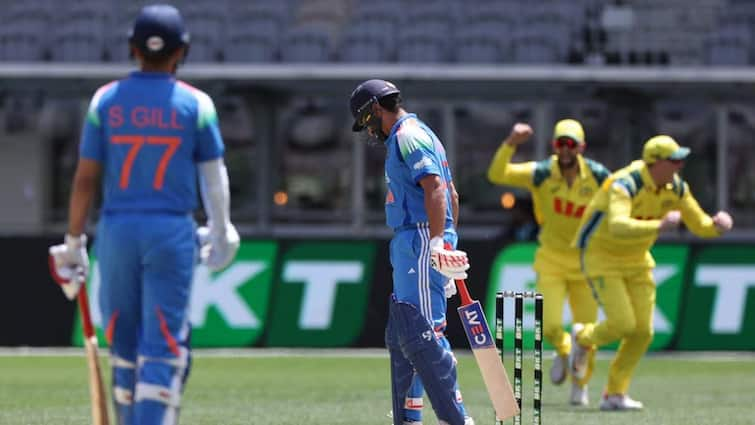
In the first ODI match played in Perth, the Indian team was able to score only 136 runs, but Australia got the target of only 131 runs. Team India struggled to reach the score of 136 in the stipulated 26 overs, in which KL Rahul contributed the maximum of 38 runs. Akshar Patel scored 31 runs and debutant Nitish Kumar Reddy returned unbeaten after scoring 19 runs. But how did it happen that India scored 136 runs, but Australia got the target of 5 runs less than that.
Why should Australia aim for less runs?
Rain interfered in this match being played in Perth. A lot of time was lost due to rain, due to which the overs were reduced to 26 overs in each innings. Rohit Sharma, Virat Kohli and even captain Shubman Gill could not score big.
The Indian innings ended at 136 runs, but due to Duckworth-Lewis rules, Australia was given a target of 131 runs. Actually, the rules of DLS also depend on the remaining overs and remaining wickets.
How to get a new target from DLS?
Based on the Duckworth-Lewis rule, the revised target is given keeping in mind many aspects. According to the rules, the target is given to the other team keeping in mind the remaining overs, remaining wickets, how many runs the team batting first scored and at what time the match was interrupted.
Since the Indian team had lost 9 wickets, this was also one of the reasons for Australia getting less target. Had the Indian team been all out before the scheduled 26 overs, Australia could have got a target of less than 131 runs.
Also read:
Team India scored 136 runs in Perth ODI, then why did Australia get the target of 131; Know ICC’s rule regarding this