
 By Admin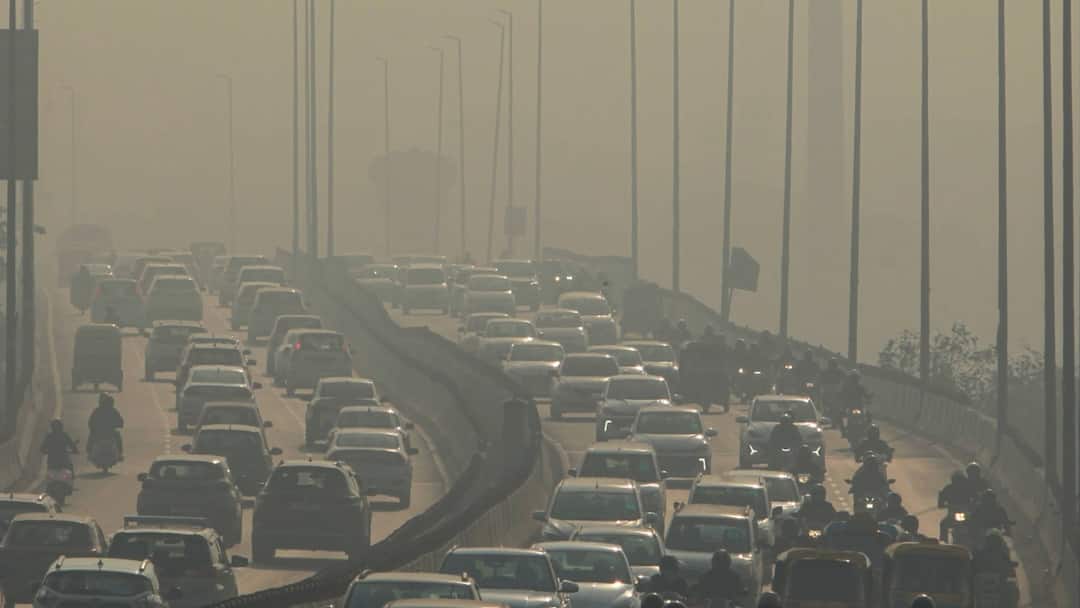
The pollution level in Delhi remained in the ‘very poor’ category on Sunday (7 December). The 24-hour average air quality index (AQI) of the capital was recorded at 308. According to the ‘Sameer’ app of the Central Pollution Control Board (CPCB), till evening the air quality at 29 monitoring stations in the city was recorded in the ‘very poor’ category and among these, Bawana had the highest AQI (336).
Which sector contributes how much to pollution?
According to the Decision Support System (DSS) for Delhi’s air quality management, the transport sector contributed 16.5 percent to pollution. After this, industrial areas in Delhi and surrounding areas contributed 8.1 percent, residential sources contributed four percent and construction activities contributed 2.3 percent. Among the neighboring districts of NCR, Jhajjar contributed 13.9 percent, Rohtak 5.2 percent, Sonipat 6 percent and Jind 2.5 percent.
Considerable fluctuation in AQI in Delhi
A lot of fluctuations were seen in the air quality of Delhi this week. AQI was 279 on Sunday, 304 on Monday, 372 on Tuesday, 342 on Wednesday, 304 on Thursday and 327 on Friday. The air was recorded in ‘very poor’ category all day. India Meteorological Department (IMD) said that the maximum temperature on Sunday was 24.7 degrees Celsius, which is 0.1 degrees below normal, while the minimum temperature was recorded at 8 degrees Celsius, which is 1.6 degrees below normal.
The relative humidity was 71 percent in the evening and 92 percent in the morning. For Monday (08 December), the Meteorological Department has predicted the minimum temperature to be 10 degrees Celsius and the maximum to be 25 degrees Celsius.
According to the app, the AQI in Delhi at 10 am on Sunday was 302 and 26 stations recorded air quality in the ‘very poor’ category. According to CPCB, AQI is considered in the category of 0-50 ‘good’, 51-100 ‘satisfactory’, 101-200 ‘moderate’, 201-300 ‘poor’, 301-400 ‘very poor’ and 401-500 ‘severe’.