
 By Admin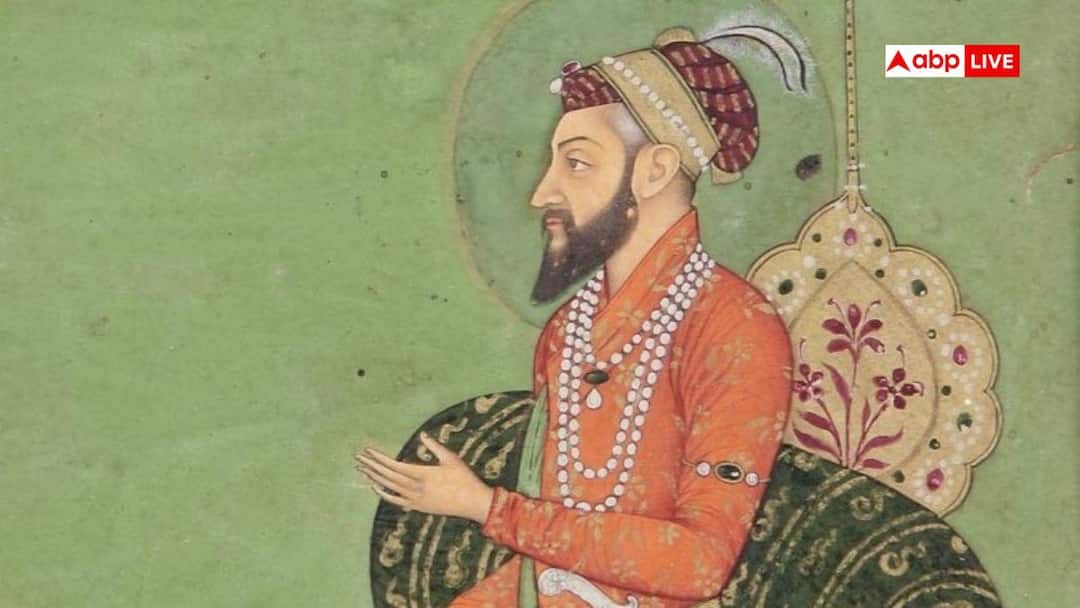
In the pages of history, the image of Mughal emperor Aurangzeb has been that of a fanatic and complex ruler. But from the corridors of this history, a story has emerged which reveals a completely different and untouched aspect of Aurangzeb. This is the story of a father who prepared probably the world’s first Hindi-Persian dictionary to teach his son the Indian language i.e. Hindi. Let us know why Aurangzeb did this unique thing for his prince.
A linguistic lover father hidden behind a fanatical image
Aurangzeb, the sixth emperor of the Mughal Empire, is often remembered for his strict rule and religious fanaticism. His brother Dara Shikoh was considered a liberal, who got the Vedas translated, but very few people know the fact about Aurangzeb that he also took interest in the preservation of Indian languages. Aurangzeb wanted his heirs to have complete knowledge of the language of the land over which they had to rule. With this thinking, he had paved the way for his third son Azam Shah to learn Hindi.
Dictionary prepared for Azam Shah
BBC report states that Aurangzeb had made a dictionary to connect Prince Azam Shah, whose full name was Abul Faiz Qutubuddin Mohammad Azam, with the local language and culture. It was named ‘Tohfatul-Hind’. According to BBC, according to historian Om Prakash Prasad’s book ‘Aurangzeb, a new vision’, the emperor had ordered Mirza Khan bin Fakhruddin Muhammad to prepare a dictionary by which a person knowing Persian could easily learn Hindi and Brajbhasha. This work was completed in 1674 after several months of hard work.
Also read: How are diesel-petrol and LPG-CNG made from crude oil? Know the complete process
Unique confluence of beauty of Braj language and Hindi
According to the report, a copy of this dictionary is still present in the famous Khudabaksh Khan Oriental Library of Patna. According to Library Director Shaista Bedar, the pronunciation of words and their Persian meanings have been explained in a very simple manner in this dictionary. Interestingly, it not only gives the meanings but also defines the metaphors used by Indian poets. For example, while explaining the meaning of Champa flower, it has been written that it is the yellow flower which Indian poets use to describe the beauty of their beloved.
This book was not just a dictionary, it was a treasure of Indian knowledge.
‘Tohfatul-Hind’ was not limited to the meaning of words only. Aurangzeb wanted his son to be proficient in Indian arts, that is why detailed information related to Indian medicine (Ayurveda), astrology, music and other arts was included in this book. At that time, the official language of the Mughal court was Persian, but Hindi and Braj were prevalent among the common people. The emperor believed that for efficient administration it was essential to have local knowledge and understanding of the language.
Importance of ‘Tohfatul-Hind’ from historical perspective
This dictionary is a proof of how the combination of Persian and Hindi was giving birth to a new culture during the Mughal era. Its construction by Aurangzeb shows that efforts for linguistic coordination were continuing even amidst the struggles for power. Even today, its copies in many major libraries remain the center of attraction for researchers. Today’s historians see this step of Aurangzeb as a practical and cultural aspect of his governance, which is completely different from his popular image.
Also read: Why have Muslims been calling Iran Atishqada, know what is the connection of Persia with Parsis?