
 By Admin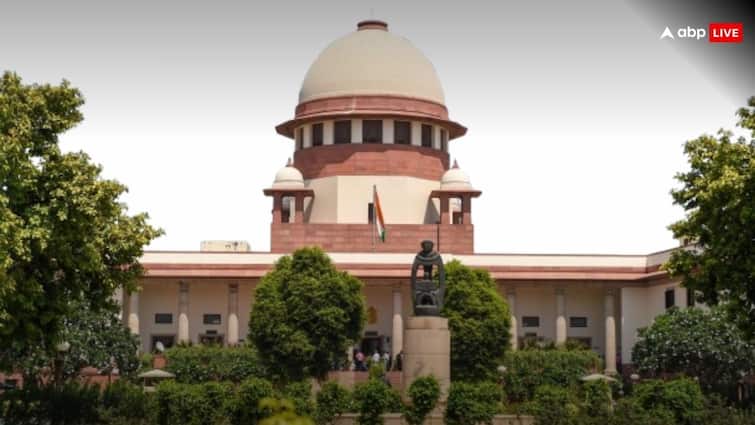
The Supreme Court has reserved the order on the issue of interim relief in the Waqf Amendment Act case. The bench of Chief Justice Bhushan Ramakrishna Gavai and Justice Augustin George Christ heard for 3 consecutive days. The court told the petitioners seeking a ban on the law that the law made from Parliament is considered constitutional till the final decision is taken. A very strong base will be required to stop its provisions.
On the first day of the hearing, 5 senior lawyers cross -examined the petitioner side. On the second and third day, the central government and some state governments responded. After this, once again about 2 hours the petitioner side spoke. Senior lawyers Kapil Sibal, Rajiv Dhawan, Abhishek Manu Singhvi, Hujifa Ahmadi and CU Singh debated on behalf of the petitioners. Solicitor General Tushar Mehta, mainly on behalf of the central government, presented the side. Senior lawyers Ranjit Kumar, Rakesh Dwivedi, Maninder Singh and Gopal Shankaranarayan made brief arguments in their support.
The petitioner side opposed things such as making the registration of Waqf by users mandatory, the government’s decision in the property dispute of the Waqf Board, making non -Muslims members members in the Waqf Board, the possibility of religious activity in ancient monuments, the condition of being a Muslim for 5 years and the Waqf Board on the tribal land to stop the Waqf Board. He was described as discrimination from Muslims and interference in religious matters.
On the other hand, the Central Government cited the law to enact a law after following the entire process on behalf of Parliament. The Center said that it would not be right to stop the sections of the law before the final hearing. Those who have brought the petition here are not personally affected. He is not a representative of the entire Muslim community. The law has been made in public interest. The discrepancies of the old Waqf law have been removed.
The government said that Waqf is not an essential part of Islam. It cannot be given the status like fundamental rights. The registration of Waqf by user was also kept necessary in the 1923 law. People who have not registered for 102 years, are still protesting. If the property is not their, then it should be used in social interest.
Earlier, only Muslims could do Waqf. But in the Waqf Act 2013, the provision of the property of non -Muslims was also made. To improve this, a condition has been laid for at least 5 years to be a Muslim. Constitution also gives protection to the land of tribals. The same has also been done in this law. Limited members in the Waqf Board will be non -Muslims, whose role will also be very limited. There will be no difference from new Waqf law on religious activities in ancient monuments.
Waqf Board claims on the entire village!
At the end of the hearing, a lawyer spoke about a village in Tamil Nadu in the court. He told that there is a 1500 -year -old temple in the village. Hindus have been living there for centuries. But the Waqf Board is claiming on the land of the entire village. This has also happened in other parts of the country. The new law gives legal solutions for such situations. Therefore, do not stop the court law.
Also read:-
WAQF Amendment Act: Debate in Waqf Amendment Act case completes, Supreme Court reserved decision