
 By Admin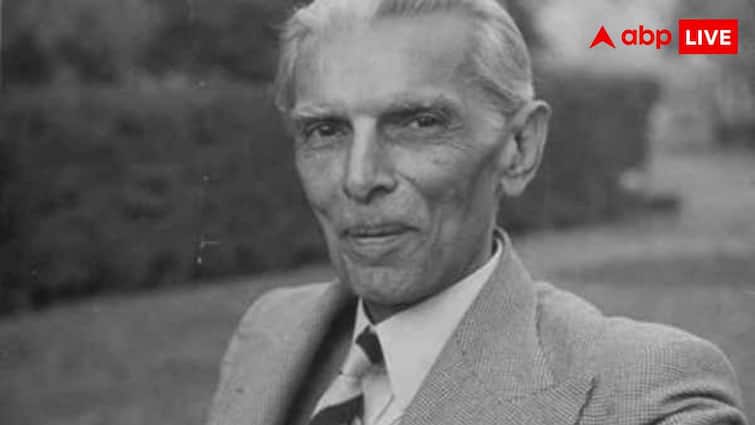
The year of 1947, the year of independence, brought a turn in the history of India forever, which changed the life of crores of people. The country got independence, but together had to pay a very heavy price for partition. After independence, India and Pakistan emerged as two separate countries. A name was the most discussed behind this partition, which was of Mohammad Ali Jinnah. Jinnah is called the founder of Pakistan. He demanded a separate country on the basis of religion and also achieved it. You will be surprised to know that the person who divided India into two pieces in the name of religion was himself against casteism and religious discrimination. Let us know how Jinnah, who divided India in the name of religion, was against casteism?
The story of Jinnah’s family and conversion
Mohammad Ali Jinnah’s ancestor was a Hindu. His family was from Kathiawar area of Gujarat. Jinnah’s grandfather’s name was Premjibhai Meghji Thakkar, who was a Lohana caste businessman. Premji Bhai’s business was connected to fish, but the non -vegetarian was completely forbidden in his caste. Because of this, he had to face protest in the society. Due to which he changed his religion and became Muslims. Jinnah’s family also moved forward on the same path. In this way, Jinnah’s family went towards conversion due to a social boycott and ethnic narrowness. This story tells that somewhere an disagreement against casteism was in Jinnah’s blood.
How was Jinnah against casteism?
Jinnah had given such a statement, which is still in the discussion. He had said that you are free, to go to your temples, to go to your mosques, or to go to some other place of worship. The state will have nothing to do with religion. Over time, the difference between Hindus and Muslims will disappear. Neither Hindu nor Hindu will remain, nor Muslims. Muslims at least from political point of view. Like Muslims also have many castes, Pathan, Punjabi, Shia, Sunni. In the same way, Brahmins, Khatri, Bengali, Madrasi among Hindus. If this discrimination was not done, India would have become independent long ago. In the coming time, people will be Indian first, then Hindus or Muslims. That too not religious, but as a political identity,
Listening to this speech shows that he was against casteism. According to historians, this speech was part of Jinnah’s policy. Its purpose was to convince the Government of India that Pakistan would treat its minorities well, so India should also allow its 3.5 crore Muslims to live in India instead of sending it to Pakistan. This speech is also considered a political move. Its real purpose was to protect Pakistan from the huge population migration that could weaken it.
Also read: Nehru or Jinnah, who was more rich? Know who had how much money