
 By Admin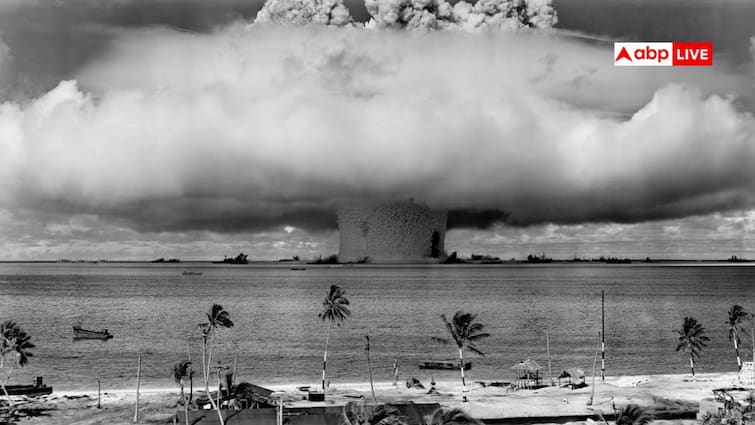
A terrible picture emerges in the mind as soon as the atomic weapon hears this word. Even though this weapon has been used only once or twice in history, but its presence has become a big power to decide the direction of international politics and security. Let us understand in simple language what is the atomic bomb, how it works, and what things are needed to make it.
How is the atomic bomb formed?
The atomic bomb is a weapon that makes great destruction by releasing excessive energy from nuclear processes. There are two types of it in the scientific language, one in the process of nuclear fission (fusion) in the other. In simple terms, in these processes, the reactions inside the atom suddenly leave a lot of energy in a sudden and controlled manner, which produces a huge explosion, sharp heat and radioactivity.
Making any atomic bomb usually takes things like uranium or plutonium. Especially the fragmentation of nuclei of uranium-233 and plutonium-239 comes out heavy energy. U-233 and Pluto-239, the process of nuclear fragmentation of these Issotops is the source of bomb.
For which work atomic bombs should be used
Getting nuclear capacity for any country is not only technical, but also political and economic decisions. Many countries have adopted it due to security-worry, regional strategic balance or political reputation. On the other hand, in view of the destructive human and environmental consequences of nuclear weapons, many attempts are also being made to stop their spread globally.
Institutions like NPT i.e. non-proliferative treaty, IAEA and various bilateral-bilateral agreements work in this direction. Through these, it is an attempt to ensure that nuclear technology is only for peaceful use, such as for electricity, medicine or research work.
Effect of nuclear weapons
The effects of nuclear weapons are very broad and long-lasting, immediate explosion, fire and heat as well as long-term health and environmental disadvantages from radioactivity are major impacts. Effect on fetal development, risk of cancer, contamination of agricultural land and social destruction are some forms that do not recover the affected areas for decades. This is the reason that due to human reasons, their control and disarmament is also emphasized.
Also read: uttar pradesh history: How the British had their right over Uttar Pradesh, know the full history of this state of India