11 Nov 2025, Tue

Two special isotopes of hydrogen and tritium are mainly used in making hydrogen bombs.

Two special isotopes of hydrogen and tritium are mainly used in making hydrogen bombs.

These are both mild elements, which are mixed with each other and energy is produced through the nuclear fusion process. Apart from this, a large amount of lithium deuteride is also used in it, which changes the fusion more powerful by changing the tritium at the time of explosion.

These are both mild elements, which are mixed with each other and energy is produced through the nuclear fusion process. Apart from this, a large amount of lithium deuteride is also used in it, which changes the fusion more powerful by changing the tritium at the time of explosion.

Although not just these light elements can become a bomb, to activate the hydrogen bomb, the first is a small atom bomb that is made of uranium-235 or plutonium-239, boils.

Although not just these light elements can become a bomb, to activate the hydrogen bomb, the first is a small atom bomb that is made of uranium-235 or plutonium-239, boils.

This atom bomb creates so much heat and pressure that the dutarium and tritium start fusion together. This fusion makes the hydrogen bomb exceptionally destructive.

This atom bomb creates so much heat and pressure that the dutarium and tritium start fusion together. This fusion makes the hydrogen bomb exceptionally destructive.

The strength of the atom bomb is measured in Kilotan, ie thousands of tons of TNT. For example, the bomb dropped on Hiroshima was around 15 kilotons.

The strength of the atom bomb is measured in Kilotan, ie thousands of tons of TNT. For example, the bomb dropped on Hiroshima was around 15 kilotons.

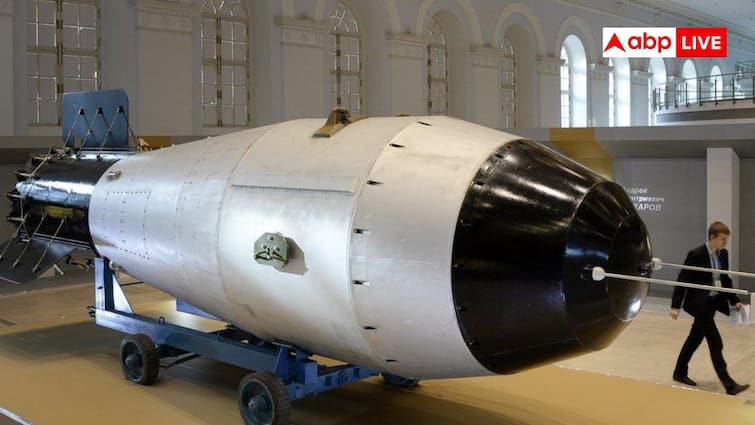
At the same time, the strength of the hydrogen bomb is in the megaton, that is, millions of tons of TNT. The largest hydrogen bomb in history was done by the Soviet Union in 1961, which was called Tsar Bomba.

At the same time, the strength of the hydrogen bomb is in the megaton, that is, millions of tons of TNT. The largest hydrogen bomb in history was done by the Soviet Union in 1961, which was called Tsar Bomba.

Its capacity was 50 megatons, that is, the atom dropped on Hiroshima was about 3000 times more powerful than the bomb. Scientists say that if such a bomb is dropped on a big city today, millions of people will be killed immediately and the effect of radiation will be on the entire region for decades.

Its capacity was 50 megatons, that is, the atom dropped on Hiroshima was about 3000 times more powerful than the bomb. Scientists say that if such a bomb is dropped on a big city today, millions of people will be killed immediately and the effect of radiation will be on the entire region for decades.

Published at: 04 Sep 2025 09:00 AM (IST)

Preferred Sources

General Knowledge Photo Gallery

Source link

By Admin

Leave a Reply

Your email address will not be published. Required fields are marked *