
 By Admin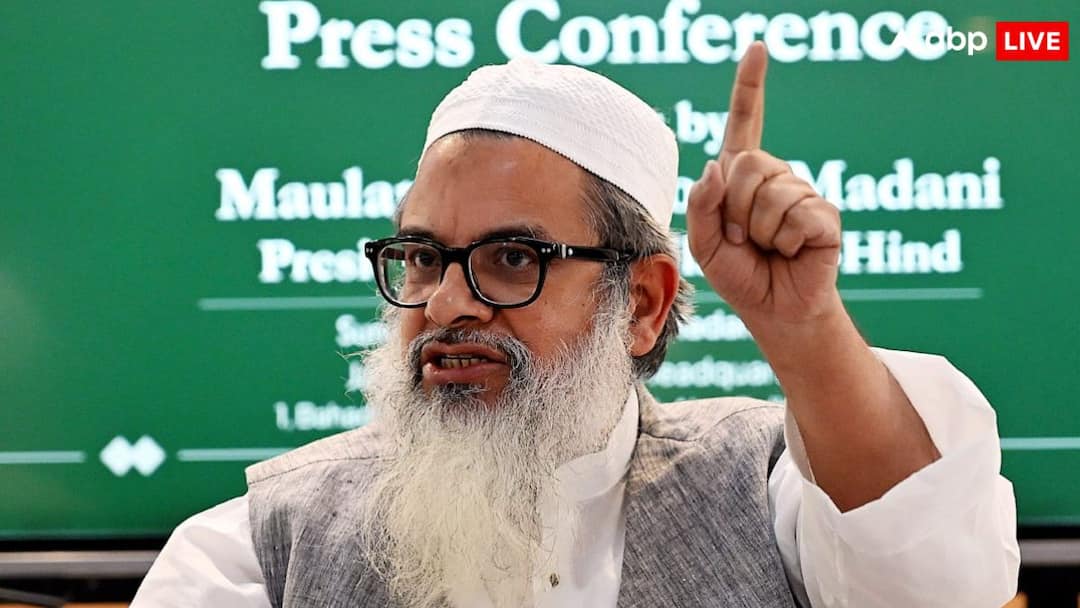
Jamiat Ulama-e-Hind chief Maulana Mahmood Madani has expressed objection to the questions being raised regarding the word Jihad in a program in Bhopal. Speaking at the National Governing Body meeting of Jamiat Ulema-e-Hind, he said that the enemies of Jihad, Islam and Muslims have transformed the sacred ideas of Islam like Jihad into words associated with misuse, disturbance and violence.
‘Whenever there is oppression, there will be jihad’
Maulana Mahmood Madani said that by using words like Love Jihad, Land Jihad, Education Jihad and Spit Jihad, Muslims are hurt a lot and their religion is insulted. He said that people holding responsible positions in the government and media also use such words. They have no shame nor do they care about hurting the entire community. During this, while making controversial remarks, Maulana Mahmood Madani said that whenever there is oppression, there will be jihad.
‘Negative campaign against religious seminaries’
Mahmood Madani also said, “The current situation in the country is very sensitive and worrying. Sadly, a community is being legally weakened, socially isolated and economically dispossessed. Efforts like mob lynching, bulldozer action, occupation of Waqf property and negative campaigns against religious madrassas and reforms are being made to weaken their religion, identity and existence.”
‘Muslims feeling unsafe’
He said, “Today Muslims feel unsafe on the road. They have to face hatred at every step. Now we also have to be prepared. Those who include people in a particular religion in the name of returning home have a free hand. No questions are raised against them nor any legal action is taken. This is a completely double attitude.”
Maulana Madani’s bad words on Supreme Court
Mahmood Madani also raised questions on the Supreme Court. Mahmood Madani said, “It is impossible to create law and order and crime-free society in any country without justice. Sadly, in the last few years, especially after the decisions in cases like Babri Masjid and Triple Talaq, it has become a common thought that the courts are working under government pressure. Various interpretations of constitutional rules and basic principles related to minorities have raised serious questions on the role of the judiciary.”
He said, “The Supreme Court is entitled to be called Supreme only as long as it follows the rules and takes care of the duties of the law. If it does not do so, then it is morally not entitled to be called Supreme.”