
 By Admin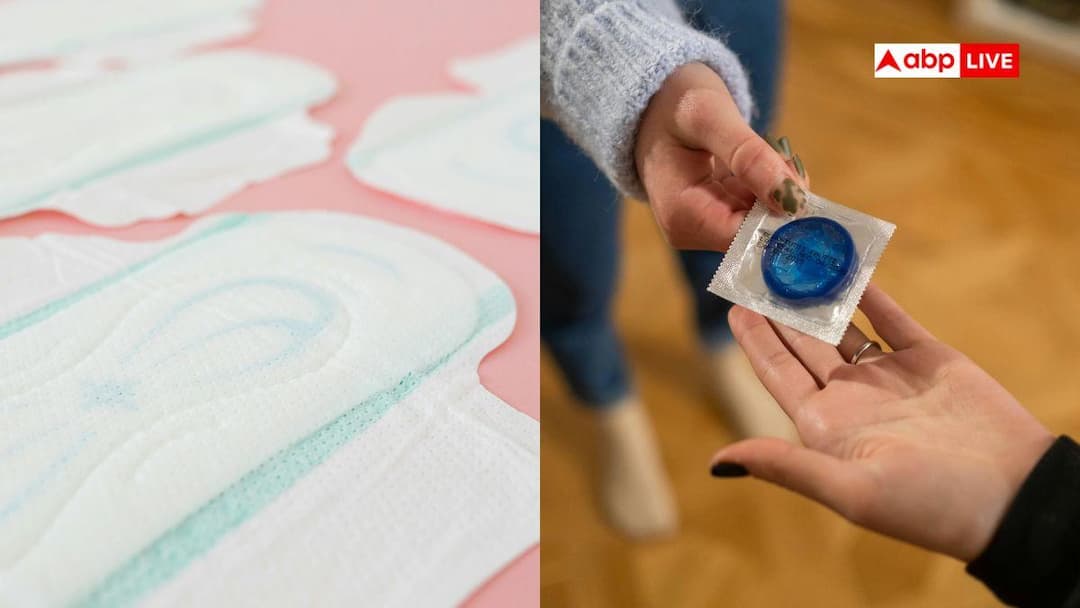
Both sanitary pads and condoms are health related products, both are directly related to daily needs, yet they are treated differently in terms of tax. On one hand, there is zero tax on sanitary pads, while on the other hand, 12 percent GST is charged on condoms. This question is not just about tax, but is related to government policy, social thinking and public health priorities. Hidden behind this difference is the story of a long policy journey and social pressure. Let’s find out.
How did these two products come under the purview of GST?
When Goods and Services Tax (GST) was implemented in the country in 2017, both sanitary pads and condoms were kept in different categories. At that time, 12 percent GST was imposed on sanitary pads, while condoms were also kept in the 12 percent tax slab. This decision was based on technical classification, not on social needs.
Journey to freedom from sanitary pad tax
Sanitary pads were initially categorized as personal care or cosmetic products, on which 12 percent GST was applicable. Women, social organizations and health experts across the country raised their voice against this. It was argued that menstruation is not a choice but a biological necessity. Due to this widespread public pressure and giving priority to women’s health, the government made sanitary pads completely tax-free in July 2018. After this, 0 percent GST is applicable on these.
Why still 12% tax on condoms?
Condoms are considered an important means of family planning and prevention of sexually transmitted diseases such as HIV/AIDS. Despite this it was not made completely tax-free. According to policy experts, condom is definitely considered a health product, but it has not been kept in the category of essential biological need like menstruation. Additionally, condoms are already widely made available under government and free distribution schemes, which led to an argument for maintaining taxes on condoms sold in the market.
Impact of social thinking in policy
Removal of tax on sanitary pads was the result of social awareness and women’s rights movement. At the same time, the hesitation and limited public pressure present in the society regarding condoms has also been influencing the tax policy. However, health experts believe that sexual health is as important a part of public health as menstrual hygiene.
Will condoms also be tax-free in future?
From time to time there has been a demand that condoms should also be brought in the 0 percent GST slab. At present the government has not taken any such decision, but with increasing public health and awareness, the possibility of reconsidering this policy cannot be ruled out.
Also read: Happy New Year 2026: New Year is not celebrated on January 1 in these countries, see the list