
 By Admin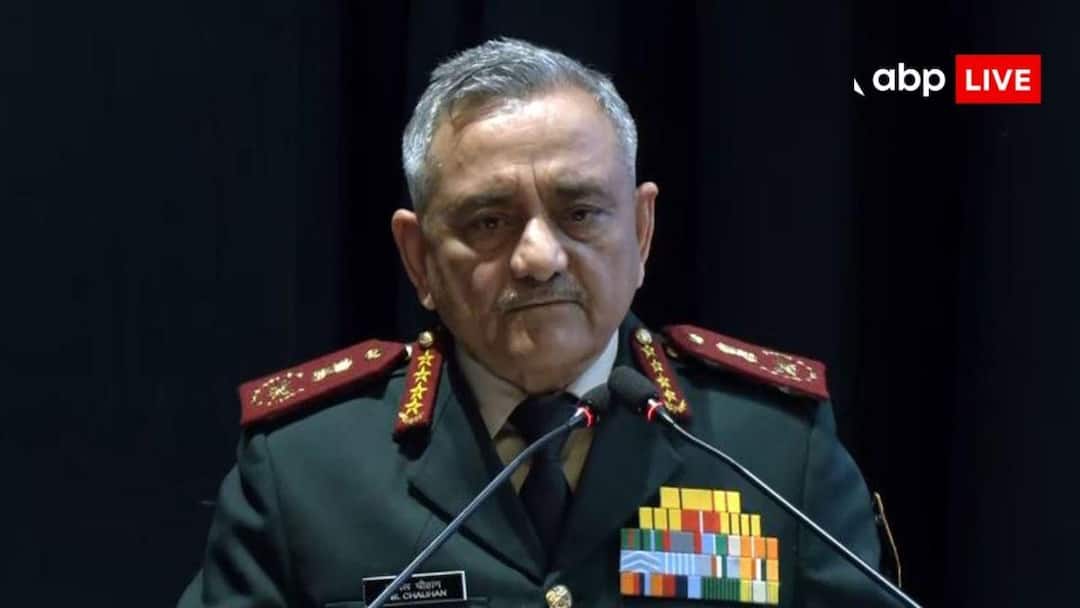
India’s Chief of Defense Staff (CDS) General Anil Chauhan gave a statement on India-China relations on Friday (February 13, 2026). He explained why the country’s first Prime Minister Pandit Jawaharlal Nehru wanted the Panchsheel Agreement of 1954 with China, which included India recognizing Tibet as a part of China.
CDS Anil Chauhan said that after India’s independence, the British left and it was for India to decide where the border was. General Chauhan said, ‘Nehru probably knew that in the past we had some claim in the form of McMahon Line and we also had some claim in the Ladakh region, but not here. That’s why perhaps they wanted to move ahead for the Panchsheel agreement.
After Panchsheel, we agreed that the dispute on the northern border has been resolved: CDS
He said, ‘The Chinese also thought the same. When the Chinese virtually liberated Tibet, they entered Lhasa. They entered Xinjiang. This particular area was extremely dangerous at both ends.
General Chauhan said, ‘Therefore this area was given priority in some form or the other. They probably wanted stability in this particular area. Independent India was eager to build good relations with China. In 1954, India recognized Tibet as part of China. Both the countries signed the Panchsheel agreement.
CDS Chauhan said, ‘With this, India had assumed that it had resolved its border, the northern border, the only area which we had not been able to resolve through a formal treaty.’
General told the difference between border and borders
CDS was giving a speech at the Bharat Himalayan Strategy Forum organized at Lok Bhawan, Dehradun, in which he focused on the boundaries, borders and the historical connectivity of the central region. Clarifying the difference between borders and frontiers, General Chauhan said that while borders are clearly defined political and legal boundaries between countries, frontiers are the rugged and customs-related areas between civilizations.
He said, ‘Borders are divided by a line on a particular map as well as on the ground, whereas a frontier is an area or area which is extensive and comprehensive in nature. Border is a concept that separates two nation-states, while frontier is the meeting point of two civilizations. Borders define the political and legal boundaries of a nation.
Uttarakhand is adjacent to the border of China, we forget: CDS
General Chauhan said, ‘Uttarakhand is a border state. Sometimes we forget this aspect because the border here is more peaceful than Ladakh, Sikkim or Arunachal Pradesh, but I think most of us forget that the root of the initial dispute between us and China on the border was here. This was before and immediately after the signing of the Panchsheel Agreement. Therefore this border is as important as other borders.