
 By Admin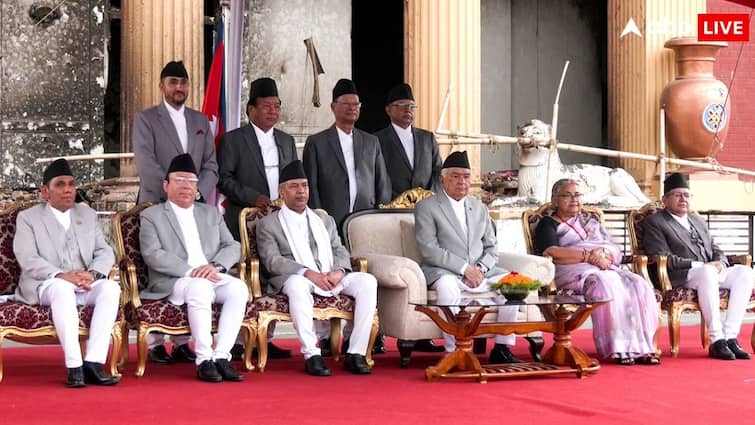
The unexpected violent movement of Gen-Z lasted barely 48 hours, but it created tremendous turmoil in Nepal. Nepal plunged into a period of deep mourning, anger and collective uncertainty. It has just started taking care of itself. On September 8 and 9, 2025, 75 people were killed and more than 2,000 were injured in the Gen-Z movement against corruption, mismanagement and social media regulation.
According to the Federation of Chambers of Commerce and Industry of Nepal (FNCCI), the recent violent protests and incidents of arson have caused damage to private property worth approximately US$571 million. The private sector contributes 81 percent to Nepal’s national economy and 86 percent of total jobs are in the private sector.
Assessment of damage to historical heritage and buildings continues
The assessment of damage caused to government buildings and historical heritage is still underway. The government has not yet made public the cost of the damage caused to the Prime Minister’s Office (Singh Darbar), the historic Parliament House, the Supreme Court and the President’s Office (Rashtrapati Bhavan).
After these incidents, an interim government was formed on September 12 under the leadership of former Chief Justice Sushila Karki. Till now he has expanded the cabinet twice by appointing eight ministers. The interim government has to conduct free, fair and credible general elections within the next six months.
Commission will investigate and submit report within 3 months
The government has constituted a three-member commission headed by former judge Gauri Bahadur Karki to investigate human rights violations and damage to public and private properties. The commission has to submit its report within three months.
In the statement issued by the Home Minister, it has been said that now complaints of arson or theft will not be filed, because the commission has started its work. Critics say that this weakens the role of the regular criminal justice process.
Nepal’s President advised to participate in the elections
Earlier, the recommendations of many commissions made during Jan Andolan-I (1990) and Jan Andolan-II (2006/2007) were not implemented, which strengthened the resentment. The main challenges now facing the interim government are to conduct the upcoming general elections and implement a new voter registration ordinance so that the youth participating in the protests can also vote. The voter enrollment period is 90 days.
The Prime Minister, after consulting the Election Commission, has given instructions to hold elections in March 2026. The President has also met political parties and advised them to participate in the elections. Despite the Prime Minister’s promise to hold elections, differences remain among the youth. Many unorganized groups have emerged on social media platforms like Discord. Some groups first tried to communicate with the Army Chief and later with the President.
Kathmandu Mayor Balendra Shah silent
Some youth are advocating reforms in existing political parties, while others are demanding constitutional amendment and a directly elected Prime Minister. Kathmandu Mayor Balendra Shah had appealed for peace during the protests, but has remained silent since then. If differences among the youth persist, there is a fear of violence in the elections.
The youth are now considering registering their own political party instead of becoming independent candidates. The government of former Prime Minister K. Travel ban has been imposed on five people including P. Oli and former Home Minister Ramesh Lekhak. CPN-UML has objected to this and said that if the investigation appears to be politically motivated then the parties will oppose it.
15,000 prisoners escaped from 28 jails
Following the violence during the protests, 486 police units were attacked and 1,247 weapons were looted. About 15,000 prisoners escaped from 28 jails, of which only half have returned. Some prisoners were arrested in New Delhi after crossing the Indian border.
The security system in Nepal is divided into three organs, Nepal Police, Nepal Armed Forces and Nepal Army, but lack of coordination was seen among them. The police played an active role during the movement, but there was a delay in the deployment of other forces. Holding elections in these circumstances will be challenging for the interim government. The government will have to ensure compliance with the law to curb anarchy and corruption. Nepal also needs international support, including from its neighbours, for stability.
Also read:- ‘Ask Israel Sahab a question’, Asaduddin Owaisi angry over violation of visa rules in India