
 By Admin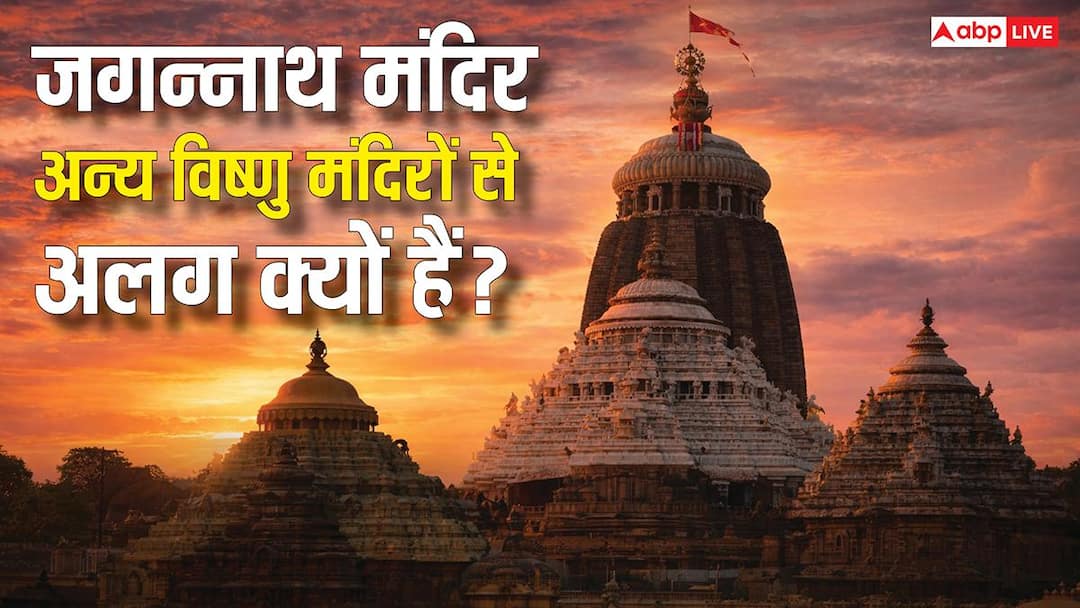
“Nah Vasami Vaikunthe Na Yoginam Hridaye Na Cha.
Madbhakta Yatra Gayanti Tatra Tishthami Narad.”
The meaning of this verse is that God does not reside only within Vaikuntha or Siddha Yogis, but also resides wherever true devotion is followed. This truth can be deeply felt in the temples dedicated to Jagannath Swami.
The temple of Lord Jagannath Swamy located in Eastern India is completely different from other Vishnu temples. Here the rituals seem lively, the idol seems bold and the devotees do not stand at a distance. Here faith is not related to system or assurance but to faith and trust.
A common offering commonly remembered by devotees points to the feeling that,
“Samarpayami sarvasvam tvayi devan Jagannath.”
O Jagannath, I offer everything to you.
Jagannath Swami is worshiped as Lord Vishnu in Puri, Orissa, yet he does not demand perfection, discipline or certainty. They only demand dedication and devotion. That’s why people often come here not with clear desires, but with weary hearts and unanswered questions.
Does Krishna still roam in Vrindavan today? Know the truth of this mysterious living city
Worship of Jagannath Swami as the lord of the world, not as the lord of the system and
Most Vishnu temples in India emphasize cosmic order. Lord Vishnu is worshiped as a protector, who helps bring balance through rules, dharma and structure. At the same time, Jagannath is worshiped as the lord of the people. If we look at the literal meaning of his name, it means Lord of the Universe, but in practice it means the Lord who is everyone.
There is no hierarchy in the worship of Jagannath Swami; in many traditions associated with him, priests, kings, common people and even people outside the formal social order are considered equal. Jagannath Swami is not reached through intellectual theology or rigorous ritual perfection. They can be reached only through presence. Which indicates that faith is experienced and not under someone’s supervision.
Importance of physical form of Jagannath Swami
In most Vishnu temples his idol is carved with precise proportions and classical beauty. The idol of Jagannath Swami is opposite to this. Talking about their appearance, incomplete limbs, round eyes and wooden body are contrary to aesthetic expectations. This is not an accidental event of history, but a religious message.
1000 year old Karpoor stepwell hidden in the forests of Nagpur, whose water never dries up!
Worship of Jagannath Swami is full of dedication and not of give and take.
Many people visit Vishnu temple seeking safety, prosperity and happiness. Devotees of Jagannath Swami also pray to him, but the meaning of their prayers is different. Here the emphasis is on offering oneself emotionally instead of asking.
Jagannath Swami’s sentiment is not bargaining. Faith in them is gradual acceptance rather than control. This does not weaken devotion, but deepens it. Devotees generally feel that Jagannath does not assure results, but rather supports them in times of uncertainty. This emotional perspective changes the experience of prayer.
Ritual dynamic, but not stable in time
In many Vishnu temples the rituals follow set patterns to maintain continuity, while those in the Jagannath temple are alive with movement and change. Here the deity is bathed, dressed, rested, taken out and even symbolically renovated.
The most striking example is the idea that gods are not eternal in physical form. The body is not replaced because it breaks down, but because renewal is natural. This concept teaches the lesson of impermanence of fear. Devotees internalize the lesson that change does not mean loss, but continuity through transformation.
Jagannath is accessible even when he is not visible
Devotees of Jagannath Swami say that he gives a feeling of closeness even when he is physically unavailable. There are also such occasions when the deity is not physically present and yet devotion does not weaken. This is contrary to the common belief that faith always depends on philosophy.
Devotion to Jagannath Swami teaches the devotees the skill of remaining connected to him even without the need for constant reassurance. This bond develops internally. Over time one becomes calmer, less dependent on beliefs and emotionally mature.
The atmosphere of the temple is humane and not perfect.
Jagannath temples are usually intensely crowded, noisy and emotionally charged. Their purpose is not to provide silence or aesthetic peace, but they present a reflection of life itself.
This environment makes one realize that the temple is not an isolated holy place. This is an expanded form of life itself. There is no pressure on the devotees to behave spiritually in Jagannath Dham. They feel the freedom to be human. Such freedom is rare in institutional religion and that is why Jagannath temples leave such a deep emotional impact.
Shiva Temples: It is forbidden to touch Shivalinga in these 7 Shiva temples from Kashi to Kedarnath, know why!
Community priority, personal secondary
In other Vishnu temples the worship of Vishnu usually emphasizes personal salvation and spiritual progress. At the same time, the community is kept in mind in the worship of Jagannath. Shared food, travel, rituals and emotions define this experience. One does not go to God alone. Even when a devotee stands silently, he is still part of a collective rhythm.
Jagannath is a symbol of accepting life as it is.
Perhaps the deepest reason why Jagannath temples are special is that they do not conflict with reality. There is no denial of sadness, lack or uncertainty in life. Instead, they are all immersed in devotion.
Jagannath does not give priority to escape from life, he is a symbol of being present within life. With time, devotees adopt this thinking. Faith is not about running away from problems, but rather about standing firm within them.
Disclaimer: The information provided here is based only on assumptions and information. It is important to mention here that ABPLive.com Does not constitute any endorsement or verification of information. Before implementing any information or belief, consult the concerned expert.