
 By Admin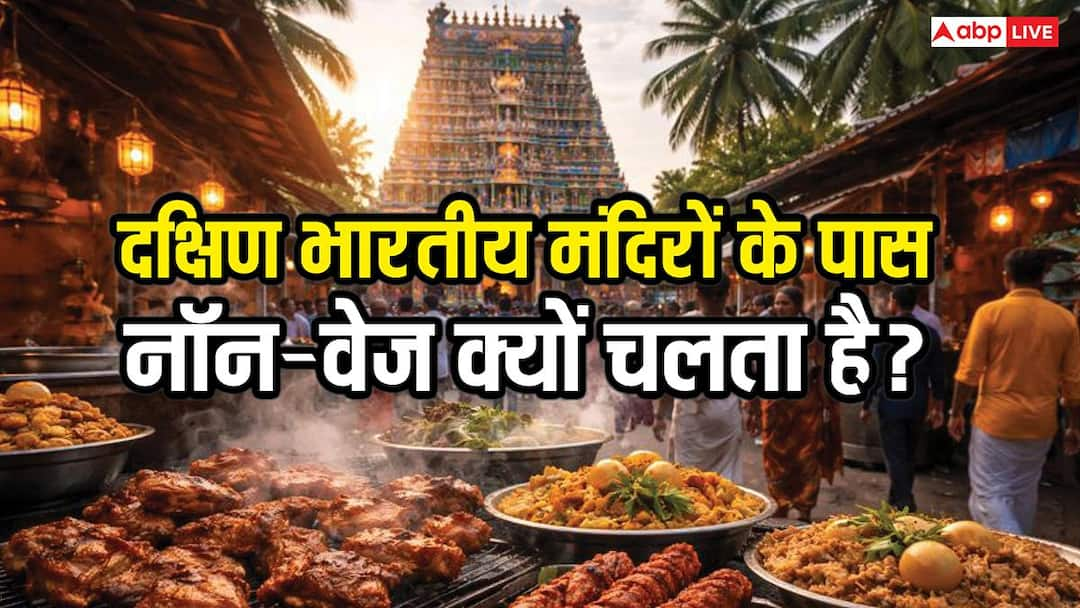
In North India, there are strict rules regarding food and drink around the temples, but in South India, people are more open and practical in this matter, hence different types of dishes, even non-veg, are available around the temples.
The feeling of religious faith is very deep in South India, but in matters related to food, personal and economic viewpoints are given priority. At the same time, things are opposite in North India, where vegetarian food is closely linked to religious rituals.
Instead of fruits and flowers, Maa Kali is offered momos, noodles and fried rice in this temple.
Non-vegetarian food is not considered a religious impurity in South India
In South Indian traditions, ritual purity inside the temple premises is kept separate from eating habits outside the temple premises.
Meat and fish have been consumed for a long time among the Nair, Reddy, Bokkaliga, Thevar and even some Brahmin communities in Kerala and Bengal. Here, non-vegetarian food is not considered a religious impurity, but an important part of the cultural identity.
Special differences between South and North Indian temples
Another special difference is also related to the administration of temples. Most temples in North India are run by politically or socially motivated organizations, which usually promote a strict vegetarian diet.
At the same time, temples in South India are generally governed by devasthanam boards or monasteries, which reflect representation of local communities, making it unusual to follow strict dietary rules.
No laddus, no fruits, in these temples the goddess is offered pizza, sandwiches and pani-puri.
One reason for this is that due to the Dravidian movement, Ambedkarbadi ideology and local politics in South India, there is not much strictness in religious matters around temples. Therefore, there are no special restrictions on people regarding food and drink.
There are temples in towns like Rameshwaram in Tamil Nadu and Srisailam in Andhra Pradesh, where local people, especially fishermen, depend on the sale of non-vegetarian food for their livelihood. Expecting removal of such shops from these areas is not only right but also morally wrong.
Consumption of fish and meat is common in these areas due to the abundance of fish and meat available near coastal areas near the sea and also due to ancient Dravidian culinary traditions.
What do the rural and local traditions of South India say?
Apart from this, meat and fish are offered in many rural and local traditions of South India, including some Shaiva and Shakta rituals. That is why opposition to meat shops near temples is not seen or heard.
In matters of religion in South India, the emphasis is on devotion and inner spirituality rather than controlling others. Because of this, a more tolerant environment is seen there and people easily accept eating and drinking habits.
Historically, rulers of South India like the Cholas and Pandyas, who were known for their temple patronage, actually consumed meat, making a non-vegetarian diet an important part of the local culture along with religious belief.
According to the information available on the internet, the number of vegetarian people is high in states like Gujarat, Haryana, Punjab and Rajasthan. On the contrary, in Andhra Pradesh, Tamil Nadu, Kerala, Karnataka and Telangana, most of the people consume non-vegetarian food.
Such temples of South India which despite being sacred, have hotels and restaurants serving non-vegetarian food around them –
- Rameshwaram, Ramanathapuram, Tamil Nadu A Jyotirlinga temple surrounded by seafood restaurants supporting the local fishing community.
- Meenakshi temple is built in a busy part of Madurai Tamil Nadu city, around which there are mutton biryani shops.
- Chidambaram Nataraja Temple Tamil Nadu which is surrounded by vegetarian and non-vegetarian restaurants.
- Arunataleswara Temple Tiruvannamalai Tamil Nadu Non-veg is also available in local hotels.
- Srisailam, Kurnool Andhra Pradesh Non-vegetarian food is sold in the outer premises of the temple, while the interior of the temple is completely vegetarian.
An exception is the Tirupati Balaji Temple, in Andhra Pradesh, where non-vegetarian food is completely banned near the temple, but non-veg is easily available in the lower city.
Disclaimer: The information provided here is based only on assumptions and information. It is important to mention here that ABPLive.com Does not constitute any endorsement or verification of information. Before implementing any information or belief, consult the concerned expert.