
 By Admin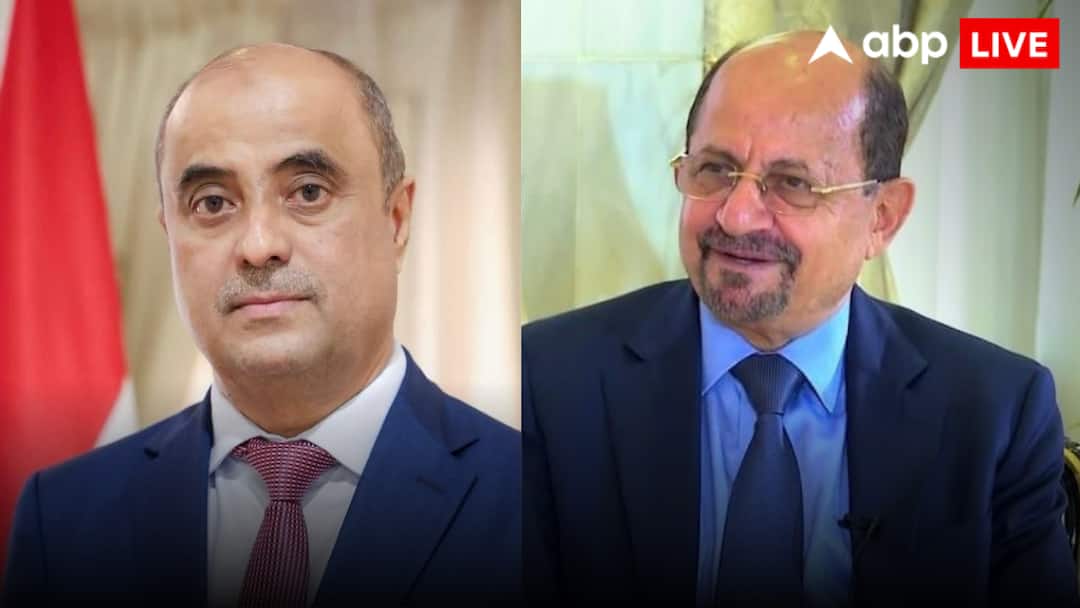
Prime Minister Salem bin Braik resigned from his post on Thursday (January 15, 2026) amid the ongoing political instability in Yemen. His resignation has been formally accepted by the Saudi Arabia-backed Presidential Leadership Council. This step has been taken at a time when the country is already going through a long struggle and power struggle.
Immediately after the resignation of the Prime Minister, an attempt was made to maintain the balance of power. Yemen’s current Foreign Minister Shayya Mohsin Zindani has been appointed the new Prime Minister of the country. He has been given the responsibility of forming a new government and handling the administrative system. This appointment is considered an important turning point in the unstable politics of Yemen.
Leadership Council made important changes
Even before the Prime Minister’s resignation, the Presidential Leadership Council had made important changes. Former Defense Minister al-Subaihi and Hadramaut Governor Salem al-Khanbashi were made council members. Through these appointments, those members were removed who were accused of having close ties to the UAE-backed Southern Transitional Council. This decision shows the growing differences in Yemen’s power structure.
Since when is Yemen under threat?
The current crisis in Yemen has been going on since 2014. The same year, Iran-backed Houthi rebels captured the capital Sanaa and large parts of northern Yemen. After this the country practically divided into two parts. The north is controlled by Houthi rebels, while the south and other areas are ruled by the Saudi-backed Presidential Leadership Council, whose temporary capital is Aden.
Yemen becomes center of tension
In recent months, Yemen has once again become the center of tension between Saudi Arabia and the United Arab Emirates. In December, the UAE-backed Southern Transitional Council established control over several areas of southern and eastern Yemen. The increasing hold of these areas reached near the Saudi border, which Riyadh considered a threat to its security. After the situation worsened, Saudi Arabia deployed its army on the Yemen border. Also, a strict warning was given to the Southern Transitional Council to stop moving forward. From this it became clear that serious differences had arisen even within the anti-Huthi coalition.
Who bombed Mukalla port?
The situation became more tense on 30 December, when Saudi jets bombed the Mukalla port. Saudi Arabia claimed that there was a consignment of weapons present there, which was being sent by the UAE to the Southern Transitional Council. After this action, Riyadh gave a 24-hour ultimatum to UAE to withdraw its army from Yemen.
Who rejected Saudi Arabia’s allegations?
The United Arab Emirates rejected Saudi Arabia’s allegations. The UAE denied arming the rebels and announced it was reducing its military presence in Yemen. This development further exposed the growing differences between the two countries.
Also read: ‘We believe in him…’, Venezuelan leader Machado gave her Nobel to Trump, what happened in the meeting?