
 By Admin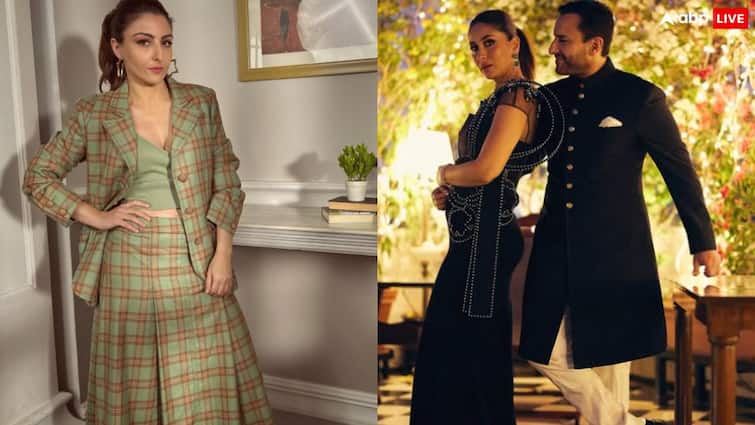
Bollywood actress Sharmila Tagore had an inter-religion marriage with cricketer Mansoor Ali Khan in 1968. This step of the actress had angered a certain section of the society. Years later, Sharmila Tagore’s son Saif Ali Khan and daughter Soha Ali Khan also had a love marriage in another religion. While Saif Ali Khan first had an inter-faith marriage with Amrita Singh, then in 2012 he also had an inter-faith marriage with Kareena Kapoor.
Whereas Soha Ali Khan married Kunal Khemu in 2015 after being in a live-in relationship. Soha Ali Khan recently revealed during an interview that there has always been a lot of noise about inter-religion marriage, and during Saif and Kareena’s wedding, people had said strange things like ‘Ghar Wapsi’ and ‘Love Jihad’.
Saif Ali Khan and Kareena Kapoor’s marriage received hatred
Actually, Soha Ali Khan told in a conversation with Nayandeep Rakshit that people have always been expressing their displeasure. He also told about the strange comments used by haters on Saif and Kareena’s wedding. The ‘Chhori 2’ star said that it doesn’t matter to her, because everyone has their own opinion.
She said, “I don’t think it has made any difference to me because I feel that as long as the people I love, care about and respect are on the same page as me, then everything is fine. There will be a lot of haters, there will be a lot of voices raised, and that’s fine too. I have no problem with everyone having their own opinion and that’s all fine.”
love jihad, Strange headlines like homecoming were created
He further added, “So I think these things like… interfaith marriage, even when Kunal and I got married, even when Kareena and Bhai got married, a lot of strange things happened. Love jihad, homecoming, all kinds of strange headlines were being made. It was even said, ‘You took our one, now we will take yours.’
Today’s world is more intolerant
Soha compared the current world to the 60s, when her parents were married. According to him, today’s world is more extremist. “I think some people don’t even believe these things, but people just say things to sensationalize, but… in many ways, perhaps, the ’60s were more free,” he concluded, “and in some ways, as you can see all over the world, we’ve become a little more intolerant, a little more extreme.”