
 By Admin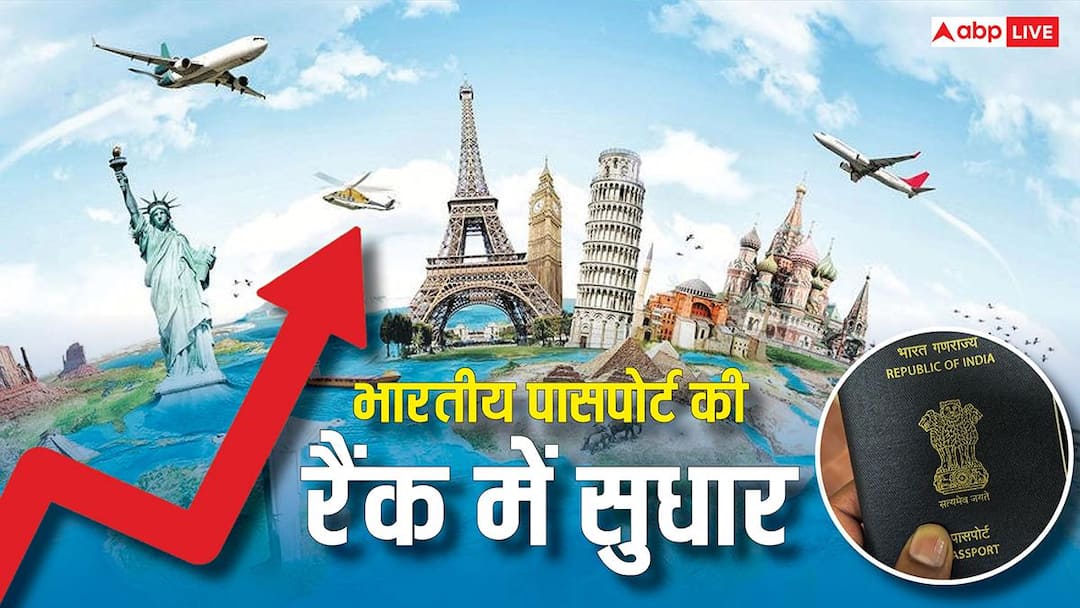
The list of Henley Passport Index 2026 has been released, in which there has been a good improvement in the ranking of Indian passport. Now Indian passport is at number 80, which was at number 85 last year (2025). This means that the ranking of passport has improved by 5 places in one year. Niger and Algeria are also at 85th rank.
Indians can travel visa free to 55 countries
Indian passport holders can now travel to 55 countries with visa free entry, visa on arrival or electronic travel authorization (eTA). Last year this number was 57, but now the rank has improved. This ranking of Indian passport is a sign of improvement after stagnant or declining in the last few years. India was ranked 71st in 2006, but declined later. Now it is in the mid-tier.
Which country has the top ranking passport?
- Singapore’s passport is the most powerful, which has visa free access to 192 countries.
- Japan and South Korea are at second place, which have got entry in 188 countries.
- Denmark, Switzerland, Sweden, Spain and Luxembourg are in third place, which has access in 186 countries.
- The UAE was the strongest performer, reaching 5th place, climbing 57 places since 2006 and now has access to 149 countries.
What rank do American and Pakistani passports hold?
In this ranking, American passport has returned to 10th place, which has visa free entry in 179 countries. Last year, America was out of the top-10 list and reached 12th position. Whereas, Pakistan (98) and Bangladesh are at 95th position.
The weakest passport is that of Afghanistan, which has been ranked 101st. That means Afghan people can travel only to 24 countries.
What is Henley Passport Index?
The Henley Passport Index is the world’s most trusted passport ranking, prepared by Henley & Partners in London. It ranks 199 passports and 227 countries/territories based on the convenience of traveling without a prior visa. For this, data is taken from the International Air Transport Association (IATA).
This index shows that there is great inequality in freedom of travel in the world. There is a difference of 168 countries between top and bottom. Global mobility has increased over the past 20 years, but the benefits are unevenly distributed.