
 By Admin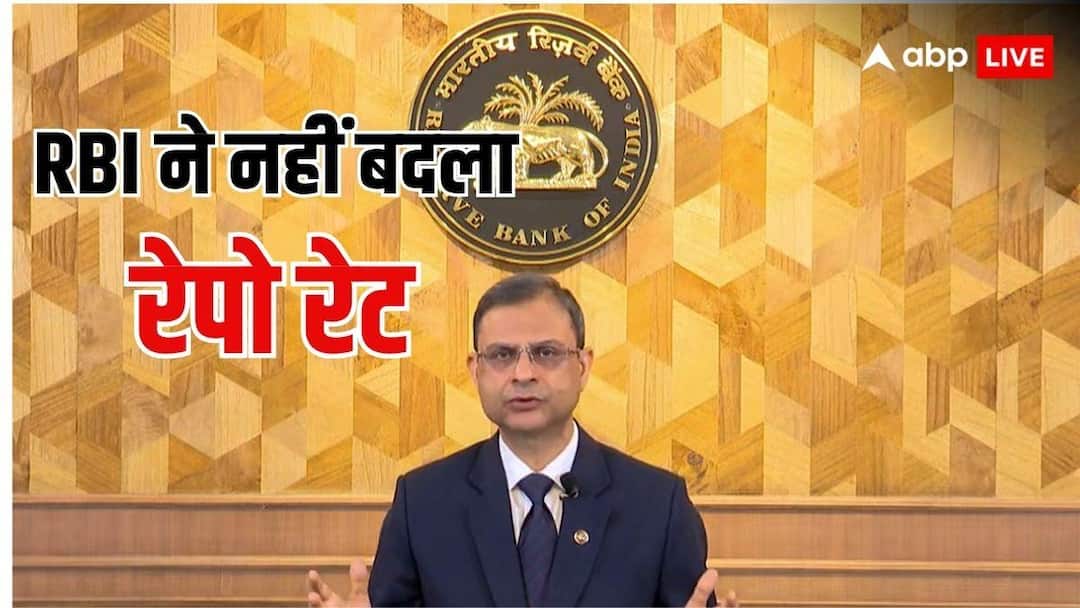
RBI MPC Meeting: This time the Reserve Bank of India did not make any change in the repo rate and kept it at 5.25 percent. The Reserve Bank Governor announced this. The meeting of the six-member Monetary Policy Committee (MPC) under his chairmanship started on Monday. This meeting of RBI MPC took place at a time when tensions in West Asia are at their peak, crude oil prices are skyrocketing and the rupee has depreciated. In such a situation, it is expected that this time RBI will maintain the repo rate at 5.25 percent.
RBI has cut the rates by a total of 125 basis points from February 2025 till now. For the first time since 2019, the Reserve Bank brought down the rates so rapidly. In the last meeting held in February 2026, the Reserve Bank had kept the rates stable so that the earlier cuts could be assessed. Earlier in December 2025, the repo rate was reduced by 25 basis points.
What will be the GDP growth?
RBI was hopeful that economic activity would remain good in FY27. The central bank has increased the GDP growth estimate for Q1FY27 to 6.9 percent from 6.7 percent, while the GDP growth estimate for Q2FY27 has been increased to 7 percent from the earlier 6.8 percent. In the February policy, the MPC also raised the inflation forecast for Q1FY27 to 4.0 percent and the inflation forecast for Q2FY27 to 4.2 percent. RBI Governor Sanjay Malhotra also said during this time that India remains an attractive destination for greenfield FDI projects.
What is repo rate?
Repo rate is the rate of interest at which the central bank of the country lends to the commercial banks. Actually, whenever banks are short of funds, they borrow money from RBI to meet their needs. The interest they have to pay on this loan is called repo rate. When inflation increases in the market, the Reserve Bank increases the repo rate. This makes loans expensive for banks and increases loan rates for customers. If loans become expensive, people will reduce spending. This helps in keeping inflation under control.
On the contrary, when the economy slows down, RBI reduces the repo rate so that people can get cheaper loans and encourage purchasing in the market and more investment.
Connection of repo rate to EMI
Banks decide the lending rate only on the basis of repo rate. If banks get cheaper funds from RBI, then banks also reduce the interest rates on their floating rate loans. If your loan is floating rate or repo-linked, banks reduce the interest rate, which either reduces your EMI on the loan or may reduce the tenure of the loan.
At the same time, when the repo rate increases, it becomes expensive for banks to take loans and the burden is passed on to the customers. Due to this the EMI on the loan also increases. This time, keeping the repo rate constant means that your current EMI on bank, home or car loan will be the same. There is no scope for relief in this right now.
Also read:
Air India becomes a burden for Tata! The budget was Rs 2000 crore, there was a loss of Rs 20000 crore, the plan failed