
 By Admin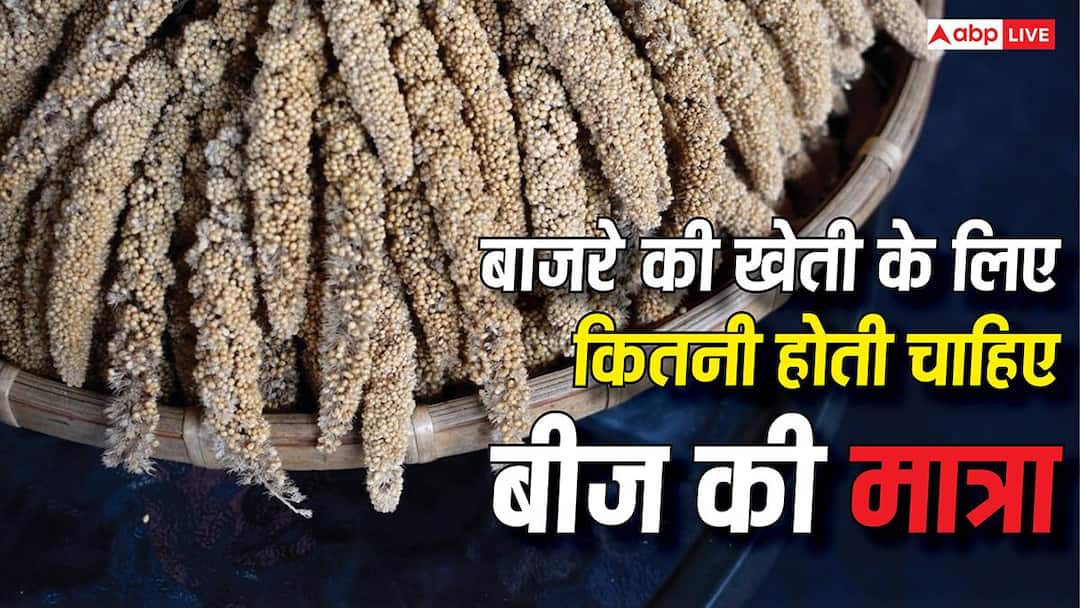
Pearl millet farming: The season of Kharif crops has arrived and in such a situation, farmers are starting Kharif farming in different areas of the country. Even in dry areas like Rajasthan, farmers cultivate millet at this time. Because millet requires less water and has the ability to tolerate drought, its cultivation is continuously increasing. For good yield, it is very important to sow at the right time, good seed quantity and adopt scientific method. In such a situation, let us tell you today what should be the quantity of seed for the cultivation of millet and what is the calculation of one hectare.
When is millet sown?
The sowing time of millet depends on the monsoon. Generally it is sown between June and July. According to agricultural scientists, the time from June 15 to July 15 is considered the most suitable. Sowing should be done on time when there is good rain. In case of heavy rainfall or continuous water flow, instead of sowing, seedlings can be prepared and transplanted. Apart from this, in non-irrigated areas, it is advisable to sow from the last week of June to mid-July, whereas in irrigated areas, sowing can be done from June to August.
How much seed quantity is required for one hectare?
The cultivation of millet depends on the quantity, variety and method of sowing seeds. For hybrid or Shankar variety, 4 to 5 kg seeds per hectare is considered sufficient. Whereas for open pollinated varieties, 8 to 10 kg seeds may be required. If sowing is being done by spraying method, then the quantity of seeds can be kept at 10 to 12 kg per hectare. In case of late sowing, it is advisable to increase the seed quantity by about 10 percent. Seed treatment before sowing is also considered necessary. For this, seeds are treated with fungicides, so that borne diseases can be avoided.
Also read- If Kisan Samman Nidhi has not come in your account then do this work, otherwise the next installment will be deducted.
Improved variety for market cultivation
Many improved varieties have been developed in different regions of the country. Among these, important varieties are Pusa 23, Pusa 415, Pusa 605, Pusa 322, HHB 50, HHB 67 Improved, HHB 117, RHB 30, GHB 318, Nandi 8 and LLBH 104. Apart from this, varieties like Pusa Composite 701, Pusa Composite 1201, Pusa Composite 266, Pusa Composite 234 and Pusa Composite 383 are also cultivated. In states like Rajasthan, Haryana and Punjab, HHB 67 Improved and Pusa 605 are considered better.
Also read: Change the diet of your animals before the monsoon season arrives, otherwise milk production will reduce.