
 By Admin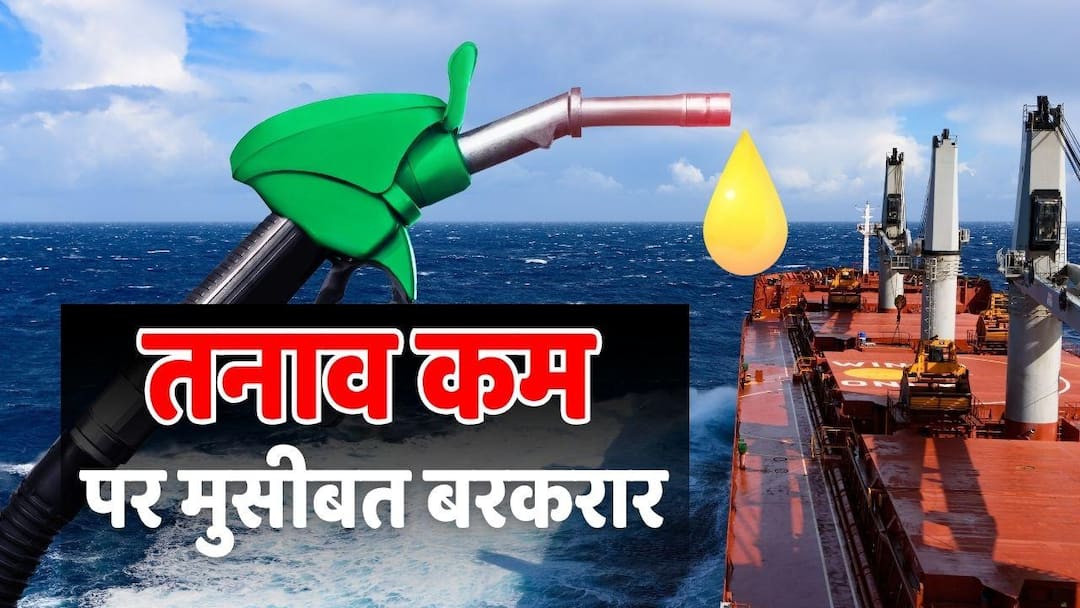
Oil-LPG Crisis News: Amidst the news of tension in the Gulf countries reducing, a new problem is emerging. After the ceasefire, the movement of ships from Hormuz has started again at a rapid pace, but now there is a huge shortage of ships there. For this reason, the fare of a big oil tanker coming to India has been fixed almost 9 times more than the normal rate, which is being said to be the most expensive fare of this year.
With this, this booking by South Korean shipping company Sinocor has made it clear that the Hormuz crisis is not over, but has now emerged in a new form.
record fare booking
The big ship that has been booked to bring crude oil from the Persian Gulf to India can carry about 2 million barrels of oil. According to ship brokers, its fare has been fixed almost 9 times more than the normal and this is the biggest booking of the year. This figure itself shows that even though reports of tension have reduced, the situation at sea has not yet become normal.
If you have 5 lakh followers on social media, you will also be called a ‘celebrity’, SEBI has made a new draft.
How is the fare decided?
The fare of oil ships is not fixed directly in dollars, but is decided through a special system, in which a standard fare for each route is fixed. When a ship is booked, its fare is quoted as a percentage of the standard fare. In simple words, this time the oil sourcing company is having to pay almost 9 times the amount for bringing oil once.
real beginning of stress
It is important to understand the reason why the rent is so high despite the stress being reduced. The conflict between America, Israel and Iran started in March 2026, after which the movement of ships from the Hormuz area stopped by 92 percent.
This is the same sea route through which 20 percent of the world’s oil passes. During that time, the fare on ships had reached 4 lakh 23 thousand 736 dollars per day and the insurance companies had stopped providing security cover to the ships out of fear.
When the route opened, there was a shortage of ships.
After the agreement between America and Iran in June 2026, when the tension subsided, the oil companies heaved a sigh of relief and started trying to source oil from the Gulf again, but this is where the real trouble started. Oil is there but there are not enough ships left to bring it.
Big prediction on gold price: There will be a bumper jump of 36%! Price may rise up to Rs 2 lakh
During the months of tension, many ships had gone away from there and now the return is not happening so quickly. After the tension subsides, only 65 empty ships can reach the Gulf of Oman within a week, out of which 25 ships are only with Sinocor Company. Demand is high and ships are less, hence buyers are forced to pay the asking price.
India’s vigilance and diplomacy
It is also important to know what is being done by India in this entire crisis. The Indian government is on high alert regarding its energy security and the safety of sailors. The government is constantly engaged in talks with international agencies to protect India’s maritime interests.
It is a matter of relief that 94 Indian sailors and 3 Indian ships Desh Vaibhav, Desh Vibhor and Sanmar Herald loaded with 8.6 lakh metric tonnes of crude oil have successfully crossed this dangerous route. These ships are reaching Indian ports between June 24 and July 1, 2026. According to the Ministry of External Affairs, after the US-Iran agreement, a total of 11 ships coming to India have crossed this route safely.
India’s record of importing oil from Russia
India had already sensed this danger and changed its strategy. India is heavily dependent on the Strait of Hormuz for its energy needs, especially for LPG, 90 percent of which comes from here.
For this reason, India has made a new record of oil import from Russia. In June 2026, oil imports from Russia have reached an all-time high of 26 lakh barrels per day and now about 53.5 percent of India’s total oil imports are coming from Russia alone. Apart from this, Indian companies have also started importing oil from countries like North America and Venezuela, so that there is no dependence on any one place.
What will be the impact on the common man?
The question that matters most is what impact it will have on the life of the common man. The interesting thing is that even though the fares on ships have increased by 9 times, the prices of crude oil are falling in the world market. Currently, the price of Brent crude has fallen to around $73 per barrel.
Still, as long as the shortage of ships persists, it will be difficult to get relief for India’s state oil companies, which were facing losses of about Rs 650 crore every day during the crisis. If the supply of ships becomes normal in the coming weeks, then India’s import bill will reduce, the rupee will strengthen and it will also help in controlling the inflation of petrol and diesel, but till then the tension is going to remain.