
 By Admin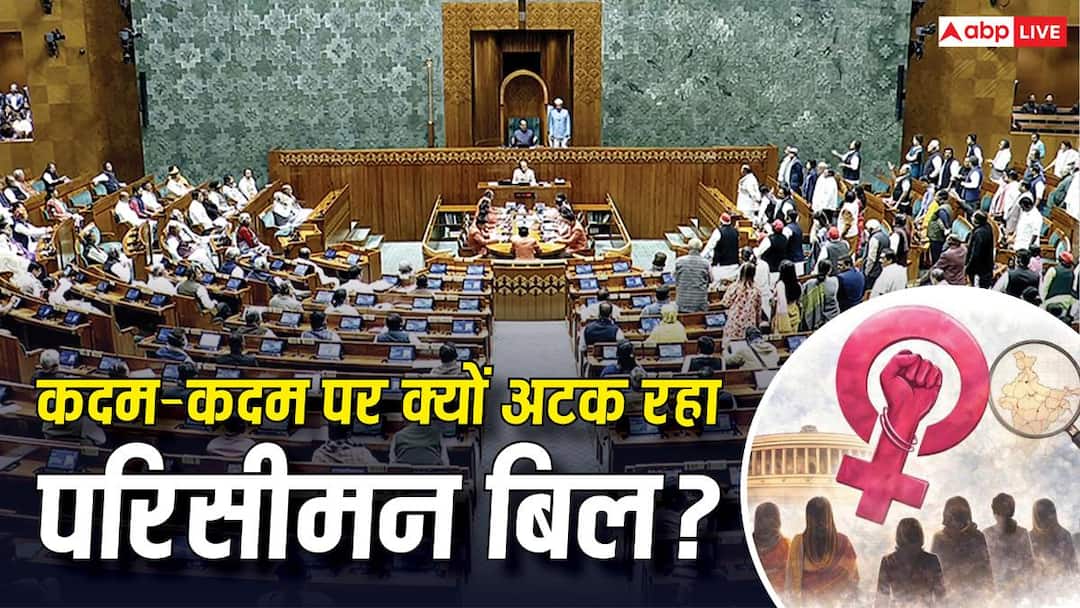
In the monsoon session of Parliament starting from July 20, an attempt will be made once again to pass the Constitution (131st Amendment) Bill 2026 i.e. the Delimitation Bill. This bill was defeated by 54 votes in the budget session of April 2026. But in the last three months the entire political mathematics of Parliament has changed. Cracks have appeared in the opposition alliance, 37 MPs have broken away from four different opposition parties and joined the ruling party and some regional parties are ready to support with conditions. The question is whether NDA will be able to cross the two-third majority mark this time…
What is 131st Amendment Bill and why is it controversial?
This bill does two big things:
- Increasing the number of Lok Sabha seats from 543 to 850.
- To prepare the constitutional basis for implementing 33 percent women’s reservation (Nari Shakti Vandan Act) after delimitation.
According to the bill, the principle of seats in each state in proportion to its population will be brought back. The controversy is because southern states like Tamil Nadu, Kerala, Karnataka, Telangana and Andhra Pradesh fear that increasing seats on the basis of population will reduce their political power. The states which have been successful in population control are troubled by their lack of representation.
April 2026: When the bill was dropped
Voting took place in the Lok Sabha on 17 April 2026. A total of 528 MPs cast their votes. To amend the Constitution, two-thirds majority i.e. 352 votes was required. The government got 298 votes, while 230 votes were cast in opposition. That means 54 votes were short.
Congress, TMC, DMK, Shiv Sena (UBT), NCP (Sharad Pawar), SP, RJD and Left parties together defeated the bill. DMK chief M.K. Stalin had termed the bill’s defeat as a ‘victory for Tamil Nadu’.
What major changes took place in three months?
From April till now the mathematics of Parliament has completely changed. This is the biggest defection after the 1985 anti-defection law. 37 MPs have broken away from four opposition parties and joined the ruling party.
- TMC’s division: 20 MPs of Mamata Banerjee’s party rebelled and supported the NDA by forming a new party named National Common People’s Initiative (NCPI).
- Weakening of Shiv Sena (UBT): 6 MPs from Uddhav Thackeray’s group joined Eknath Shinde’s camp.
- Merger of AAP: 7 MPs of Aam Aadmi Party merged with BJP.
After these changes, the strength of NDA has increased from 292 to 329. At present three seats are vacant in the Lok Sabha, so the two-thirds figure has come down to 360. That means NDA is now just 31 votes away from the figure of 360. In April this difference was 62 votes.
‘Mission 360’: Where will the remaining votes come from?
The Central Government has named it ‘Mission 360’, that is, achieving two-thirds majority. NDA has its eyes on several opposition parties:
- DMK breaks ties with Congress: The party did not even accept sitting close to the Congress and boycotted the INDIA alliance meeting. Stalin clearly told his MPs, ‘The ideology of the party and the interests of Tamil Nadu will come before political alliances.’ They will consider issue-based support. The government hopes that if the guarantee of ‘increasing seats by 50 percent in all states’ is included in the bill, then the DMK can support it.
- NCP (Sharad Pawar) 8 MPs: Supriya Sule has made it clear that if the government gives a written guarantee of increasing 50 percent seats in every state, then NCP can consider support. However, he also said, ‘We do not have the text of the bill. When it happens, we will reply within 24 hours. NCP has not taken any official stand yet.
- Shiv Sena (UBT) in dilemma: Sanjay Raut has said that if the government includes the opposition’s amendments, they may reconsider.
- Togetherness of DMK and NCP(SP): If we get the support of both together, then NDA’s strength will increase from 329 to 359. The figure of 360 can be crossed with the support of some more regional parties like BJD and YSRCP.
Union Minister Ramdas Athawale claimed, ‘Now NDA has two-thirds majority. Women’s reservation and delimitation bill should be passed.
Opposition’s strategy: Trying to drop the bill
Opposition alliance INDIA is no longer as united as before. TMC has divided, Shiv Sena (UBT) has weakened, DMK has separated from Congress and NCP (Sharad Pawar) is putting conditions for support.
Congress President Mallikarjun Kharge has written a letter to the Prime Minister demanding a meeting of all parties. Kharge said, ‘The 131st Amendment Bill failed to get two-thirds majority in April. Now the government is bringing a revised bill, without seeing which no decision can be taken.
The immediate objective for the opposition is to keep the NDA below the 360-vote threshold. If the NDA fails to garner two-thirds support, the constitutional amendment will once again fail. In Parliament:
- 19th July: all party meeting
- 20th July: Monsoon session starts
- 21 July: NDA parliamentary party meeting (Prime Minister Modi will address)
- 13 August: session terminated
So will the delimitation bill be passed in the monsoon session or not?
Four big changes are completely changing the equation:
- Numerical Variation: NDA is now just 31 votes away from the figure of 360 with 329 MPs.
- Political changes: NDA has been strengthened by the rebellion/merger in TMC, Shiv Sena (UBT) and AAP.
- Strategic Changes: NDA can come closer with the conditional support of NCP(SP) and DMK.
- Bill Formula: The government is trying to allay the concerns of the southern states by guaranteeing ’50 percent increase in seats in all states’.
According to experts, now if NDA can bring 22 MPs from DMK and 8 MPs from NCP(SP), then the bill can be passed. If not, this session may prove to be as disappointing as April 2026. The immediate objective for the opposition is to keep the NDA below the 360-vote threshold. Even if the ruling coalition emerges as the largest group, failure to garner two-thirds support will prevent the passage of the constitutional amendment.
This big game is starting from July 20 and its results will rewrite the electoral map for the coming decades.