
 By Admin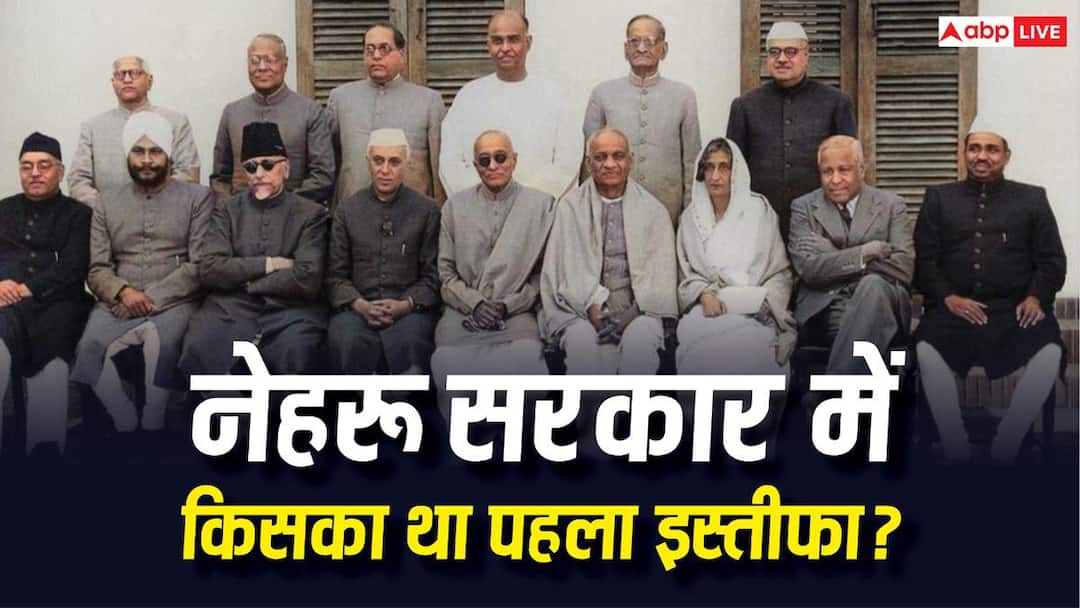
Protests and hunger strikes have been going on at Jantar Mantar in Delhi for the last few days. Famous social activist Sonam Wangchuk has been on a continuous fast since June 28 on serious issues like NEET paper leak. It has been 20 days since Wangchuk’s hunger strike, demanding the resignation of Union Education Minister Dharmendra Pradhan, is continuously deteriorating due to which his health is deteriorating. In the midst of this environment, an old and very important page of resignations of ministers has come to the fore in the country’s politics. Let us know what was the first occasion in the history of independent India when a senior minister of the Nehru government resigned from his post.
Shyama Prasad Mukherjee came into the first cabinet of independent India.
Jawaharlal Nehru, the first Prime Minister of independent India, was initially not in favor of including Dr. Syama Prasad Mukherjee in his cabinet. Despite ideological differences, Nehru had to give up his insistence on the special insistence of Mahatma Gandhi and the country’s first Home Minister Sardar Vallabhbhai Patel. After the advocacy of these two big leaders, Dr. Mukherjee got a place in the first cabinet of independent India and he was made the country’s first Industry and Supply Minister. However, this foundation of ideological differences within the government could not last long and soon took the form of a major controversy.
First historic resignation from Nehru government
Within a few years of joining the cabinet, there was an unprecedented turn in the country’s politics. On April 19, 1950, Dr. Shyama Prasad Mukherjee officially resigned from the Nehru Cabinet, which was the first resignation of any Union Minister in the history of the country. The biggest reason behind this historic step was the Liaquat-Nehru Agreement between the then India and Pakistan. Dr. Mukherjee clearly believed that the policies of the Nehru government were completely ignoring the rights and security of the minority Hindus living in East Pakistan (now Bangladesh).
Also read: If Sonam Wangchuk dies while on hunger strike, can a case be filed against the government, is there any such rule?
Deep crisis emerged after partition
To understand this entire political development and controversy, it is important to look at the circumstances of the year 1949-50. Even after the partition of the country in 1947, a large number of minority populations were living on both sides. During that time, news of large-scale violence and atrocities against Hindus started coming in East Pakistan, due to which lakhs of refugees started fleeing to West Bengal. Due to this serious situation, the danger of war between India and Pakistan started looming. To avert this grave humanitarian and political crisis, a bilateral dialogue was organized in Delhi between the Prime Ministers of the two countries.
What Nehru-Liaquat Pact?
As a solution to this crisis, an agreement was reached in Delhi between Prime Minister Jawaharlal Nehru and Pakistan’s PM Liaquat Ali Khan, which is also called Delhi Pact. Under this agreement, both the countries guaranteed full citizenship, security and fundamental rights to their minorities. Along with this, refugees were given the freedom to sell their abandoned properties and return. In the agreement, forced religious conversions and marriages were declared completely illegal and it was decided to form Minority Commission for monitoring at the provincial level in both the countries.
Why was Shyama Prasad Mukherjee not happy with this agreement?
Dr. Shyama Prasad Mukherjee considered this agreement as the weakness of the Nehru government and a big betrayal of the Hindus. He firmly believed that Pakistan had become an Islamic country, which would go back on its promises at any time and non-Muslims would never be safe there. Describing the government’s policies as appeasement, he proposed that either there should be a complete exchange of minorities between the two countries, or an additional portion of Pakistan’s land should be sought for the settlement of Hindus. When the government did not accept these suggestions, he left the cabinet.
Also read: How many Jantar Mantars in the country, who built them and why? Know the history